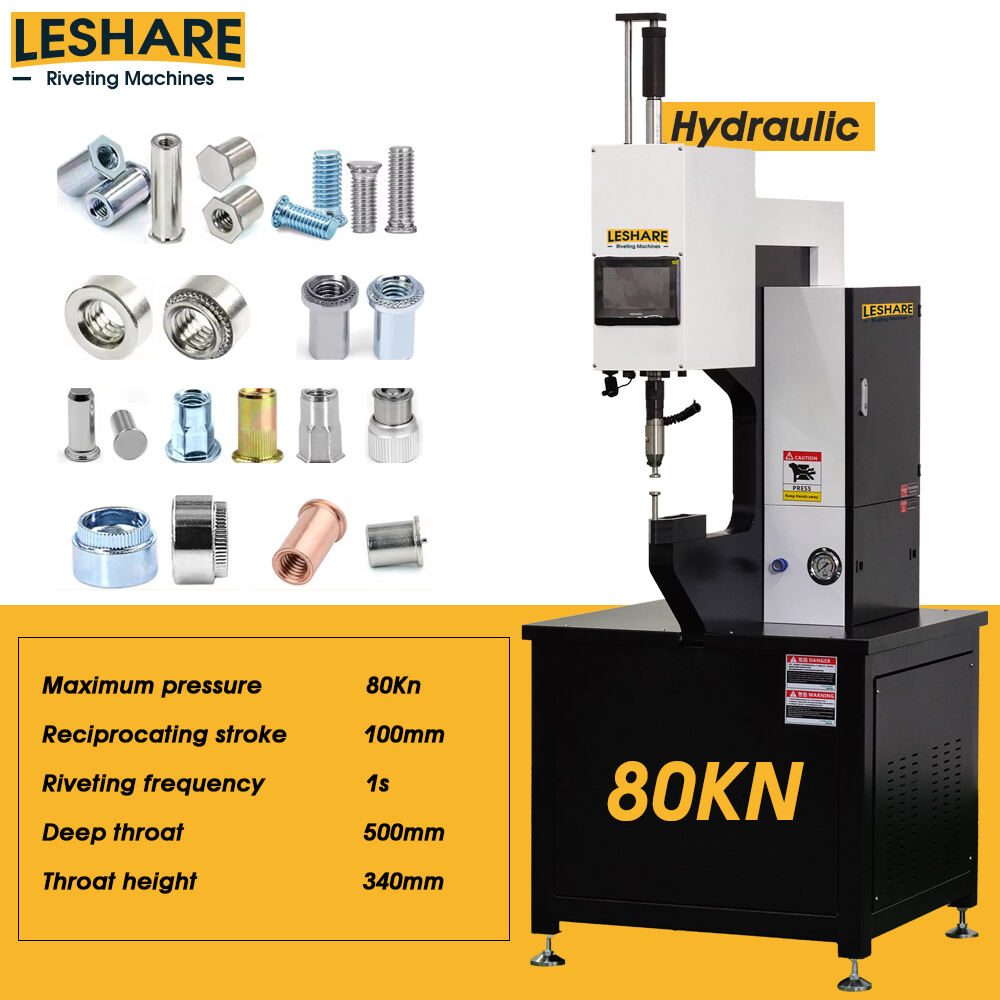
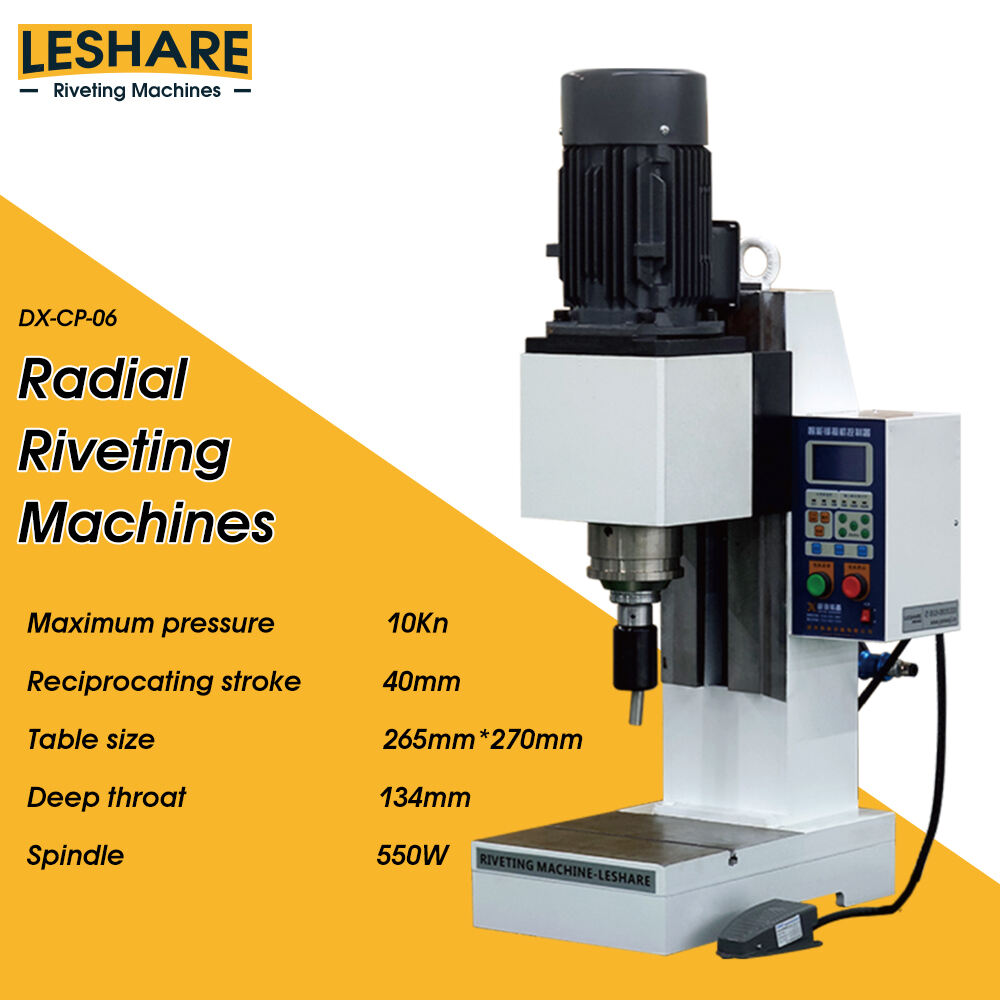
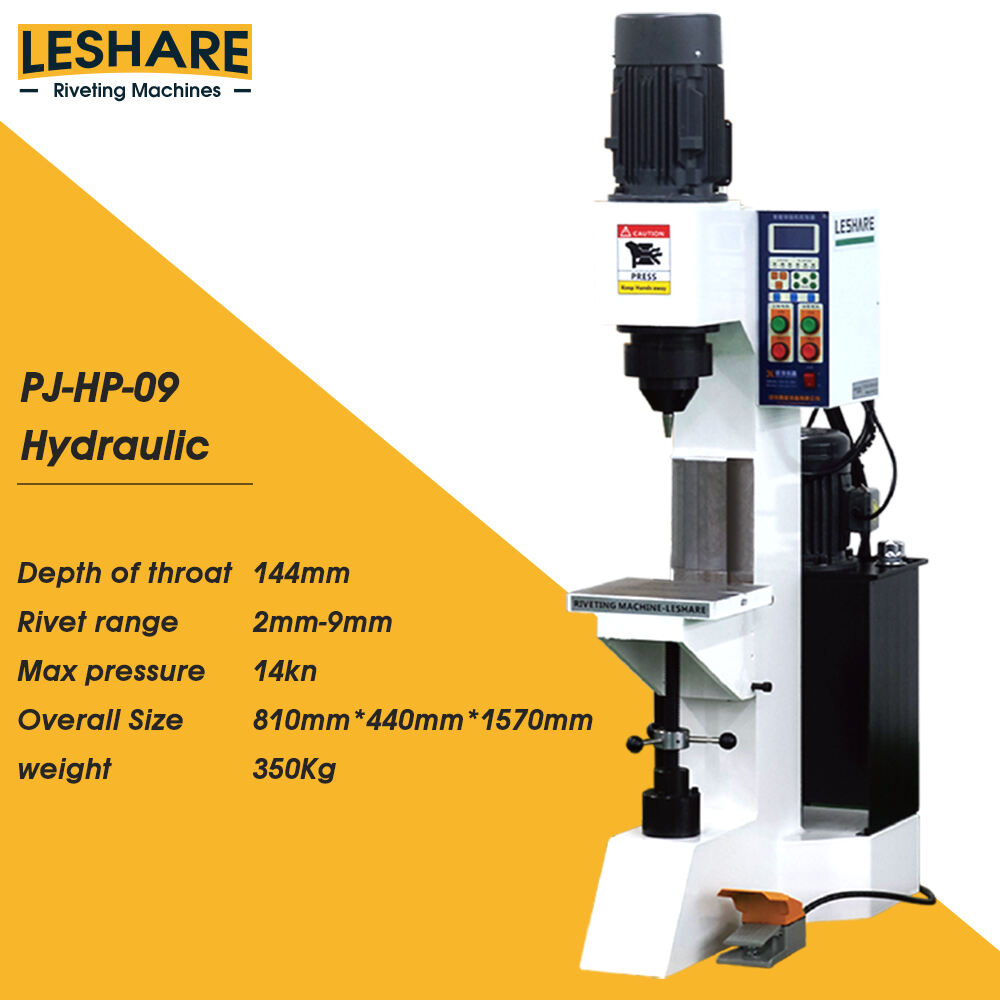
Pneumatic riveting machines are core equipment in sheet metal processing and hardware assembly, and their stability directly determines riveting accuracy and production efficiency. As a medium-tonnage equipment, the 8-ton pneumatic riveting machine has an air source range of 0.3-0.6 MPa, with a normal working air pressure of about 0.5 MPa. This article briefly analyzes the factors affecting its stability and optimization schemes to provide reference for production.
I. Core Influencing Factors
(1) Air Source System
The air source is the foundation for the stable operation of the equipment, with three core impacts: first, pressure fluctuation, deviating from the normal range of 0.5 MPa (insufficient riveting force below 0.3 MPa, and accelerated equipment wear above 0.6 MPa); second, insufficient purity, as moisture, oil stains and impurities will damage air circuit components, leading to movement jamming and leakage; third, improper air circuit connection and maintenance, as loose joints, aging pipelines and untimely maintenance will cause pressure loss and component failure.
(2) Equipment Own Components
The accuracy and wear of equipment components directly affect stability: cylinder wear and seal failure will lead to insufficient riveting force and slow movement; insufficient accuracy and improper matching of riveting heads and molds will cause riveting deviation and equipment vibration; insufficient lubrication of the guide mechanism and insufficient rigidity of the machine body will accelerate component wear; failures of the electrical control system (such as sensor failure and line aging) will cause disordered equipment operation.
(3) Operation and Process
Non-standard operations (such as no inspection before startup, improper air pressure adjustment, and illegal operation) and unreasonable process parameter settings will lead to abnormal equipment load and accelerated wear, directly affecting stability; operators who have not received professional training are prone to misoperation, leading to equipment failures.
(4) Environmental Factors
Environmental temperature (suitable 10-35℃), humidity (30%-70%) and dust will affect equipment operation: high temperature accelerates component aging, low temperature causes air circuit blockage, high humidity causes rust, and dust causes component jamming and poor contact.
II. Optimization Strategies
(1) Optimize the Air Source System
Select an air compressor with matching power and a sufficient air storage tank to stabilize the air pressure at about 0.5 MPa; install a three-stage filtration system, regularly replace filter elements and drain accumulated water to ensure air source purity; regularly check air circuit tightness, replace aging components, and arrange pipelines reasonably.
(2) Strengthen Equipment Maintenance
Regularly inspect components such as cylinders, riveting heads and molds, replace worn parts in a timely manner to ensure accuracy and matching; do a good job in lubrication of the guide mechanism and fixation of the machine body, regularly calibrate electrical components, and troubleshoot potential faults.
(3) Standardize Operation Process
Strengthen operator training and standardize operations such as pre-startup inspection and air pressure adjustment; reasonably set process parameters according to riveting materials and rivet specifications to avoid illegal operation and fatigue operation.
(4) Optimize the Operating Environment
Place the equipment in an environment with suitable temperature and humidity, regularly clean dust in the operation area, ensure sufficient operation and heat dissipation space around the equipment, and avoid external impact and vibration.
III. Conclusion
The stability of the 8-ton pneumatic riveting machine is affected by many factors such as air source, equipment, operation and environment. Combined with its air source range of 0.3-0.6 MPa and normal air pressure of 0.5 MPa, scientific air source management, equipment maintenance, standardized operation and environmental control can effectively improve stability, reduce failures, extend equipment service life, and ensure efficient and orderly production.
 Hot News
2026-05-13
2026-04-23
2026-03-25
2026-03-13
2026-03-12
2025-06-11
 EN
EN