 EN
EN


Selecting the appropriate fastener insertion machine for your manufacturing operation requires careful consideration of multiple technical factors that directly impact production efficiency, quality, and cost-effectiveness. Modern industrial applications demand precise matching between fastener characteristics and machine capabilities to ensure optimal performance and minimize operational downtime. Understanding the relationship between fastener specifications and machine parameters enables manufacturers to make informed decisions that enhance their assembly processes while maintaining stringent quality standards.
The complexity of fastener insertion technology has evolved significantly with advances in pneumatic systems, servo controls, and sensor integration. Contemporary manufacturing environments require equipment that can handle diverse fastener types while maintaining consistent insertion depth, torque specifications, and alignment accuracy. Professional engineers must evaluate numerous parameters including material compatibility, insertion force requirements, cycle time expectations, and quality control capabilities when selecting the most suitable equipment for their specific applications.
Understanding Fastener Characteristics and Machine Compatibility
Material Properties and Machine Requirements
Different fastener materials present unique challenges that require specific machine capabilities to achieve successful insertion without damage to either the fastener or the workpiece. Steel fasteners typically require higher insertion forces compared to aluminum or plastic variants, necessitating machines with robust pneumatic or hydraulic systems capable of generating sufficient pressure. The hardness and tensile strength of the fastener material directly influence the selection of insertion tooling and the required machine force output specifications.
Stainless steel fasteners often demand specialized handling due to their tendency to gall or seize during insertion, requiring machines with precise speed control and variable force application capabilities. Brass and bronze fasteners, while softer than steel alternatives, may require different insertion parameters to prevent deformation or thread damage. Modern fastener insertion machines incorporate adjustable force settings and programmable insertion profiles to accommodate various material characteristics effectively.
Composite and polymer fasteners represent a growing segment in lightweight applications, particularly in aerospace and automotive industries. These materials often require lower insertion forces but demand greater precision in positioning and alignment to prevent cracking or structural failure. Advanced machines feature sensitive force feedback systems that can detect material resistance changes and adjust insertion parameters automatically to prevent damage.
Geometric Considerations and Tooling Requirements
Fastener geometry significantly impacts the selection of appropriate insertion equipment, as different head styles, thread configurations, and length specifications require corresponding tooling and machine capabilities. Hex head fasteners demand different gripper designs compared to Phillips or Torx head variants, while specialized fasteners like rivets or press-fit pins require entirely different insertion mechanisms and force application methods.
Thread pitch and diameter combinations affect the insertion speed and torque requirements, with fine-pitch threads typically requiring slower insertion rates and more precise control systems. Coarse threads allow for faster insertion but may require higher initial insertion forces to properly engage with the workpiece material. Machine selection must account for these variations through adjustable speed controls and programmable insertion sequences.
Length variations within fastener families necessitate machines with adequate stroke capability and depth control systems. Short fasteners may require high-precision positioning to ensure proper seating, while longer fasteners demand extended machine reach and consistent force application throughout the insertion process. Variable stroke capabilities and programmable depth stops enable single machines to handle multiple fastener lengths effectively.
Machine Types and Their Optimal Applications
Pneumatic Systems for High-Volume Production
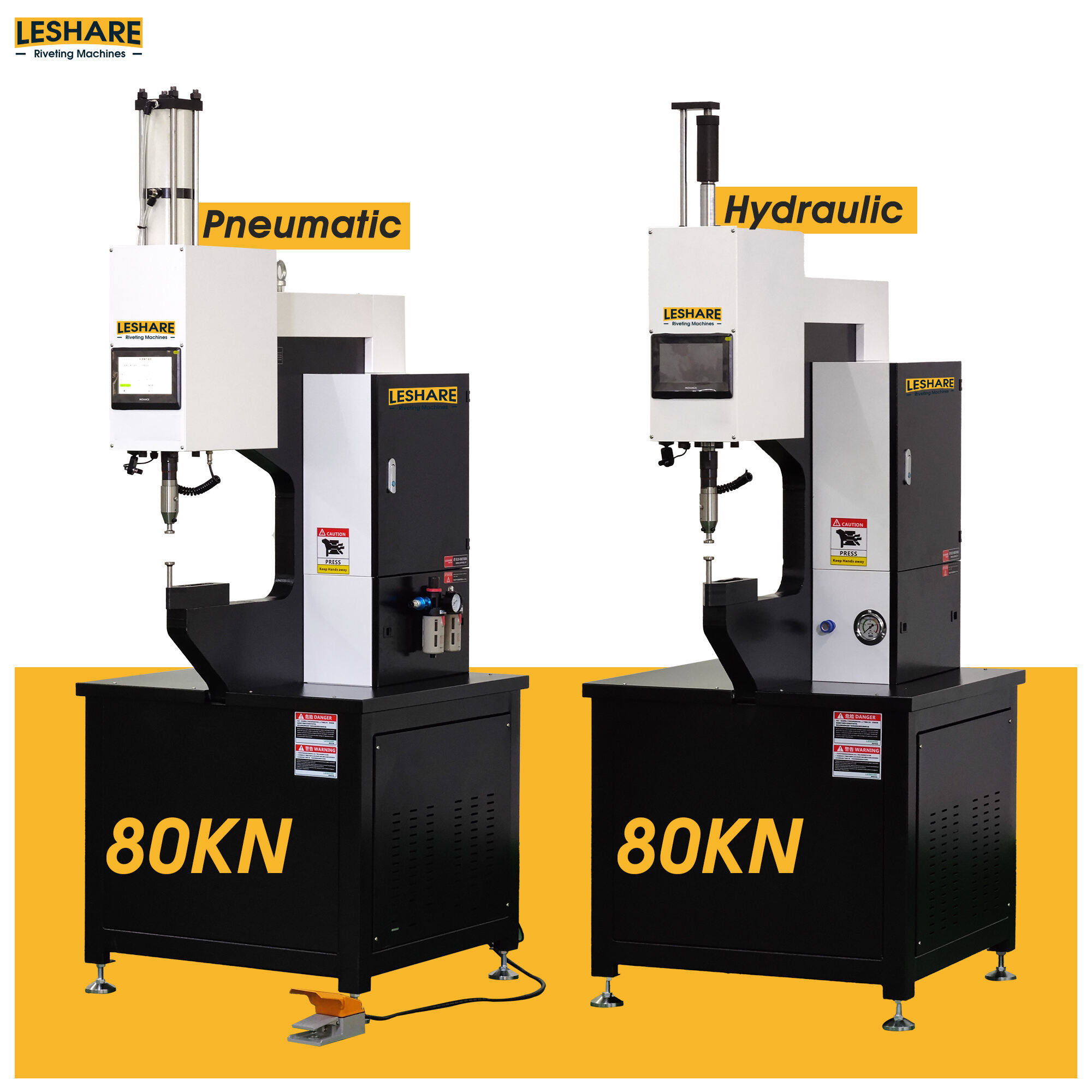
Pneumatic fastener insertion machines excel in high-volume manufacturing environments where rapid cycle times and consistent performance are paramount. These systems leverage compressed air to generate insertion forces ranging from light-duty applications requiring minimal pressure to heavy-duty operations demanding substantial force output. The inherent speed advantage of pneumatic systems makes them ideal for automotive assembly lines, electronics manufacturing, and other applications where throughput is critical.
Modern pneumatic systems incorporate sophisticated pressure regulation and flow control mechanisms that enable precise force modulation throughout the insertion cycle. Variable pressure settings allow operators to optimize insertion parameters for different fastener types without requiring machine changeovers or extensive setup modifications. Digital pressure monitoring systems provide real-time feedback on insertion forces, enabling quality control personnel to detect anomalies and maintain consistent assembly quality.
The reliability and maintenance advantages of pneumatic systems make them particularly attractive for continuous production environments. With fewer mechanical components compared to servo-driven alternatives, pneumatic machines typically exhibit lower maintenance requirements and extended operational lifespans. However, the compressible nature of air can introduce slight variations in insertion force, making these systems less suitable for applications requiring extremely precise force control.
Servo-Driven Precision Systems
Servo-controlled fastener insertion machine technology provides unparalleled precision and flexibility for applications demanding exact force control, position accuracy, and programmable insertion profiles. These systems utilize advanced motor control algorithms to achieve insertion forces within tight tolerance ranges while maintaining consistent speed profiles throughout the insertion cycle. The ability to program complex insertion sequences makes servo systems ideal for applications involving multiple fastener types or varying material conditions.
Position feedback systems integral to servo technology enable precise depth control and insertion monitoring, ensuring consistent fastener seating across production runs. Real-time force and position data collection capabilities facilitate comprehensive quality control documentation and process optimization. Advanced servo systems can detect insertion anomalies such as cross-threading, incomplete insertion, or material defects through sophisticated monitoring algorithms.
The programmability of servo systems allows for rapid changeovers between different fastener types and sizes, reducing setup time and increasing production flexibility. Recipe-based control systems store optimal insertion parameters for various fastener configurations, enabling operators to switch between different products with minimal downtime. However, the increased complexity and higher initial cost of servo systems require careful consideration of application requirements and return on investment calculations.
Force Requirements and Machine Sizing
Calculating Insertion Force Specifications
Determining appropriate insertion force requirements involves analyzing multiple factors including fastener material properties, thread engagement characteristics, workpiece material hardness, and desired insertion speed. Engineers must consider the maximum force required to overcome initial thread engagement resistance, continuous insertion force throughout the threading process, and final seating force to achieve proper fastener positioning. Accurate force calculations prevent both inadequate insertion leading to loose fasteners and excessive force causing thread damage or workpiece deformation.
Material interaction between fastener and workpiece significantly influences force requirements, with dissimilar metals often requiring higher insertion forces due to galvanic interaction effects. Thread lubricants and surface coatings can substantially reduce insertion forces but must be factored into force calculations to prevent over-torquing or inadequate seating. Environmental conditions such as temperature and humidity can affect material properties and subsequently alter insertion force requirements.
Safety factors must be incorporated into force calculations to account for material variations, wear effects, and operational uncertainties. Typical safety factors range from 1.5 to 2.0 times the calculated insertion force, ensuring adequate machine capacity while preventing excessive force application. Dynamic force considerations during acceleration and deceleration phases of the insertion cycle require additional analysis to ensure proper machine sizing.
Machine Capacity Selection Guidelines
Selecting appropriate machine force capacity involves balancing current application requirements with future flexibility needs while considering cost and space constraints. Machines with excessive force capacity may introduce unnecessary complexity and cost, while undersized machines limit production capability and may experience premature wear due to operating near maximum capacity. Industry best practices recommend selecting machines with force capacity approximately 25-50% above calculated requirements to provide operational margin and future application flexibility.
Cycle time requirements directly influence machine sizing decisions, as higher forces typically enable faster insertion speeds but may require more robust mechanical components and larger power systems. Applications demanding rapid cycle times may benefit from machines with higher force capacity operating at reduced percentages of maximum output, providing both speed advantages and extended component life. Load duty cycles must be evaluated to ensure selected machines can sustain required operational rates without overheating or mechanical stress.
Stroke length requirements affect machine selection beyond simple force considerations, as longer strokes may require different actuator technologies and structural support systems. Variable stroke capability enables single machines to handle diverse fastener lengths but may introduce additional complexity and cost. Fixed-stroke machines optimized for specific applications often provide superior accuracy and reliability at lower cost points.
Quality Control and Monitoring Systems
Process Monitoring Technologies
Contemporary fastener insertion machine technology incorporates sophisticated monitoring systems that track critical process parameters throughout each insertion cycle. Force monitoring sensors provide real-time data on insertion resistance, enabling detection of material defects, cross-threading, or improper fastener alignment before completion of the insertion process. Position sensors verify proper insertion depth and fastener seating, ensuring consistent assembly quality across production runs.
Torque monitoring capabilities enable detection of over-tightening or under-tightening conditions that could compromise joint integrity or cause fastener failure. Advanced systems correlate force, position, and torque data to create comprehensive process signatures that can identify subtle variations in material properties or fastener quality. Statistical process control integration allows automatic adjustment of insertion parameters to maintain optimal performance and minimize variation.
Vision systems increasingly complement traditional force and position monitoring by providing visual verification of fastener orientation, head seating, and surface finish quality. Machine learning algorithms analyze historical process data to predict maintenance requirements and optimize insertion parameters for changing conditions. Data logging capabilities facilitate traceability requirements and support continuous improvement initiatives through detailed process analysis.
Defect Detection and Prevention
Automated defect detection systems identify common insertion problems including incomplete threading, fastener damage, and workpiece deformation before defective assemblies progress through the production process. Signature analysis compares current insertion cycles to established acceptable ranges, flagging deviations that indicate potential quality issues. Early detection capabilities enable immediate corrective action, reducing scrap rates and preventing downstream quality problems.
Cross-threading detection algorithms analyze force and torque patterns during initial thread engagement to identify misaligned fasteners before significant damage occurs. Automatic rejection systems can remove defective parts from production lines while alerting operators to investigate root causes. Preventive measures include fastener orientation verification, workpiece positioning confirmation, and tool condition monitoring to minimize defect occurrence rates.
Quality documentation systems automatically generate reports linking individual fastener insertions to process parameters, enabling comprehensive traceability and supporting quality certification requirements. Integration with enterprise resource planning systems facilitates lot tracking and quality trend analysis across multiple production lines and time periods. Predictive quality algorithms identify conditions that typically precede quality issues, enabling proactive adjustments to maintain consistent performance.
Integration Considerations for Production Lines
Automation Interface Requirements
Modern manufacturing environments demand fastener insertion machines that integrate seamlessly with existing automation systems and production line controls. Communication protocols must be compatible with supervisory control systems, enabling coordinated operation with material handling equipment, quality inspection systems, and production scheduling software. Standard industrial communication interfaces such as Ethernet/IP, Profinet, and Modbus ensure compatibility with diverse automation architectures while providing real-time data exchange capabilities.
Robot integration requires precise positioning systems and coordinated motion control to ensure accurate fastener placement and insertion. Teaching pendant programming capabilities enable operators to define complex insertion sequences and coordinate machine operations with robotic material handling systems. Safety integration systems ensure proper interlocking between machines and robotic systems to prevent accidents and equipment damage during automated operations.
Production line synchronization capabilities enable fastener insertion machines to operate in coordination with conveyor systems, indexing tables, and other material handling equipment. Variable cycle timing adjustments accommodate different production rates and product mix requirements without requiring extensive reprogramming or setup modifications. Buffer management systems handle temporary production rate variations while maintaining overall line efficiency.
Flexibility and Changeover Requirements
Production flexibility demands machines capable of handling multiple product variants with minimal setup time and complexity. Quick-change tooling systems enable rapid transitions between different fastener types and sizes, reducing changeover-related downtime and increasing overall equipment effectiveness. Standardized tool interfaces and automated tool recognition systems further streamline changeover processes while minimizing operator training requirements.
Recipe management systems store optimal operating parameters for different product configurations, enabling automatic machine setup when production schedules change. Barcode or RFID integration can trigger automatic parameter loading based on product identification, reducing setup errors and ensuring consistent quality across product variants. Version control systems track parameter changes and enable rapid restoration of proven settings when quality issues arise.
Modular machine architectures facilitate expansion or reconfiguration as production requirements evolve. Standardized mounting interfaces and power distribution systems enable rapid relocation or integration of machines into different production line configurations. Scalable control systems support additional stations or capabilities without requiring complete system replacement, protecting equipment investments while enabling growth.
FAQ
What factors determine the insertion force requirements for different fastener types?
Insertion force requirements depend on several critical factors including fastener material properties, thread pitch and diameter, workpiece material hardness, and desired insertion speed. Steel fasteners typically require higher forces than aluminum or plastic variants due to material strength differences. Thread engagement characteristics significantly influence force requirements, with fine-pitch threads generally requiring more precise control and potentially higher initial forces. Workpiece material properties such as hardness and thickness directly affect the resistance encountered during insertion, while surface treatments and lubricants can substantially modify force requirements.
How do pneumatic and servo-driven systems compare for fastener insertion applications?
Pneumatic systems excel in high-volume applications requiring rapid cycle times and consistent performance, offering lower initial costs and simpler maintenance requirements. However, the compressible nature of air can introduce slight force variations that may not be suitable for extremely precision-critical applications. Servo-driven systems provide superior precision and programmability, enabling exact force control and complex insertion profiles, but typically require higher initial investment and more sophisticated maintenance capabilities. The choice between technologies depends on specific application requirements for precision, speed, flexibility, and total cost of ownership considerations.
What monitoring capabilities are essential for maintaining consistent fastener insertion quality?
Essential monitoring capabilities include real-time force measurement throughout the insertion cycle, position feedback for depth control verification, and torque monitoring for proper fastener seating confirmation. Advanced systems incorporate signature analysis that compares current insertions to established acceptable ranges, enabling automatic detection of anomalies such as cross-threading, incomplete insertion, or material defects. Integration with statistical process control systems facilitates continuous quality improvement through trend analysis and automatic parameter adjustment capabilities.
How should manufacturers evaluate return on investment for fastener insertion machine upgrades?
ROI evaluation should consider multiple factors beyond initial equipment cost, including increased production throughput, improved quality consistency, reduced labor requirements, and decreased maintenance expenses. Quantify potential savings from reduced scrap rates, decreased rework requirements, and improved first-pass quality yields. Consider long-term benefits such as enhanced production flexibility, improved documentation capabilities, and compliance with evolving quality standards. Factor in training costs, installation expenses, and temporary production disruptions during implementation when calculating total investment requirements and payback periods.
Table of Contents
- Understanding Fastener Characteristics and Machine Compatibility
- Machine Types and Their Optimal Applications
- Force Requirements and Machine Sizing
- Quality Control and Monitoring Systems
- Integration Considerations for Production Lines
-
FAQ
- What factors determine the insertion force requirements for different fastener types?
- How do pneumatic and servo-driven systems compare for fastener insertion applications?
- What monitoring capabilities are essential for maintaining consistent fastener insertion quality?
- How should manufacturers evaluate return on investment for fastener insertion machine upgrades?