 EN
EN

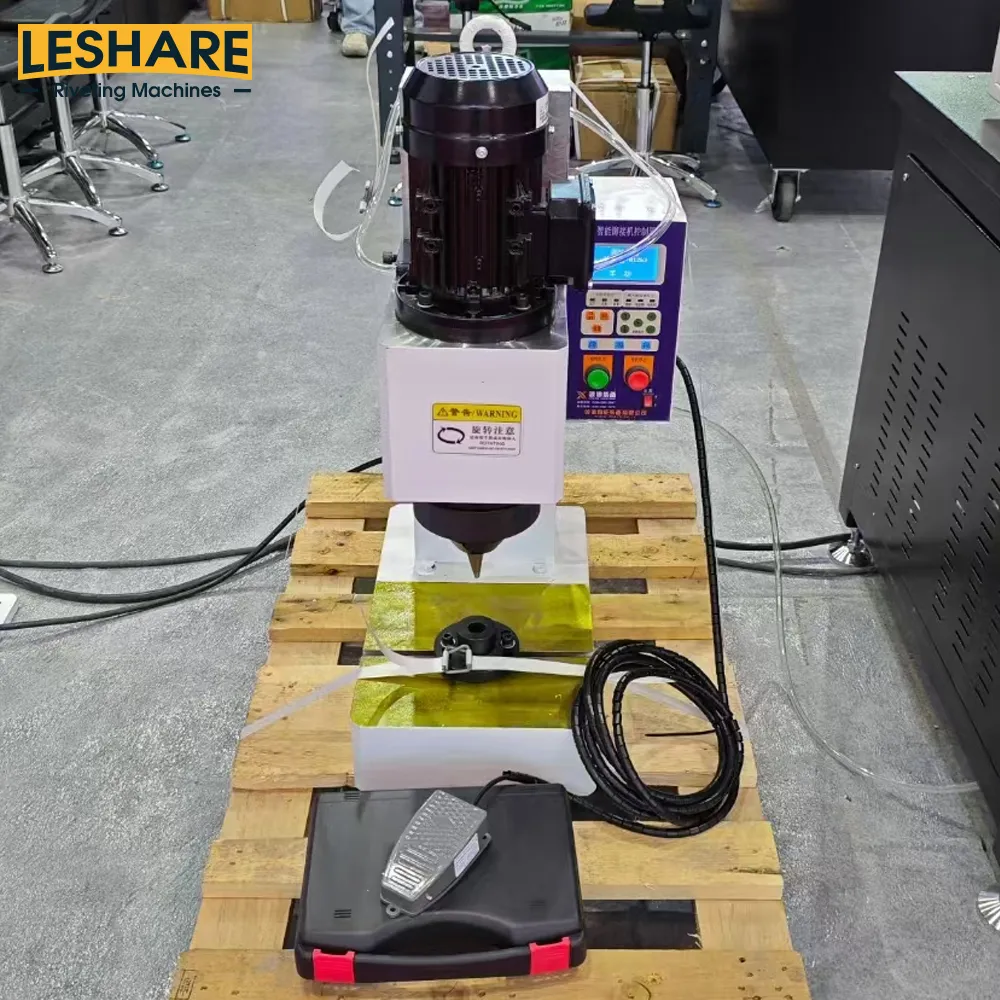
In modern manufacturing environments where precision, speed, and consistency determine competitive advantage, the choice between manual and automated fastening processes has become a critical decision point for production engineers and facility managers. Riveting, one of the oldest and most reliable mechanical joining methods, has undergone significant technological evolution from hand-operated tools to sophisticated automated systems. Understanding the tangible advantages that automatic riveting machines deliver over traditional manual methods is essential for businesses seeking to optimize their assembly operations, reduce production costs, and improve product quality in today's demanding industrial landscape.
The transition from manual riveting to automated systems represents more than just a change in equipment—it fundamentally transforms production capabilities, workforce requirements, and quality assurance protocols. While manual riveting has served manufacturing well for decades, the inherent limitations of human-operated processes create bottlenecks that become increasingly problematic as production volumes scale and quality expectations rise. Automatic riveting machines address these challenges through mechanical precision, programmable control systems, and integration capabilities that manual methods simply cannot match, offering manufacturers a pathway to enhanced operational efficiency and improved bottom-line performance.
Production Speed and Throughput Advantages
Cycle Time Reduction Through Automated Operation
One of the most immediately apparent advantages that automatic riveting machines provide is their ability to complete riveting operations in a fraction of the time required by manual methods. Where a skilled operator might complete ten to fifteen rivets per minute using handheld pneumatic tools, automated systems can consistently process thirty to sixty rivets per minute depending on workpiece complexity and rivet specifications. This dramatic improvement in cycle time translates directly into increased production throughput, allowing manufacturers to meet higher volume demands without proportionally expanding their workforce or facility footprint.
The speed advantage of automatic riveting machines stems from several engineering factors including optimized force delivery profiles, elimination of manual positioning delays, and integrated feed systems that present rivets to the work area without operator intervention. Advanced servo-controlled systems can adjust ram speed dynamically throughout the forming stroke, accelerating through non-critical portions of the cycle while decelerating precisely during material deformation phases to ensure proper rivet formation. This level of process optimization is impossible to achieve with manual riveting, where operator technique and fatigue introduce unavoidable variability in both speed and quality.
Continuous Operation Capability Without Fatigue
Unlike human operators who experience declining performance over extended shifts due to physical fatigue and mental exhaustion, automatic riveting machines maintain consistent operation characteristics throughout production runs regardless of duration. Manual riveting demands significant physical exertion, particularly when working with harder materials or larger rivet sizes, leading to operator fatigue that progressively reduces work speed and increases error rates as shifts progress. This fatigue factor necessitates frequent breaks, shift rotations, and workforce redundancy that adds labor costs while still failing to eliminate performance degradation.
Automated systems eliminate this productivity erosion by providing mechanical consistency that does not degrade over time. An automatic riveting machines operating at the beginning of a production run performs identically to its operation eight hours later, maintaining the same cycle time, force application, and quality output without variation. This consistency enables more accurate production planning, predictable output schedules, and the ability to run extended shifts or continuous operations when market demands require maximum throughput without compromising quality standards.
Elimination of Non-Value-Added Manual Handling
Manual riveting processes involve substantial non-productive time spent on workpiece positioning, rivet selection and loading, tool repositioning, and quality verification activities that add no direct value to the finished product. Studies of manual riveting operations consistently show that actual rivet forming represents only thirty to forty percent of total operator time, with the remainder consumed by preparatory and transitional activities. Automatic riveting machines dramatically reduce or eliminate these non-value-added activities through integrated part fixtures, automatic rivet feeding systems, and programmable positioning mechanisms that execute these functions simultaneously with or immediately following the forming operation.
Modern automatic riveting machines often incorporate multi-axis positioning systems that move the riveting head to programmed locations without manual intervention, part presence verification sensors that confirm proper workpiece placement before initiating cycles, and automatic rivet dispensing mechanisms that eliminate manual loading errors and delays. These integrated capabilities transform riveting from a series of discrete manual steps into a continuous automated process where the only operator intervention required is loading and unloading finished assemblies, fundamentally changing the productivity equation in favor of automated systems.
Quality and Consistency Improvements
Elimination of Operator Skill Variability
Manual riveting quality depends heavily on operator skill, experience, and technique—factors that inevitably vary between individuals and fluctuate within the same operator across different shifts and working conditions. Even highly trained technicians produce rivets with measurable variation in formed head dimensions, shank fill characteristics, and clamp force depending on tool angle, application pressure, dwell time, and dozens of other technique-dependent variables. This human variability makes statistical process control challenging and increases the probability of defects escaping to downstream assembly operations or final products.
Automatic riveting machines eliminate operator skill as a quality variable by executing identical forming cycles according to programmed parameters that remain constant regardless of time, shift, or which technician loads the machine. Once process parameters are validated and programmed, every rivet formed by the automated system receives precisely the same force profile, positioning accuracy, and forming sequence. This repeatability enables manufacturers to achieve significantly tighter process capability indices, reducing defect rates from typical manual riveting levels of several hundred parts per million to levels often below fifty parts per million with properly maintained automated equipment.
Programmable Force Control and Process Monitoring
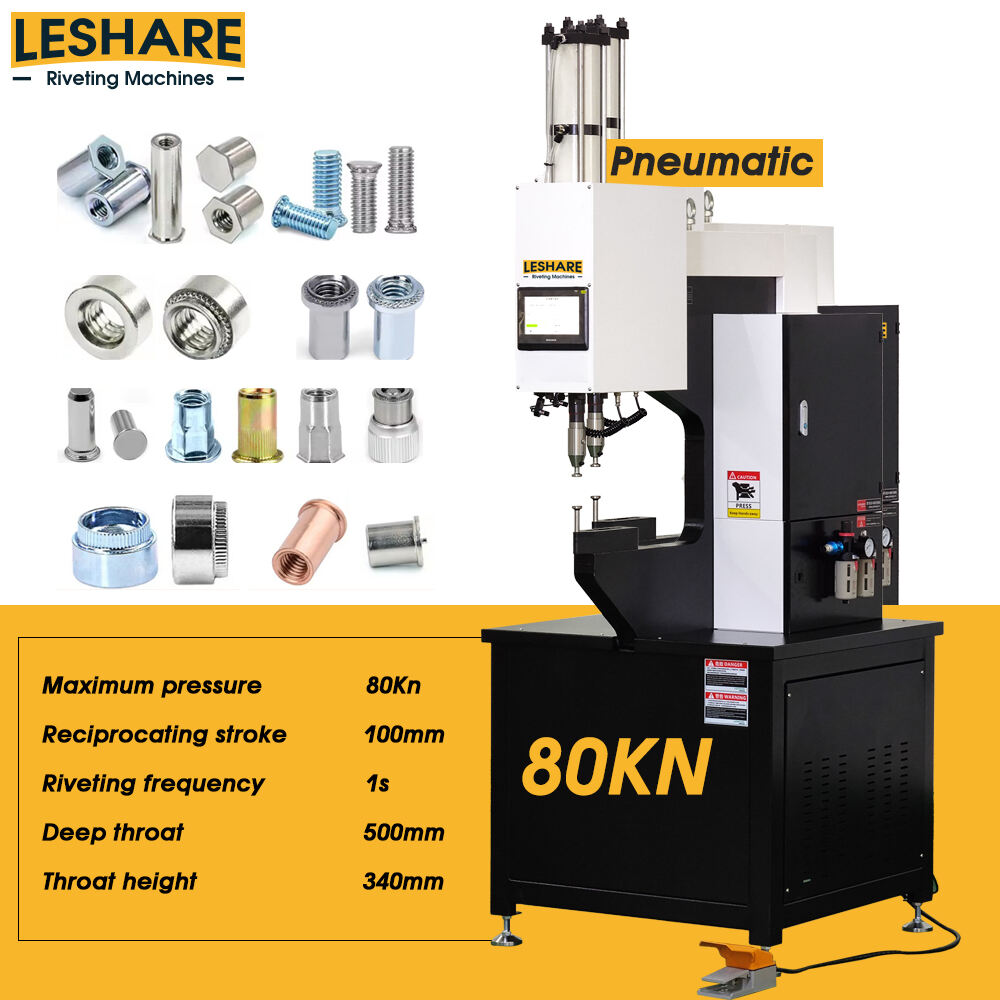
Advanced automatic riveting machines incorporate closed-loop force control systems that continuously monitor and adjust forming pressure throughout each cycle to compensate for material variations, rivet dimensional tolerances, and environmental factors that would cause quality variation in manual operations. These systems can detect anomalies such as missing rivets, incorrect rivet lengths, or material defects in real-time during the forming process and immediately halt operation or flag defective assemblies for removal, preventing defects from progressing through subsequent production stages.
The process monitoring capabilities of automatic riveting machines extend beyond simple force measurement to include displacement tracking, cycle time analysis, and acoustic signature monitoring that collectively provide comprehensive quality assurance far exceeding what manual inspection methods can achieve. Many systems generate digital records of every rivet formed, creating complete traceability documentation that supports quality investigations, customer audits, and continuous improvement initiatives. This level of process documentation and control is practically impossible to achieve with manual riveting methods, where quality verification relies primarily on post-process sampling inspection rather than real-time process validation.
Geometric Precision and Positional Accuracy
Achieving consistent rivet positioning and perpendicularity represents a significant challenge in manual riveting operations, where tool alignment depends entirely on operator hand-eye coordination and steady manipulation under physically demanding conditions. Rivets installed even slightly off-axis or at incorrect positions compromise joint strength, create assembly interference issues, and produce cosmetically unacceptable appearances that may require costly rework or component scrap. The difficulty of maintaining positional accuracy increases exponentially when working with complex assemblies containing multiple rivets in tight spatial arrangements or when riveting must be performed in difficult-to-access locations.
Automatic riveting machines address these positioning challenges through precision mechanical guidance systems and programmable multi-axis positioning that ensure every rivet is formed at the exact specified location with perpendicularity typically maintained within 0.5 degrees or better. Servo-driven positioning axes provide repeatability measured in hundredths of a millimeter, eliminating the cumulative positioning errors that plague manual operations. This geometric precision not only improves joint quality and assembly fit but also enables tighter engineering tolerances in product design, potentially reducing material usage and component weight while maintaining or improving structural performance.
Ergonomic and Safety Benefits
Elimination of Repetitive Strain Injuries
Manual riveting imposes severe ergonomic demands on operators, requiring sustained gripping force, repetitive trigger actuation, tool weight support in awkward positions, and absorption of significant vibration and reaction forces through hands, wrists, and arms. These physical demands make manual riveting one of the highest-risk activities for cumulative trauma disorders including carpal tunnel syndrome, tennis elbow, and shoulder impingement syndrome. Studies document that workers performing manual riveting operations experience musculoskeletal injury rates two to three times higher than manufacturing averages, resulting in lost work time, workers' compensation claims, and long-term disability costs that substantially impact total labor expenses.
Transitioning to automatic riveting machines fundamentally transforms the operator's role from performing the physically demanding forming operation to loading and unloading workpieces—activities that can be ergonomically optimized through proper fixture design and material handling equipment. By removing operators from direct contact with forming forces and vibration, automated systems eliminate the primary causal factors for repetitive strain injuries while simultaneously improving working conditions and job satisfaction. The reduction in injury rates translates directly into lower workers' compensation insurance premiums, reduced absenteeism, and improved workforce retention, creating financial benefits that extend well beyond direct productivity improvements.
Reduced Noise Exposure and Environmental Hazards
Manual pneumatic riveting tools generate noise levels frequently exceeding ninety-five decibels at operator ear position, exposing workers to hazardous sound levels that require hearing protection and limit communication effectiveness in production environments. The impact nature of manual riveting also produces vibration transmitted directly through operator hands and arms, contributing to hand-arm vibration syndrome and associated circulatory disorders. These environmental hazards necessitate extensive personal protective equipment, rotation schedules to limit exposure duration, and ongoing hearing conservation programs that add administrative burden and compliance costs.
While automatic riveting machines still generate significant forces during operation, proper equipment design and enclosure can substantially reduce operator noise exposure compared to handheld tools, often bringing sound levels below eighty-five decibels at operator positions through acoustic dampening and increased distance from the forming operation. The elimination of direct vibration transmission to operators completely removes hand-arm vibration syndrome risk, improving long-term worker health outcomes. These environmental improvements not only enhance workplace safety and regulatory compliance but also make riveting operations more compatible with adjacent work areas that might otherwise require isolation due to noise and vibration concerns.
Improved Workplace Safety Through Automation
Manual riveting operations present numerous safety hazards including pinch points between workpieces and fixtures, flying rivet mandrels or debris, and the potential for tool loss of control resulting in operator injury or workpiece damage. The handheld nature of manual tools requires operators to position their hands in close proximity to forming forces and sharp edges, creating situations where momentary inattention or unexpected workpiece movement can result in serious hand injuries. The combination of physical fatigue, repetitive motion, and proximity to hazards makes manual riveting inherently more dangerous than many other manufacturing operations.
Automatic riveting machines incorporate multiple safety features including two-hand control systems that require deliberate operator action to initiate cycles, light curtains or presence-sensing systems that prevent operation when hands or other objects intrude into the work zone, and mechanical guards that physically separate operators from moving components and forming forces. These engineered safety controls reduce accident rates substantially compared to manual operations while also providing compliance with increasingly stringent machine safety regulations. The safety improvements not only protect workers but also reduce liability exposure, insurance costs, and the production disruptions that inevitably accompany workplace accidents.
Economic and Operational Advantages
Labor Cost Reduction and Workforce Optimization
While automatic riveting machines require higher initial capital investment than manual tooling, the labor cost savings they generate typically provide return on investment within one to three years depending on production volume and labor rates. A single automated riveting system can often replace two to four manual operators while producing higher output, directly reducing per-unit labor costs by fifty to seventy-five percent in high-volume applications. Beyond direct labor reduction, automation enables workforce reallocation from repetitive manual tasks to higher-value activities such as quality inspection, process optimization, and equipment maintenance that better utilize human cognitive capabilities.
The labor advantages of automatic riveting machines extend beyond simple headcount reduction to include decreased training requirements, reduced supervision intensity, and lower turnover costs. Manual riveting skill development requires weeks or months of practice to achieve acceptable proficiency, with significant variation in learning curves between individuals. Automated systems reduce operator training to basic loading procedures and simple machine interface operation that most workers can master in hours rather than weeks. The simplified operator role also reduces job monotony and physical demands, typically resulting in improved retention rates that lower recruiting and training costs over time.
Reduced Material Waste and Rework Costs
The quality consistency that automatic riveting machines provide translates directly into reduced scrap rates and rework costs compared to manual operations. Manual riveting typically generates defect rates requiring rework or scrap on one to three percent of assemblies due to positioning errors, incomplete forming, damage to surrounding materials, or other quality issues. In high-volume production, these defect rates consume substantial material value and require dedicated rework stations staffed with skilled technicians, adding both material and labor costs without producing additional saleable output.
Automated systems reduce these waste costs by consistently producing acceptable rivets on first-pass operations, often achieving defect rates below 0.1 percent once processes are properly validated and maintained. The reduction in rework requirements frees production capacity for additional throughput rather than reprocessing defective work, effectively increasing facility capacity without physical expansion. Additionally, the reduced scrap generation lowers raw material purchasing requirements and waste disposal costs, contributing to improved environmental performance alongside economic benefits.
Enhanced Production Planning and Scheduling Flexibility
The predictable cycle times and consistent output rates that automatic riveting machines deliver enable more accurate production scheduling and improved delivery reliability compared to manual operations where output rates vary with operator availability, skill levels, and fatigue factors. Manufacturing planners can schedule automated riveting capacity with confidence that planned production quantities will be achieved within projected timeframes, reducing the schedule padding and safety stock that manufacturers must maintain to buffer against manual process variability. This scheduling precision improves customer delivery performance while reducing working capital tied up in excess inventory.
Automatic riveting machines also provide greater flexibility to respond to demand fluctuations through extended shifts or weekend operation without the workforce scheduling complexities that manual operations require. When order surges necessitate increased production, automated systems can operate additional hours without proportional labor cost increases simply by extending machine operating time and adding minimal supervision. This operational flexibility enables manufacturers to capture revenue opportunities that might otherwise be declined due to capacity constraints, improving overall business responsiveness and competitiveness in dynamic market conditions.
Integration and Industry 4.0 Capabilities
Data Collection and Process Analytics
Modern automatic riveting machines function as sophisticated data generation platforms that continuously capture detailed process parameters including applied forces, displacement profiles, cycle times, and quality verification results for every rivet formed. This comprehensive data collection enables statistical process analysis, trend identification, and predictive maintenance capabilities that are simply unattainable with manual riveting operations. Manufacturing engineers can analyze this data to optimize process parameters, identify emerging quality issues before they generate significant defects, and demonstrate process capability to customers and regulatory authorities through objective quantitative evidence.
The integration of automatic riveting machines with manufacturing execution systems and enterprise resource planning platforms creates digital production ecosystems where riveting operations are fully visible and controllable through centralized interfaces. Production managers can monitor equipment utilization, identify bottlenecks, and track key performance indicators in real-time across multiple machines or production lines from single dashboards. This visibility enables data-driven decision making that continuously improves operational efficiency and supports lean manufacturing initiatives aimed at eliminating waste and maximizing value-added activity throughout production processes.
Automated Quality Documentation and Traceability
Industries such as aerospace, medical devices, and automotive manufacturing increasingly require complete traceability documentation proving that every critical fastener was installed correctly according to validated procedures. Manual riveting operations struggle to provide this level of documentation, typically relying on sampling inspection combined with paper-based traveler documents that are labor-intensive to maintain and vulnerable to recording errors. This documentation challenge becomes particularly acute when regulatory authorities or customers demand proof of compliance years after production, requiring manufacturers to maintain extensive paper archives with uncertain reliability.
Automatic riveting machines address these traceability requirements by generating digital records automatically for every rivet installed, typically including date, time, operator identification, process parameters used, quality verification results, and component serial numbers when integrated with barcode or RFID tracking systems. These records are stored in secure databases that enable instant retrieval and analysis years after production, providing definitive proof of compliance that satisfies the most stringent audit requirements. The elimination of manual documentation tasks reduces administrative labor while improving record accuracy and reliability, creating value that extends far beyond the immediate production process.
Compatibility with Collaborative Manufacturing Environments
The evolution toward flexible manufacturing systems where equipment, robots, and human workers collaborate dynamically requires fastening technologies capable of integration within these complex environments. Automatic riveting machines designed with modern communication protocols and safety systems can function as collaborative workstations within larger automated assembly cells, coordinating their operations with robot material handlers, vision inspection systems, and other automated equipment through standardized industrial communication networks. This integration capability enables manufacturers to design production systems that combine the efficiency of automation with the adaptability required to handle product variations and design changes.
The programmable nature of automatic riveting machines supports the rapid changeover capabilities that modern manufacturing demands, allowing production systems to switch between different product configurations through software changes rather than extensive mechanical adjustments. Recipe management systems store validated parameter sets for different applications, enabling operators to select appropriate programs through simple interface selections rather than manual machine adjustments that consume valuable production time. This flexibility allows manufacturers using automatic riveting machines to economically serve diverse product portfolios including low-volume specialty items alongside high-volume standard products, improving asset utilization across varied market demands.
FAQ
What is the typical payback period for investing in automatic riveting machines compared to continuing with manual riveting methods?
The payback period for automatic riveting machines varies significantly based on production volume, labor rates, and application complexity, but most manufacturers experience return on investment within eighteen to thirty-six months. High-volume operations with production rates exceeding several thousand rivets daily often achieve payback in twelve to eighteen months through direct labor savings alone, while lower-volume applications might extend to three years when considering the full range of benefits including quality improvements, reduced rework costs, and decreased worker compensation expenses. The calculation should include not only direct labor displacement but also savings from reduced scrap, improved throughput, lower supervision requirements, and decreased training costs to capture the complete economic impact.
Can automatic riveting machines handle the same range of rivet types and sizes that manual methods accommodate?
Modern automatic riveting machines accommodate extensive ranges of rivet types including solid rivets, semi-tubular rivets, blind rivets, and self-piercing rivets across diameter ranges from two millimeters to over ten millimeters depending on machine capacity. While extremely large rivets or highly specialized fasteners might still require manual installation, the vast majority of industrial riveting applications fall well within automated system capabilities. Many automatic riveting machines feature quick-change tooling systems that enable switching between different rivet sizes in minutes rather than hours, providing flexibility that approaches or exceeds manual methods while maintaining the consistency and speed advantages of automation.
What maintenance requirements do automatic riveting machines have compared to manual riveting tools?
Automatic riveting machines require more structured preventive maintenance programs than manual tools but typically generate lower total maintenance costs over equipment lifetime due to reduced component wear from optimized force profiles and controlled operating conditions. Typical maintenance schedules include daily inspection and lubrication of critical wear components, weekly verification of positioning accuracy and force calibration, and monthly replacement of consumable items such as rivet feed mechanisms and forming dies. While these maintenance requirements demand more technical skill than manual tool service, the scheduled nature of automated system maintenance is easier to plan and budget than the reactive repairs common with manual tools that experience unpredictable failures from operator misuse and variable working conditions.
How difficult is it to train operators to work with automatic riveting machines if they have only manual riveting experience?
Training operators with manual riveting experience to work with automatic riveting machines typically requires only two to five days of structured instruction covering machine operation procedures, safety protocols, basic troubleshooting, and quality verification methods. The transition is generally easier than learning manual riveting initially because automated systems remove the complex hand-eye coordination and technique development that manual methods require, replacing these skills with straightforward procedural steps and interface interactions. Most manufacturers find that operators adapt quickly and actually prefer automated systems due to reduced physical demands and the satisfaction of operating sophisticated equipment, though some initial resistance may occur among workers who identify strongly with their manual skills and fear technology displacement.
Table of Contents
- Production Speed and Throughput Advantages
- Quality and Consistency Improvements
- Ergonomic and Safety Benefits
- Economic and Operational Advantages
- Integration and Industry 4.0 Capabilities
-
FAQ
- What is the typical payback period for investing in automatic riveting machines compared to continuing with manual riveting methods?
- Can automatic riveting machines handle the same range of rivet types and sizes that manual methods accommodate?
- What maintenance requirements do automatic riveting machines have compared to manual riveting tools?
- How difficult is it to train operators to work with automatic riveting machines if they have only manual riveting experience?