 EN
EN

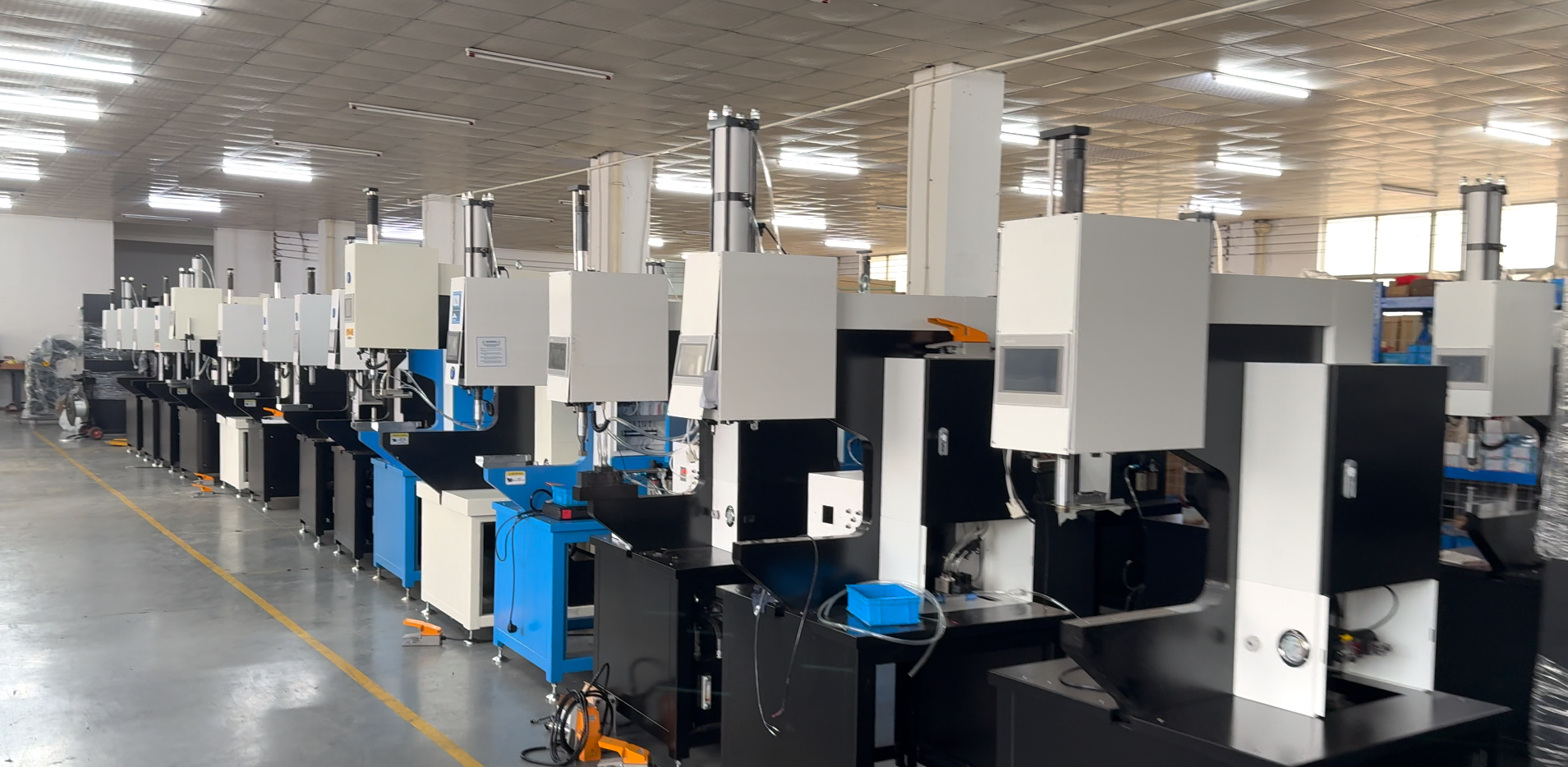
Selecting the right automatic riveting machines for your production line is a critical decision that directly impacts assembly quality, throughput efficiency, and long-term operational costs. As manufacturers face increasing pressure to deliver precision-fastened components at competitive rates, the evaluation process must extend beyond basic machine specifications to encompass workpiece compatibility, process flexibility, and integration capabilities within existing manufacturing systems. Understanding how to systematically assess automatic riveting machines ensures that your investment aligns with both current production requirements and future scalability objectives.
The evaluation framework for automatic riveting machines must address multiple technical dimensions simultaneously, including force capacity, tooling versatility, control precision, and operational reliability. Whether your assembly operations involve automotive subframes, aerospace structural components, electronics enclosures, or HVAC ductwork, each application presents distinct material combinations, joint configurations, and quality validation requirements. This comprehensive guide walks you through the systematic evaluation methodology that industrial engineers and production managers should employ when assessing automatic riveting machines, ensuring that the selected equipment delivers measurable performance improvements while maintaining compliance with industry-specific quality standards and safety regulations.
Understanding Your Assembly Process Requirements
Material Characteristics and Joint Configuration Analysis
The foundational step in evaluating automatic riveting machines begins with a thorough analysis of the materials being joined and the joint configurations required in your assembly processes. Different material combinations demand varying force profiles, deformation control parameters, and tooling approaches. When working with aluminum alloys commonly found in transportation equipment, the riveting machine must deliver controlled plastic deformation without causing work hardening or microstructural damage that could compromise joint integrity. Steel assemblies, particularly those involving high-strength grades, require significantly higher forming forces and often benefit from machines with enhanced rigidity and thermal management capabilities.
The geometric complexity of your joint configurations directly influences the type of automatic riveting machines best suited for your operations. Single-sided access applications, such as closed-section assemblies in appliance manufacturing, necessitate self-piercing or blind riveting capabilities that many standard orbital or radial riveting machines cannot accommodate. Multi-layer assemblies with varying thicknesses present challenges in achieving uniform material flow and proper clinch formation across all layers. Assess whether your typical workpieces involve flat sheet metal joints, tubular connections, or complex three-dimensional assemblies, as each configuration type imposes distinct accessibility requirements and tooling constraints on the riveting equipment.
Production Volume and Cycle Time Expectations
Production volume targets and required cycle times establish the performance baseline against which automatic riveting machines must be evaluated. High-volume automotive component manufacturing, where individual assembly lines may process thousands of units per shift, demands machines with rapid indexing capabilities, minimal setup time between workpieces, and robust construction that maintains precision under continuous operation. Calculate your required rivets-per-minute rate by analyzing your takt time, the number of rivets per assembly, and any quality inspection intervals. This calculation reveals whether pneumatic, hydraulic, or servo-electric drive systems offer the optimal balance between speed, control precision, and energy efficiency for your specific application.
Beyond raw cycle time, consider the operational flexibility required to accommodate product mix variations and changeover frequency. Facilities producing multiple product variants on shared equipment benefit significantly from automatic riveting machines with programmable force profiles, quick-change tooling systems, and recipe management capabilities that minimize downtime during product transitions. Evaluate whether your production environment follows dedicated manufacturing lines for single products or flexible manufacturing cells handling diverse assemblies. The latter scenario places premium value on machines with intuitive programming interfaces, comprehensive sensor feedback systems, and modular tooling platforms that reduce setup complexity and operator training requirements.
Quality Standards and Inspection Requirements
Quality assurance expectations fundamentally shape the evaluation criteria for automatic riveting machines, as different industries impose varying levels of joint integrity verification and traceability documentation. Aerospace and medical device manufacturing typically mandate 100% inspection protocols with comprehensive data logging for every riveted joint, requiring machines equipped with integrated force-displacement monitoring, statistical process control capabilities, and digital traceability systems. Consumer electronics assembly may prioritize cosmetic appearance and dimensional consistency, necessitating precise depth control and minimal surface marking capabilities in the riveting equipment.
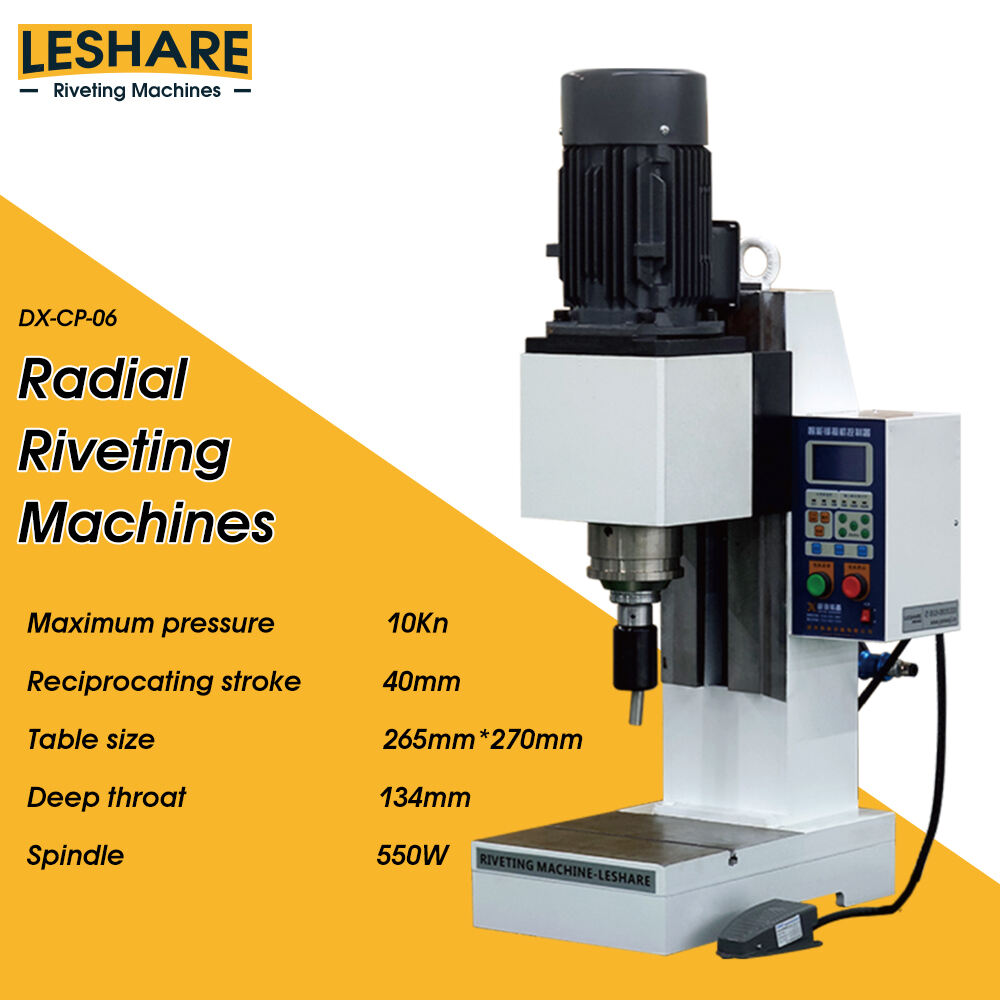
Determine the specific quality validation methods your operations employ, whether destructive testing of sample joints, non-destructive ultrasonic or radiographic inspection, or in-process monitoring of riveting parameters. Automatic riveting machines with real-time process monitoring can detect anomalies such as insufficient material flow, tool wear progression, or workpiece positioning errors before defective assemblies advance to subsequent production stages. Evaluate whether the machine's control system provides adequate sensor integration points, data resolution, and alarm management functionality to support your quality assurance protocols without requiring extensive custom engineering or third-party monitoring equipment.
Technical Specifications and Performance Capabilities
Force Capacity and Energy Delivery Systems
The force generation capacity of automatic riveting machines represents a primary specification that must align with the mechanical demands of your specific riveting operations. Radial riveting machines typically specify their capacity in kilonewtons, with common industrial models ranging from 5kN for light electronics assembly to 100kN for heavy structural applications. However, force capacity alone provides insufficient information without understanding the force-displacement characteristics throughout the riveting cycle. Evaluate whether the machine delivers constant force, programmable force ramping, or adaptive force control that responds to real-time material feedback during the forming process.
Different energy delivery systems in automatic riveting machines offer distinct advantages depending on application requirements. Pneumatic systems provide cost-effective solutions for moderate-force applications with excellent speed characteristics but limited force modulation precision. Hydraulic drives deliver high forces with good controllability, making them suitable for heavy-duty structural riveting, though they introduce maintenance complexity and potential contamination concerns in clean manufacturing environments. Servo-electric systems represent the premium option, offering precise force and position control, comprehensive programming flexibility, and minimal maintenance requirements, though at higher initial investment costs. Assess your application against these trade-offs, considering factors such as available utilities, environmental cleanliness requirements, and the importance of force profile customization.
Tooling Versatility and Changeover Efficiency
Tooling flexibility directly impacts the operational efficiency and application range of automatic riveting machines within your facility. Examine the machine's tooling interface design to understand how easily different rivet sizes, head styles, and material types can be accommodated. Quick-change tooling systems that allow operators to swap forming dies, anvils, and feed mechanisms in minutes rather than hours dramatically reduce setup time and support agile manufacturing strategies. Evaluate whether the machine manufacturer offers comprehensive tooling libraries covering the rivet specifications common in your industry, or whether custom tooling development will be required for your specific applications.
The mechanical design of automatic riveting machines influences their adaptability to various workpiece geometries and access constraints. C-frame configurations provide excellent workpiece accessibility from multiple angles, making them ideal for large, irregularly shaped assemblies where the riveting machine must reach into recessed areas. Bench-mounted or inline configurations optimize floor space utilization in high-volume production lines but may limit workpiece size and geometry flexibility. Consider whether your operations would benefit from machines with adjustable throat depth, rotating work tables, or multi-axis positioning systems that enhance accessibility without requiring complex workpiece fixturing.
Control Systems and Integration Capabilities
Modern automatic riveting machines incorporate sophisticated control systems that extend beyond simple on-off operation to provide comprehensive process management and quality assurance functionality. Evaluate the machine's human-machine interface for intuitive operation, particularly if your workforce includes operators with varying technical backgrounds. Touchscreen interfaces with graphical process visualization, guided setup wizards, and multi-language support reduce training time and minimize operator errors. Assess whether the control system supports recipe-based operation, allowing storage of hundreds of different process parameters sets that can be recalled with simple part number entry, eliminating manual parameter adjustment and associated setup errors.
Integration with broader manufacturing execution systems represents an increasingly important evaluation criterion as factories adopt Industry 4.0 principles and connected manufacturing architectures. Examine whether the automatic riveting machines under consideration offer standard industrial communication protocols such as Ethernet/IP, PROFINET, or OPC UA that facilitate seamless data exchange with supervisory control systems, quality databases, and enterprise resource planning platforms. Real-time production monitoring, predictive maintenance alerts based on tool wear algorithms, and automatic documentation of process parameters for every riveted joint provide operational visibility that supports continuous improvement initiatives and regulatory compliance requirements in regulated industries.
Operational Considerations and Total Cost Analysis
Installation Requirements and Facility Integration
The physical installation requirements of automatic riveting machines extend beyond simple floor space allocation to encompass utility requirements, structural considerations, and integration with material handling systems. Assess the machine's footprint in relation to available production floor space, but also consider the working envelope required for workpiece loading, operator access, and maintenance activities. Heavy-duty riveting machines may require reinforced floor foundations to manage vibration transmission and maintain long-term positional accuracy, particularly in facilities with suspended floors or seismic considerations. Evaluate utility requirements including electrical power capacity and characteristics, compressed air supply volume and quality, and any hydraulic system cooling needs.
Material flow efficiency significantly impacts the overall productivity gains achievable through automatic riveting machines. Consider how the equipment will integrate with upstream and downstream processes, whether through manual workpiece transfer, conveyor systems, or robotic material handling. Machines designed for inline integration typically feature standardized mounting interfaces, adjustable working heights, and coordinated control interfaces that simplify synchronization with adjacent process equipment. Standalone work cells may benefit from machines with integrated workpiece positioning systems, automated rivet feeding, and quality verification stations that minimize operator intervention and reduce cycle time variability.
Maintenance Accessibility and Service Requirements
Long-term operational reliability of automatic riveting machines depends heavily on accessibility for routine maintenance and the availability of technical support resources. Examine the machine's design for maintenance-friendly features such as removable access panels, clearly labeled lubrication points, and modular component construction that facilitates replacement of wear items without extensive disassembly. Evaluate the machine manufacturer's documentation quality, including detailed maintenance schedules, illustrated parts catalogs, and troubleshooting guides that empower in-house maintenance teams to resolve common issues without external service calls.
The availability and responsiveness of technical support services represents a critical evaluation factor, particularly for facilities operating continuous or multi-shift production schedules where equipment downtime directly impacts delivery commitments. Investigate the manufacturer's service infrastructure, including regional service centers, spare parts inventory locations, and remote diagnostic capabilities that enable rapid response to technical issues. Consider whether the manufacturer offers preventive maintenance programs, operator training services, and application engineering support that can optimize machine performance for your specific assembly requirements. Assess the typical lead times for consumable tooling components such as forming dies and feeding mechanisms, as extended procurement cycles for these wear items can create production bottlenecks if not properly managed through inventory planning.
Energy Efficiency and Environmental Impact
Energy consumption characteristics of automatic riveting machines contribute to both operational costs and corporate sustainability objectives. Servo-electric machines typically demonstrate superior energy efficiency compared to pneumatic or hydraulic alternatives, consuming power only during actual riveting cycles rather than maintaining continuous pressure in accumulators or compressed air systems. Calculate the anticipated energy cost over the machine's expected service life based on your production volume, local utility rates, and the specific power consumption specifications provided by manufacturers. This analysis often reveals that higher initial investment in energy-efficient technology generates positive return through reduced operating costs within typical capital equipment depreciation periods.
Environmental considerations extend beyond energy consumption to encompass noise emissions, lubricant requirements, and waste generation. Pneumatic automatic riveting machines can generate significant noise levels during exhaust cycles, potentially requiring acoustic enclosures or hearing protection in work areas. Hydraulic systems introduce potential environmental contamination risks if fluid leaks occur, creating housekeeping challenges and possible regulatory compliance issues in food-grade or pharmaceutical manufacturing environments. Evaluate whether the machine's design incorporates features such as integrated mist collection for lubricant aerosols, noise-dampening exhaust mufflers, or closed-loop hydraulic systems with leak detection that support clean manufacturing practices and worker comfort.
Validation Testing and Performance Verification
Trial Production and Application Testing
Conducting comprehensive trial production with candidate automatic riveting machines provides invaluable validation data that paper specifications cannot deliver. Whenever possible, arrange to test your actual production components on prospective machines, either through manufacturer demonstration facilities or equipment trial programs. This hands-on evaluation reveals practical considerations such as workpiece loading ergonomics, cycle time achievability with real parts rather than ideal test samples, and the adequacy of quality monitoring systems for detecting actual defect modes that occur in your assemblies. Document process parameters, joint quality measurements, and operator feedback systematically to enable objective comparison across multiple machine options.
The trial production phase should specifically test edge cases and challenging scenarios that represent the limits of your application requirements. Include workpieces with maximum and minimum material thicknesses, parts with dimensional variations at the upper tolerance limits, and any special configurations such as pre-coated materials or dissimilar metal combinations that may present unique forming challenges. Evaluate the machine's ability to accommodate these variations without extensive parameter adjustment or operator intervention. Request that automatic riveting machines under consideration process sufficient sample volume to assess consistency over multiple cycles, revealing any drift in process parameters or quality metrics that could indicate inadequate process stability for production implementation.
Quality Validation and Joint Integrity Assessment
Comprehensive quality validation of joints produced during trial runs provides essential evidence of machine capability to meet your assembly standards. Employ the same inspection methods used in your production quality assurance protocols, whether dimensional measurement of rivet head formation, peel and shear strength testing of joint samples, or cross-sectioning for metallurgical evaluation of material flow and interface characteristics. Compare results against your established acceptance criteria and industry standards applicable to your products. If the automatic riveting machines include integrated process monitoring, validate the correlation between monitored parameters and actual joint quality through statistical analysis of measured relationships.
Long-term joint reliability often depends on factors not immediately apparent in initial quality testing, such as residual stress distribution, work hardening effects, or potential for galvanic corrosion in dissimilar metal joints. Consider conducting accelerated aging tests on sample assemblies produced during equipment trials, subjecting them to thermal cycling, vibration exposure, or corrosive environments representative of actual service conditions. This extended validation provides confidence that the riveting process parameters achievable with candidate machines will deliver durable assemblies throughout their intended service life. Document any quality concerns or borderline results discovered during validation testing, and discuss potential process optimization approaches with equipment manufacturers before making final selection decisions.
Process Capability and Statistical Analysis
Statistical process capability analysis transforms subjective quality impressions into quantitative metrics that support objective comparison of automatic riveting machines. Calculate process capability indices such as Cp and Cpk based on measured quality characteristics from trial production runs, comparing these values against the capability requirements established in your manufacturing specifications. Machines demonstrating Cpk values below 1.33 for critical quality characteristics may require extensive process optimization or tighter incoming material specifications to achieve acceptable production yields, impacting total cost of ownership beyond the equipment purchase price.
Analyze the sources of process variation observed during trial runs to understand whether variability stems from the machine's inherent repeatability, workpiece positioning inconsistencies, or material property variations. Automatic riveting machines with superior inherent repeatability enable tighter process control and reduce the sensitivity to upstream process variations, potentially simplifying fixturing requirements and reducing scrap rates. Request gauge repeatability and reproducibility studies from equipment manufacturers, demonstrating the measurement uncertainty associated with the machine's integrated monitoring systems. This data proves essential for establishing appropriate process control limits and determining whether additional offline inspection will be required to ensure product quality compliance.
FAQ
What force capacity should I specify for automatic riveting machines when working with aluminum assemblies?
For typical aluminum assembly applications, automatic riveting machines with force capacities between 8kN and 30kN handle most common rivet sizes and material thicknesses effectively. Lighter consumer electronics assemblies using 2mm-3mm rivets may operate successfully with 5kN-10kN machines, while structural assemblies in transportation equipment with 5mm-6mm rivets often require 20kN-40kN capacity. The specific force requirement depends on rivet diameter, total material stack-up thickness, and the desired head formation characteristics. Always verify force requirements through trial production with your actual components, as material temper conditions and alloy composition significantly influence the forming force needed to achieve proper joint quality.
How do I evaluate whether servo-electric or hydraulic drive systems better suit my application?
Servo-electric automatic riveting machines offer advantages in precision control, energy efficiency, and maintenance simplicity, making them ideal for applications requiring programmable force profiles, clean manufacturing environments, and high process repeatability. Hydraulic systems excel in applications demanding maximum force capacity, continuous heavy-duty operation, and environments where initial investment costs must be minimized. Evaluate your decision based on the force requirements relative to available servo-electric capacities, the importance of energy consumption in your operating cost structure, environmental cleanliness requirements, and the technical capabilities of your maintenance staff. Many facilities find servo-electric systems provide superior total cost of ownership despite higher initial purchase prices through reduced energy costs and maintenance requirements over the equipment's service life.
What integration capabilities should I prioritize when selecting automatic riveting machines for a modern manufacturing environment?
Prioritize automatic riveting machines offering industrial Ethernet communication protocols such as Ethernet/IP, PROFINET, or OPC UA for seamless integration with manufacturing execution systems and enterprise data platforms. Real-time process parameter logging with timestamp correlation enables traceability requirements in regulated industries and supports statistical process control initiatives. Digital I/O interfaces facilitate coordination with material handling automation, while integrated vision systems or bar code readers enable automatic recipe selection based on workpiece identification. Consider machines with remote access capabilities allowing manufacturer technical support to provide diagnostic assistance and software updates without on-site visits, reducing downtime and support costs throughout the equipment lifecycle.
How can I validate that automatic riveting machines will maintain quality consistency across production shifts and operator changes?
Implement a structured validation approach that includes process capability studies across multiple operators and shifts during trial production phases, documenting quality metrics and process parameters to identify any operator-dependent variations. Automatic riveting machines with recipe-based parameter management and minimal manual adjustment requirements demonstrate superior consistency across different operators. Request documentation of gauge repeatability and reproducibility studies from manufacturers, confirming that the machine's integrated monitoring systems provide reliable quality indication independent of operator technique. Establish clear standard operating procedures with visual work instructions during implementation, and verify that the machine's control interface provides adequate feedback to guide operators in detecting and correcting setup errors before production of defective assemblies.
Table of Contents
- Understanding Your Assembly Process Requirements
- Technical Specifications and Performance Capabilities
- Operational Considerations and Total Cost Analysis
- Validation Testing and Performance Verification
-
FAQ
- What force capacity should I specify for automatic riveting machines when working with aluminum assemblies?
- How do I evaluate whether servo-electric or hydraulic drive systems better suit my application?
- What integration capabilities should I prioritize when selecting automatic riveting machines for a modern manufacturing environment?
- How can I validate that automatic riveting machines will maintain quality consistency across production shifts and operator changes?