 EN
EN

Selecting the right orbital riveting machine for your manufacturing operations requires careful evaluation of multiple technical and operational factors that directly impact production efficiency, joint quality, and long-term operational costs. Unlike traditional riveting methods, an orbital riveting machine uses a specialized forming process that creates consistent, high-strength joints through controlled radial pressure application, making the selection criteria fundamentally different from conventional fastening equipment.
The decision-making process for choosing an orbital riveting machine extends beyond basic force capacity and includes critical considerations such as material compatibility, joint accessibility requirements, production volume demands, and integration capabilities with existing manufacturing systems. Understanding these selection aspects ensures optimal equipment performance while avoiding costly operational limitations that could compromise production schedules and quality standards.
Force Capacity and Power Requirements
Maximum Riveting Force Specifications
The force capacity of an orbital riveting machine represents one of the most critical selection parameters, as it determines the range of rivet sizes and material combinations the equipment can effectively process. Force requirements vary significantly based on rivet diameter, material hardness, and joint configuration, with typical industrial applications ranging from 2kN for small electronic assemblies to over 50kN for heavy structural applications.
When evaluating force specifications, consider both the maximum force capability and the precision of force control throughout the riveting cycle. An orbital riveting machine with superior force modulation capabilities can adapt to varying material properties within a single assembly, ensuring consistent joint formation across different rivet locations without over-forming or under-forming issues.
Calculate your force requirements by analyzing the largest rivet diameter you plan to process, factoring in material work-hardening characteristics and any special joint configurations that might require additional forming pressure. Always specify equipment with at least 20% force capacity margin above your calculated requirements to accommodate future production needs and material variations.
Power System Configuration
The power delivery system of an orbital riveting machine directly influences both performance consistency and operational flexibility. Pneumatic systems offer rapid cycle times and simple maintenance but may exhibit force variations due to air pressure fluctuations, while hydraulic systems provide superior force control and higher power density but require more complex maintenance protocols.
Electric servo-driven systems represent the latest advancement in orbital riveting machine technology, offering precise force control, programmable forming profiles, and comprehensive process monitoring capabilities. These systems excel in applications requiring tight process tolerances and detailed quality documentation, though they typically require higher initial investment compared to pneumatic alternatives.
Evaluate your facility's existing utilities and maintenance capabilities when selecting power systems, as each configuration presents different requirements for compressed air quality, hydraulic fluid specifications, or electrical power conditioning that could impact total installation and operating costs.
Material Compatibility and Joint Design Factors
Rivet Material Processing Capabilities
Different orbital riveting machine configurations excel with specific rivet materials, making material compatibility assessment essential for optimal joint quality and equipment longevity. Aluminum rivets require different forming characteristics compared to steel or stainless steel options, with each material presenting unique work-hardening behavior and flow characteristics during the orbital forming process.
High-strength materials such as inconel or titanium demand specialized orbital riveting machine capabilities including enhanced force capacity, precise temperature control, and advanced tooling materials that can withstand the increased forming pressures required for these aerospace-grade materials. Consider the full range of materials you anticipate processing, including potential future requirements that might expand beyond current specifications.
Evaluate the machine's ability to handle coated rivets or specialized surface treatments that may require modified forming parameters or protective measures during processing. Some orbital riveting machine models include programmable forming profiles that can optimize the riveting cycle for different material combinations within the same production run.
Joint Accessibility and Workspace Requirements
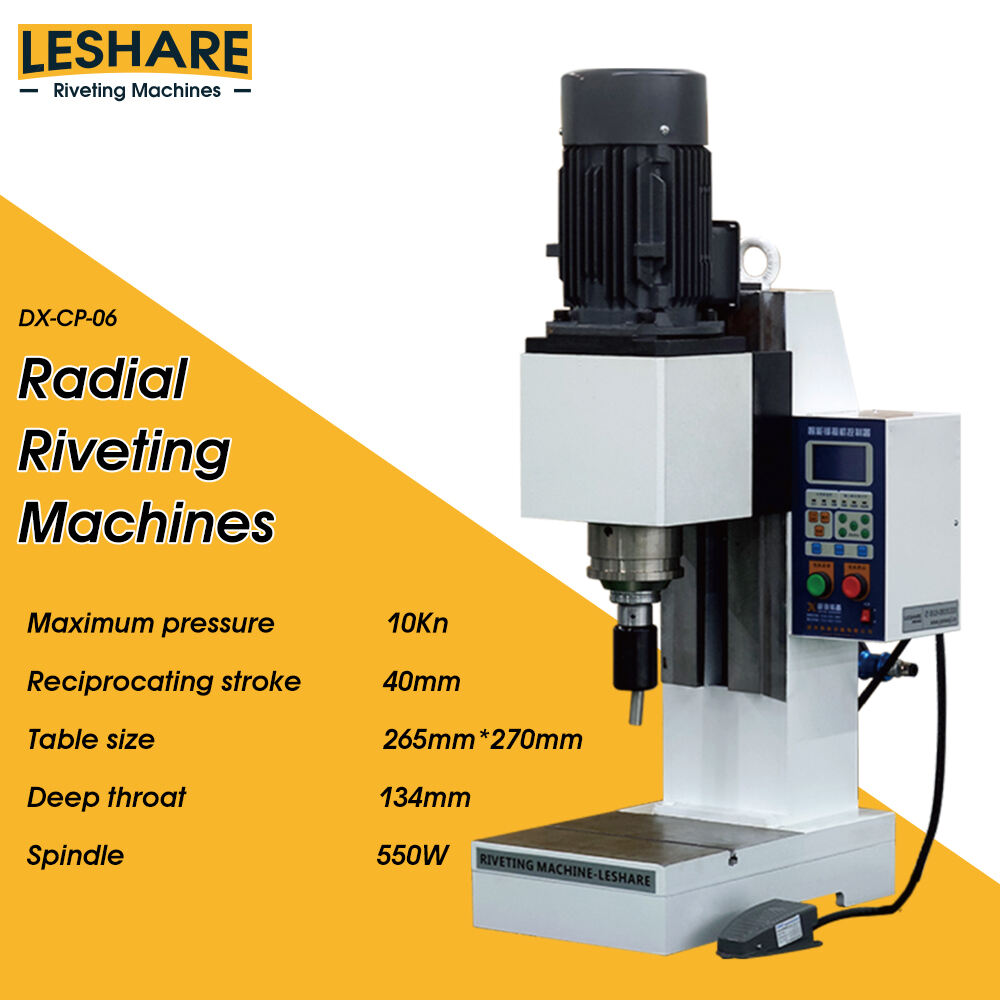
The physical configuration of your assemblies determines the workspace access requirements for your orbital riveting machine, including throat depth, lateral clearance, and vertical reach capabilities. Complex assemblies with deep joint locations or surrounded by other components require machines with extended reach capabilities or specialized tooling configurations.
Consider both the immediate joint accessibility and any future assembly designs that might require different workspace configurations. An orbital riveting machine with modular tooling systems can adapt to varying joint geometries without requiring complete equipment replacement, providing long-term operational flexibility as product designs evolve.
Evaluate clearance requirements for both the riveting head and any associated fixture or workholding equipment, ensuring adequate space for operator access, maintenance activities, and potential automation integration. Some applications benefit from orbital riveting machine configurations with articulating heads or multi-axis positioning capabilities that can access joints from multiple angles.
Production Volume and Cycle Time Considerations
Throughput Capacity Planning
Production volume requirements directly influence the selection of orbital riveting machine features such as cycle time capabilities, automation integration potential, and durability specifications. High-volume operations benefit from machines with rapid cycle times and minimal setup requirements between different rivet configurations, while lower-volume applications might prioritize versatility and ease of changeover.
Calculate your required cycle times based on overall production targets, factoring in setup time, part loading and unloading, and any quality inspection requirements that might extend the total processing time per assembly. An orbital riveting machine with consistent cycle times and predictable performance characteristics enables more accurate production scheduling and capacity planning.
Consider peak production demands and seasonal variations that might require higher throughput capacity than average production levels. Selecting an orbital riveting machine with capacity margins ensures consistent delivery performance even during high-demand periods while avoiding the need for multiple machine investments or overtime operations.
Automation Integration Capabilities
Modern orbital riveting machine designs increasingly include features that support automation integration, from simple part presence sensors to complete robotic integration capabilities. Evaluate your current automation level and future expansion plans when selecting equipment, as retrofit automation additions can be significantly more expensive than integrated solutions.
Consider the communication protocols and control interfaces available on different orbital riveting machine models, ensuring compatibility with existing manufacturing execution systems or planned automation investments. Machines with standardized communication protocols can integrate more easily with upstream and downstream processes, enabling comprehensive production monitoring and control.
Assess the machine's capability for remote monitoring and diagnostic functions, which become increasingly important in automated production environments where immediate operator intervention may not be available. Advanced orbital riveting machine systems include predictive maintenance features and process quality monitoring that can prevent production disruptions and maintain consistent joint quality.
Quality Control and Process Monitoring Features
Joint Quality Verification Systems
Quality assurance capabilities built into an orbital riveting machine provide real-time process monitoring and joint quality verification that traditional riveting methods cannot match. Force monitoring throughout the forming cycle enables detection of incomplete rivet formation, material defects, or tooling wear that could compromise joint integrity.
Advanced orbital riveting machine systems include position feedback and forming displacement measurement that verify proper rivet head formation and joint completion. These monitoring systems can detect variations in material properties, rivet dimensions, or hole preparation quality that might otherwise result in defective assemblies reaching final inspection or customer delivery.
Consider the documentation and traceability requirements for your applications, as some orbital riveting machine configurations provide comprehensive process data recording that supports quality certifications and regulatory compliance requirements. This capability becomes particularly important in aerospace, medical device, and automotive applications where joint quality documentation is mandatory.
Process Parameter Control
The ability to precisely control and repeat forming parameters distinguishes advanced orbital riveting machine systems from basic models, particularly in applications requiring consistent joint properties across large production volumes. Programmable forming profiles allow optimization of the riveting cycle for different material combinations and joint configurations within the same assembly.
Evaluate the machine's capability for storing and recalling different process parameter sets, enabling rapid changeover between different product configurations without manual adjustment procedures that could introduce operator variability. Some orbital riveting machine models include adaptive control systems that automatically adjust forming parameters based on real-time feedback from the riveting process.
Consider the level of process parameter visibility and control required for your operations, as more sophisticated systems provide detailed parameter adjustment capabilities that can optimize joint properties for specific applications. However, this increased capability may require additional operator training and process engineering support to realize the full benefits.
Installation and Maintenance Requirements
Facility Integration Considerations
The installation requirements for an orbital riveting machine extend beyond basic floor space and power connections to include considerations for vibration isolation, utilities access, and integration with existing production workflows. Heavy-duty machines may require reinforced foundations or vibration isolation systems to prevent transmission of forming forces to adjacent equipment or building structures.
Evaluate the space requirements for both the machine and associated support equipment such as air preparation systems, hydraulic power units, or electrical control panels. Some orbital riveting machine configurations can be integrated into existing work cells with minimal facility modifications, while others may require dedicated installation areas with specialized utilities and access provisions.
Consider the ergonomic requirements for operator access and part handling, ensuring adequate clearance for safe operation and efficient workflow. The orbital riveting machine installation should support smooth material flow and minimize operator fatigue through proper working height and access positioning.
Maintenance Accessibility and Service Requirements
Maintenance accessibility features of an orbital riveting machine significantly impact long-term operating costs and production availability, making these considerations important selection criteria. Machines designed with accessible service points, modular component replacement, and clear maintenance procedures require less downtime and specialized service support.
Evaluate the availability of replacement parts, service documentation, and technical support from the machine supplier, as these factors directly impact your ability to maintain consistent production schedules. Some orbital riveting machine suppliers provide comprehensive maintenance training and support programs that can reduce dependence on external service providers.
Consider the preventive maintenance requirements and schedules for different machine configurations, as some systems require more frequent service intervals or specialized maintenance procedures that could impact production scheduling. Advanced diagnostic systems can predict maintenance needs and schedule service activities during planned production breaks, minimizing unexpected downtime.
FAQ
What is the typical force range needed for different rivet sizes in orbital riveting applications?
Force requirements for orbital riveting typically range from 1-3kN for 3mm diameter rivets up to 40-60kN for 12mm diameter rivets, depending on material hardness and joint configuration. Aluminum rivets generally require 30-40% less force than equivalent steel rivets, while stainless steel may require 20-30% more force than carbon steel options.
How do I determine if my existing facility can support a specific orbital riveting machine installation?
Facility compatibility requires evaluation of floor loading capacity, vibration tolerance, utility requirements including compressed air quality and electrical power specifications, and adequate clearance for operation and maintenance access. Most industrial facilities can accommodate orbital riveting machines up to 25kN capacity with standard utilities, while larger machines may require foundation reinforcement and dedicated power supplies.
What are the main advantages of servo-electric orbital riveting machines compared to pneumatic systems?
Servo-electric orbital riveting machines provide superior force control precision, programmable forming profiles, comprehensive process monitoring, and consistent performance regardless of facility air pressure variations. While pneumatic systems offer faster cycle times and lower initial costs, electric systems excel in applications requiring tight process control and quality documentation capabilities.
How important is process monitoring capability when selecting an orbital riveting machine for automotive applications?
Process monitoring is critical for automotive applications due to quality traceability requirements and high-volume consistency demands. Advanced monitoring systems detect variations in joint formation, provide real-time quality feedback, and generate documentation required for automotive quality standards, making these features essential rather than optional for automotive production environments.
Table of Contents
- Force Capacity and Power Requirements
- Material Compatibility and Joint Design Factors
- Production Volume and Cycle Time Considerations
- Quality Control and Process Monitoring Features
- Installation and Maintenance Requirements
-
FAQ
- What is the typical force range needed for different rivet sizes in orbital riveting applications?
- How do I determine if my existing facility can support a specific orbital riveting machine installation?
- What are the main advantages of servo-electric orbital riveting machines compared to pneumatic systems?
- How important is process monitoring capability when selecting an orbital riveting machine for automotive applications?