 EN
EN

Understanding the Revolutionary Impact of Modern Riveting Technology
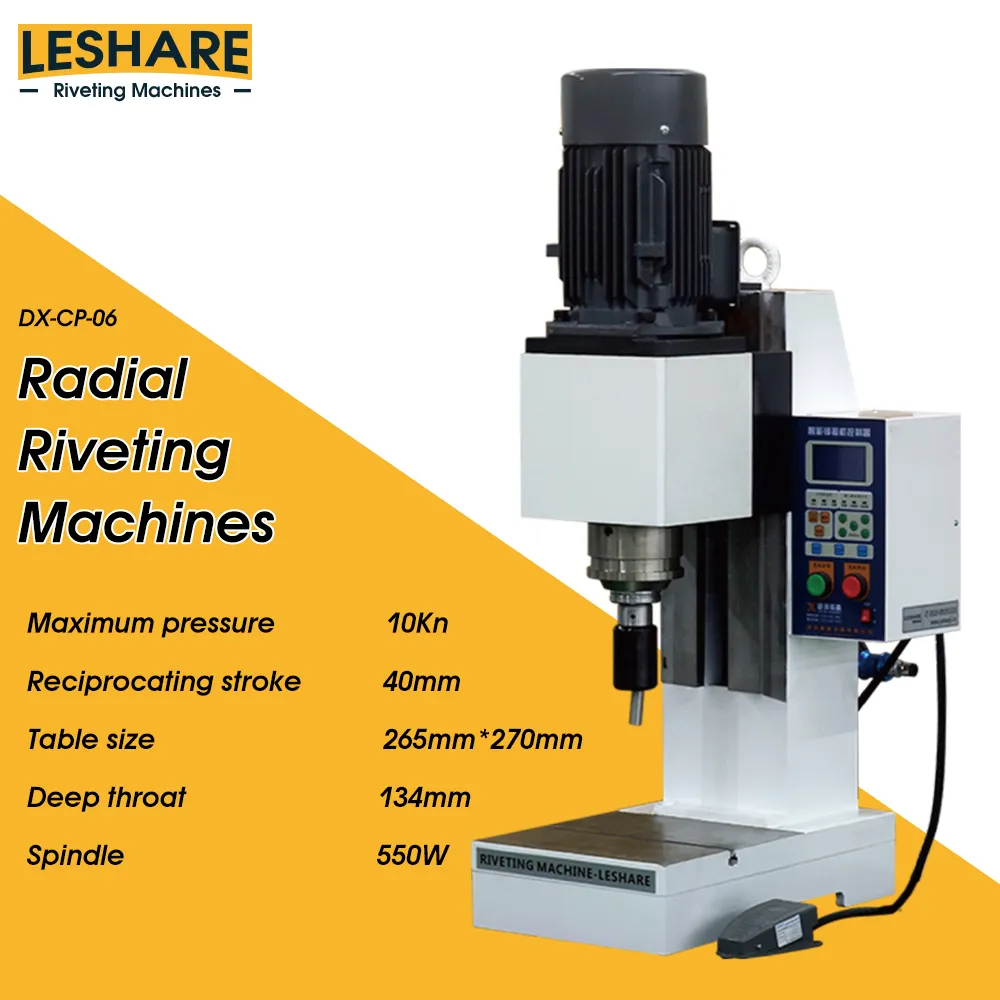
The evolution of industrial fastening has reached new heights with the emergence of pneumatic orbital riveting systems. These sophisticated tools have transformed manufacturing processes across numerous industries, offering unprecedented precision and efficiency. A pneumatic orbital riveter represents the pinnacle of riveting technology, combining the power of compressed air with orbital forming mechanics to create superior joint connections.
Modern manufacturing demands have pushed the boundaries of traditional riveting methods, making the transition to pneumatic orbital riveting systems not just beneficial but essential for companies striving to maintain competitive advantages. These advanced tools have become indispensable in industries ranging from automotive manufacturing to aerospace applications, where joint integrity and consistency are paramount.
Enhanced Operational Efficiency and Productivity
Speed and Precision in Manufacturing
The pneumatic orbital riveter delivers exceptional speed without compromising accuracy. Traditional riveting methods often require multiple strikes or adjustments to achieve proper deformation, but orbital riveters complete the process in one smooth, continuous motion. This revolutionary approach significantly reduces cycle times while ensuring consistent results across hundreds or thousands of operations.
Manufacturing facilities using pneumatic orbital riveters report productivity increases of up to 40% compared to conventional riveting methods. The consistent orbital motion creates uniform pressure distribution, resulting in faster cycle times and reduced material waste. This efficiency translates directly to improved production schedules and reduced labor costs.
Automation Integration Capabilities
Modern pneumatic orbital riveters seamlessly integrate with automated production lines, offering unprecedented flexibility in manufacturing processes. Their precise control systems allow for easy programming and adjustment, making them ideal for both high-volume production and custom applications. The ability to maintain consistent performance throughout extended operation periods makes these tools invaluable in automated environments.
Integration with smart manufacturing systems enables real-time monitoring and adjustment of riveting parameters, ensuring optimal performance and maintaining quality standards. This level of control and adaptability is particularly crucial in Industry 4.0 environments where data-driven decision-making drives production efficiency.
Superior Joint Quality and Reliability
Uniform Pressure Distribution
One of the most significant advantages of a pneumatic orbital riveter is its ability to create uniform pressure distribution during the forming process. The orbital motion ensures that force is applied evenly around the rivet head, resulting in consistent deformation and superior joint strength. This uniform pressure distribution minimizes the risk of material stress concentrations that could lead to premature failure.
The controlled orbital motion also reduces the likelihood of material splitting or cracking, which can be common issues with traditional impact riveting methods. This improved joint integrity is particularly valuable in applications where safety and reliability are critical, such as automotive safety components or aerospace structures.
Enhanced Surface Finish
The pneumatic orbital riveter produces exceptionally clean and aesthetically pleasing finished joints. The smooth, controlled forming process eliminates many of the surface imperfections commonly associated with traditional riveting methods. This superior finish quality is particularly important in visible applications where appearance matters, such as consumer products or architectural elements.
The consistent surface finish also contributes to better corrosion resistance and longer joint life. The absence of surface damage or stress concentrations helps prevent the initiation of corrosion and fatigue failures, leading to improved product durability and reliability.
Ergonomic Benefits and Operator Safety
Reduced Physical Strain
Operating a pneumatic orbital riveter requires significantly less physical effort compared to traditional riveting tools. The orbital forming process eliminates the need for high-impact forces, reducing operator fatigue and the risk of repetitive strain injuries. This ergonomic advantage becomes particularly important in high-volume production environments where operators perform hundreds of riveting operations daily.
The reduced physical strain not only improves operator comfort but also contributes to better quality control. Operators who are less fatigued are more likely to maintain consistent performance and attention to detail throughout their shift, resulting in higher overall product quality.
Noise and Vibration Reduction
The smooth orbital motion of pneumatic orbital riveters produces significantly less noise and vibration compared to traditional impact riveting methods. This reduction in noise and vibration exposure helps protect operator health and creates a more comfortable working environment. Lower noise levels also contribute to improved communication and safety on the production floor.
The reduced vibration levels help prevent hand-arm vibration syndrome (HAVS) and other occupational health issues associated with prolonged exposure to vibrating tools. This makes pneumatic orbital riveters an excellent choice for companies prioritizing worker health and safety.
Cost-Effective Long-Term Investment
Reduced Maintenance Requirements
Pneumatic orbital riveters are designed for durability and minimal maintenance. The smooth orbital motion produces less wear on components compared to impact-based systems, resulting in longer tool life and reduced maintenance costs. Regular maintenance requirements are typically limited to simple lubrication and inspection procedures, minimizing production downtime.
The robust design and high-quality components used in modern pneumatic orbital riveters contribute to exceptional reliability and reduced need for repairs or replacements. This reliability translates to lower total cost of ownership and improved return on investment over the tool's lifetime.
Energy Efficiency and Sustainability
The efficient operation of pneumatic orbital riveters contributes to reduced energy consumption compared to traditional riveting methods. The precise control of the forming process eliminates unnecessary energy waste, while the smooth orbital motion requires less power to achieve the desired results. This energy efficiency aligns with modern sustainability goals and helps reduce operating costs.
Additionally, the improved joint quality and reduced material waste contribute to environmental sustainability by minimizing the need for rework or replacement of failed joints. This efficiency in material usage and energy consumption makes pneumatic orbital riveters an environmentally responsible choice for modern manufacturing operations.
Frequently Asked Questions
What materials can be joined using a pneumatic orbital riveter?
Pneumatic orbital riveters are versatile tools capable of joining a wide range of materials, including various metals, plastics, and composites. They are particularly effective with aluminum, steel, and mixed-material assemblies, providing consistent results across different material combinations.
How long does it take to train operators on pneumatic orbital riveting equipment?
Operator training typically requires only a few days of hands-on instruction. The intuitive controls and automated features of modern pneumatic orbital riveters make them relatively easy to master, though achieving optimal efficiency may require several weeks of practical experience.
What maintenance schedule is recommended for pneumatic orbital riveters?
Regular maintenance for pneumatic orbital riveters typically includes daily lubrication checks, weekly cleaning of air filters, and monthly inspection of wearing parts. Most manufacturers recommend a comprehensive service inspection annually, though specific schedules may vary based on usage intensity and operating conditions.