 EN
EN

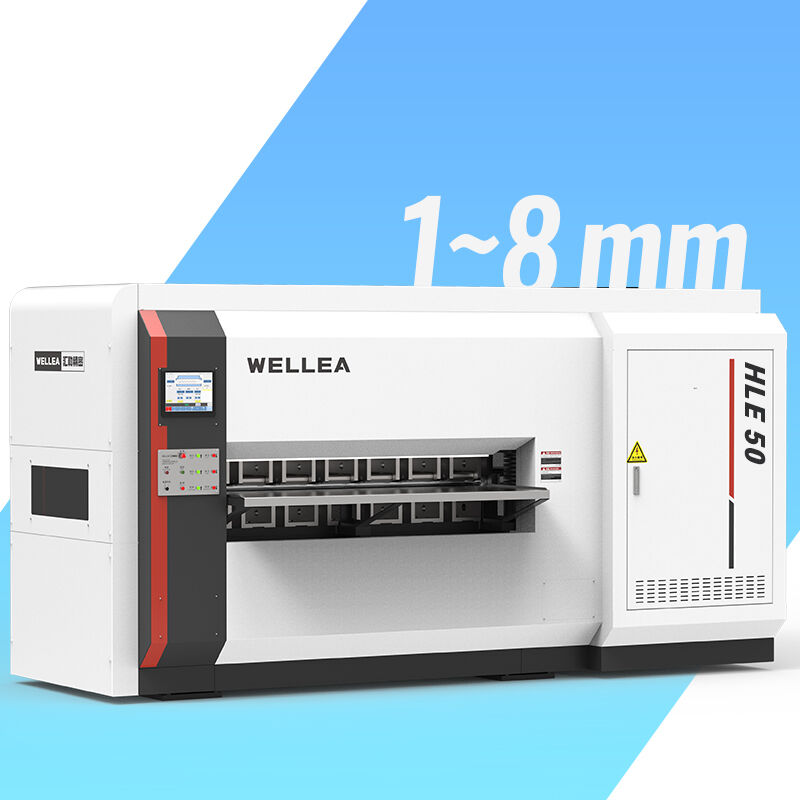
Selecting the right sheet metal leveler is a critical decision that directly impacts production efficiency, product quality, and operational costs in metal fabrication environments. Whether you're processing thin gauge materials for automotive components or heavy plate for structural applications, the leveler you choose must align with your specific material specifications, throughput requirements, and quality standards. Understanding the key selection criteria helps manufacturers avoid costly mistakes and ensures long-term equipment performance that meets evolving production demands.
The complexity of modern metal forming operations demands careful evaluation of multiple technical and operational factors before investing in leveling equipment. From material thickness range and width capacity to leveling precision and automation capabilities, each consideration plays a vital role in determining whether a particular sheet metal leveler will deliver the performance your operation requires. This comprehensive guide examines the most important factors that should influence your selection process, providing practical insights to help you make an informed investment decision that supports both current needs and future growth.
Material Specifications and Processing Requirements
Thickness Range and Material Grades
The primary technical consideration when selecting a sheet metal leveler is ensuring the equipment can handle your specific material thickness range. Different leveler designs are optimized for particular thickness ranges, and choosing equipment outside its ideal operating window leads to suboptimal performance. Precision levelers typically handle materials from 0.3mm to 6mm, while heavy-duty models accommodate thicker plates up to 25mm or more. Your selection must account not only for current production requirements but also anticipated future materials to avoid premature equipment obsolescence.
Material grade significantly influences leveling requirements because different alloys exhibit varying yield strengths, work hardening characteristics, and springback behaviors. High-strength steels, stainless alloys, aluminum, and non-ferrous metals each respond differently to the leveling process. A sheet metal leveler designed for mild steel may lack sufficient roll pressure or adjustability for harder materials. Evaluate whether the equipment specifications match the yield strength range of your material portfolio, and confirm that roll diameter and work roll configuration suit your specific alloy requirements.
Width Capacity and Dimensional Flexibility
Working width capacity determines the maximum sheet dimensions your leveler can process and must accommodate your largest material sizes with adequate margin. Standard industrial sheet metal levelers range from 600mm to over 2500mm in width, with each size category representing different cost and footprint considerations. Selecting equipment with insufficient width capacity forces costly material trimming or multiple passes, while oversized equipment wastes floor space and increases energy consumption. Calculate your typical and maximum material widths, then select a leveler that provides appropriate capacity without excessive overspecification.
Consider dimensional flexibility requirements when evaluating width capacity, particularly if your production involves varied material sizes. Some advanced sheet metal leveler designs incorporate adjustable work zones that optimize performance across different widths, while simpler models maintain consistent settings regardless of material width. For operations processing diverse material sizes, equipment with width-adaptive features delivers better edge quality and reduces setup time. Additionally, confirm that material handling systems, including coil feeders and downstream equipment, match the leveler's width capacity to ensure smooth material flow throughout the production line.
Surface Quality Standards and Finish Requirements
Surface finish preservation is critical in applications where material appearance or coating integrity affects final product quality. The sheet metal leveler you select must maintain existing surface finishes without introducing scratches, roll marks, or other defects. Evaluate roll surface specifications, including material composition and surface hardness, to ensure compatibility with your finish requirements. Chrome-plated work rolls typically suit most applications, while specialized coatings or ceramic rolls may be necessary for sensitive materials like pre-painted stock or polished stainless steel.
Different industries impose varying surface quality standards that directly influence leveler selection criteria. Automotive exposed panels demand Class A surface requirements with zero visible defects, while structural components tolerate minor marking. For applications requiring pristine surface quality, consider sheet metal leveler models with polyurethane backup rolls or specialized roll configurations that minimize contact pressure and distribute loading evenly. Additionally, assess cleaning systems and debris management features, as contaminants trapped between rolls can cause surface damage even on well-designed equipment.
Leveling Precision and Flatness Control Capabilities
Flatness Tolerance Achievement
The fundamental purpose of any sheet metal leveler is achieving specified flatness tolerances, making precision capability the most critical performance factor. Flatness requirements vary dramatically across applications, from general fabrication tolerances of 3-5mm per meter to precision applications demanding 0.5mm per meter or tighter. Understand your specific flatness requirements and verify that prospective equipment can consistently achieve these standards across your full material range. Equipment specifications should clearly state achievable flatness tolerances for different material thicknesses and strengths.
Advanced sheet metal leveler designs incorporate multiple adjustment mechanisms that enable precise flatness control across varying material conditions. Entry and exit roll positioning, individual roll pressure adjustment, and automated leveling parameter systems all contribute to flatness achievement. For demanding applications, consider equipment with closed-loop flatness measurement systems that monitor output quality and automatically adjust leveling parameters to maintain specifications. Such systems reduce operator dependency and ensure consistent results despite material property variations common in production environments.
Stress Relief and Internal Stress Management
Effective leveling extends beyond surface flatness to include internal stress relief, which prevents material distortion during subsequent processing or after final fabrication. A properly selected sheet metal leveler applies controlled plastic deformation through multiple work rolls, redistributing internal stresses accumulated during rolling, slitting, or thermal processing. The number of leveling rolls directly affects stress relief capability, with more rolls generally providing superior stress distribution and more thorough internal stress elimination.
Material with residual internal stress may appear flat immediately after leveling but develop waviness, edge curl, or distortion when cut or formed. This phenomenon is particularly problematic in laser cutting operations where thermal input can trigger stress-related distortion. Evaluate whether the sheet metal leveler incorporates sufficient work rolls and backup support to achieve genuine stress relief rather than merely bending material flat. For critical applications, request sample processing or reference installations where similar materials have been successfully processed to verify stress relief performance.
Edge Wave and Center Buckle Correction
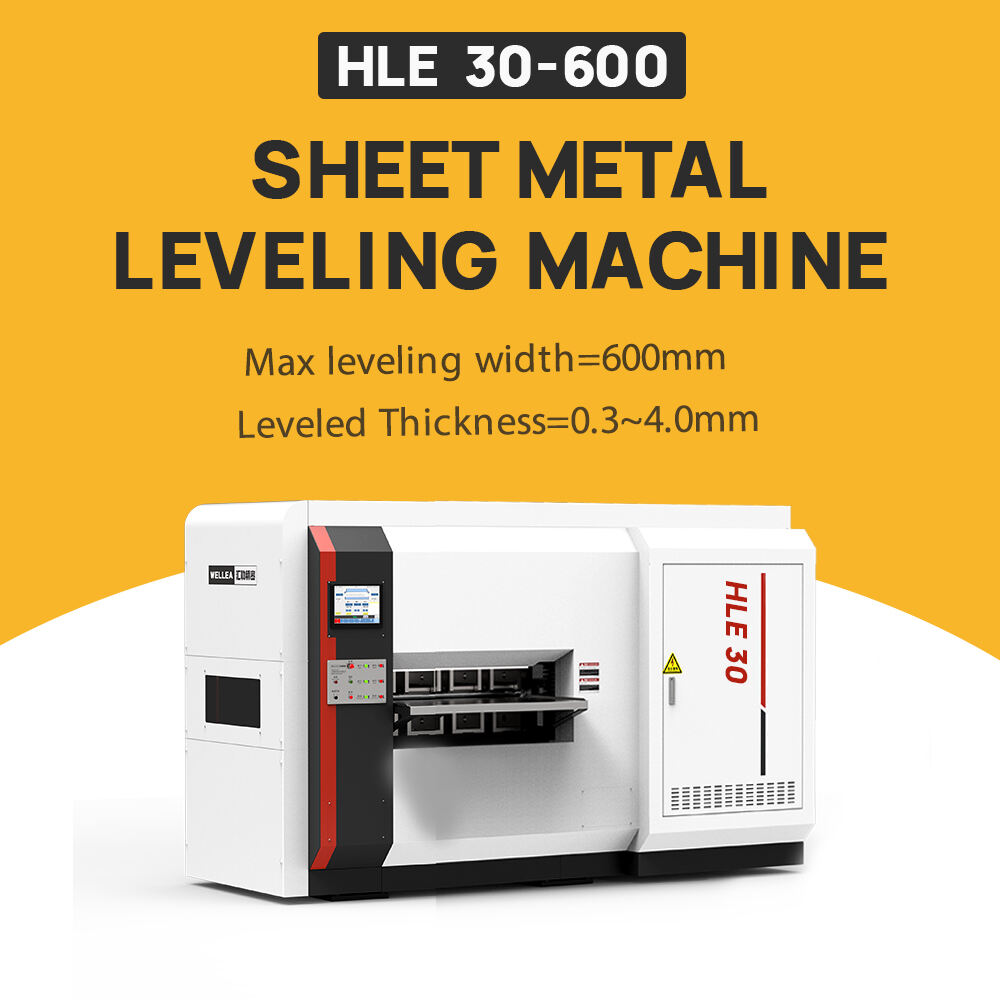
Edge wave and center buckle represent common flatness defects that require specific leveling capabilities to correct effectively. Edge wave occurs when sheet edges are longer than the center, creating rippled edges, while center buckle results from the opposite condition where the center is longer than edges. A capable sheet metal leveler must address both conditions through differential work roll positioning that applies varying elongation across the material width. Equipment lacking adequate edge-to-center adjustment capability cannot correct these defects, limiting usability for materials exhibiting such characteristics.
Modern sheet metal leveler designs offer various edge wave correction mechanisms, from manual adjustment systems to automated profiling capabilities. Manual systems require skilled operator intervention and trial-and-error adjustment, while automated systems use flatness sensors to detect edge conditions and adjust roll positioning accordingly. For high-mix production environments processing varied materials, automated correction systems significantly reduce setup time and improve consistency. Evaluate whether your typical material exhibits edge or center defects and select equipment with appropriate correction capability to address these specific flatness challenges.
Equipment Configuration and Operational Integration
Roll Configuration and Machine Architecture
The fundamental architecture of a sheet metal leveler significantly influences its performance characteristics, operational versatility, and maintenance requirements. Roller levelers employ multiple small-diameter work rolls arranged in staggered upper and lower banks, with each roll contributing incremental bending cycles that eliminate flatness deviations and relieve internal stress. The number of leveling rolls typically ranges from nine to twenty-one or more, with higher roll counts generally providing superior flatness and stress relief but increasing equipment cost and complexity. Carefully evaluate whether your application requires the enhanced performance of high roll count configurations or whether simpler designs suffice.
Roll diameter represents another critical architectural parameter affecting sheet metal leveler performance. Smaller diameter rolls create tighter bending radii that more effectively work thin materials and provide superior stress relief, while larger rolls better withstand the forces involved in processing thick or high-strength materials. Some advanced designs incorporate variable roll diameter configurations that optimize performance across broader material ranges. Additionally, consider backup roll configuration and support structure rigidity, as these elements determine how effectively the leveler maintains precise roll positioning under production loads and directly impact achieved flatness consistency.
Drive System and Speed Capabilities
Processing speed directly affects production throughput and equipment utilization, making drive system capability an important selection factor. Sheet metal leveler drive systems must provide sufficient torque to process materials across the full thickness and strength range while maintaining stable speed control for consistent leveling quality. Standard industrial levelers operate at speeds ranging from 10 to 100 meters per minute, with high-speed models exceeding 150 meters per minute for thin gauge production. Evaluate your throughput requirements and confirm that prospective equipment provides adequate speed capability without compromising leveling quality or creating material handling challenges.
Drive system configuration affects both performance and operational flexibility. Individual motor drives for each roll pair provide superior control and enable advanced leveling strategies, while single motor systems with mechanical distribution offer simpler maintenance but limited adjustment capability. For operations requiring frequent material changes or processing varied products, sheet metal leveler designs with variable speed drives and programmable speed profiles streamline production transitions and optimize processing parameters for different materials. Additionally, consider acceleration and deceleration capabilities, particularly for coil processing applications where frequent starting and stopping occurs.
Automation Level and Control Integration
Modern sheet metal leveler systems offer varying automation levels ranging from manual adjustment machines to fully automated systems with integrated quality monitoring. Manual systems require skilled operators to adjust leveling parameters based on material characteristics and flatness results, while automated systems employ preset programs, adaptive control algorithms, and feedback systems that optimize performance with minimal operator intervention. The appropriate automation level depends on your production environment, operator skill availability, material consistency, and quality requirements.
Advanced automation features significantly enhance sheet metal leveler productivity and consistency in high-volume or high-mix production environments. Programmable material libraries store optimal leveling parameters for different materials, eliminating setup trial-and-error and accelerating changeovers. Adaptive control systems monitor leveling forces, material thickness variations, and flatness results, automatically adjusting parameters to maintain specifications despite material property variations. For integration into automated production lines, confirm that the leveler control system offers appropriate communication protocols and can interface with upstream and downstream equipment for coordinated operation and data exchange.
Operational Considerations and Total Cost Analysis
Footprint Requirements and Installation Constraints
Physical footprint and installation requirements significantly impact sheet metal leveler selection, particularly for facilities with limited floor space or existing layout constraints. Equipment dimensions include not only the leveler itself but also required material entry and exit zones, maintenance access areas, and auxiliary systems. A compact sheet metal leveler design may appear attractive, but inadequate entry and exit zones can create material handling difficulties that negate space savings. Carefully measure available floor space and confirm that prospective equipment fits within existing constraints while providing adequate operational clearances.
Foundation requirements and utility connections represent additional installation considerations that affect total implementation costs. Heavy-duty sheet metal leveler models may require reinforced foundations or isolation pads to manage vibration and equipment weight, while high-speed operations demand robust mounting to maintain alignment precision. Electrical supply capacity, compressed air availability, and hydraulic system requirements must match existing facility infrastructure or require costly upgrades. Request detailed installation specifications including foundation loading, utility requirements, and spatial envelopes early in the selection process to identify potential installation challenges and associated costs.
Maintenance Accessibility and Service Requirements
Long-term operational costs depend heavily on maintenance requirements and service accessibility, making these factors critical selection considerations. A sheet metal leveler with superior initial specifications but difficult maintenance procedures ultimately costs more to operate than well-designed equipment with straightforward service requirements. Evaluate roll replacement procedures, adjustment mechanism accessibility, and bearing service intervals when comparing equipment options. Designs incorporating quick-change roll cartridges or modular bearing assemblies significantly reduce maintenance downtime compared to equipment requiring extensive disassembly for routine service.
Consumable component life and replacement costs directly impact operating expenses over equipment lifetime. Work roll and backup roll life varies based on material processed, with abrasive materials or coated stock accelerating wear. Request specific information on expected roll life for your material types and obtain replacement costs to calculate long-term consumable expenses. Additionally, evaluate whether the sheet metal leveler design incorporates wear monitoring systems or maintenance prediction capabilities that optimize service intervals and prevent unexpected failures. Supplier support capabilities, including parts availability, technical assistance, and service response times, should factor into selection decisions as they significantly affect equipment uptime and operational continuity.
Energy Consumption and Operating Efficiency
Energy consumption represents an ongoing operational cost that accumulates significantly over equipment lifetime, making efficiency an important selection factor particularly for high-utilization operations. Sheet metal leveler energy consumption depends on drive system efficiency, hydraulic system design, and auxiliary component power requirements. Modern equipment incorporating high-efficiency motors, variable frequency drives, and optimized hydraulic circuits consumes substantially less energy than older designs. Request specific power consumption data for your typical operating conditions and calculate projected energy costs to compare total ownership costs between equipment options.
Beyond direct energy consumption, consider operational efficiency factors that affect overall production costs. Processing speed capability, setup time requirements, and scrap generation all influence effective throughput and material utilization. A sheet metal leveler that processes material faster or requires less setup time between product changes delivers superior productivity even if initial acquisition costs are higher. Similarly, equipment that achieves specifications reliably reduces scrap and rework costs that significantly impact profitability. Conduct comprehensive total cost analysis including acquisition price, installation costs, energy consumption, maintenance expenses, and productivity factors to identify the most cost-effective solution for your specific operation.
Supplier Evaluation and Long-Term Partnership Considerations
Technical Support and Application Engineering
The quality of supplier technical support significantly influences sheet metal leveler performance and long-term satisfaction. Reputable suppliers provide comprehensive application engineering assistance to ensure equipment specifications match your requirements and installation integrates smoothly into existing production systems. During the selection process, evaluate supplier responsiveness, technical knowledge, and willingness to address specific application questions. Suppliers offering material testing, process optimization assistance, and detailed commissioning support typically deliver better outcomes than those providing only basic equipment specifications.
Long-term technical support capabilities affect equipment performance throughout its operational life. As production requirements evolve or new materials are introduced, access to knowledgeable application support helps optimize sheet metal leveler performance for changing conditions. Evaluate whether suppliers offer operator training, process troubleshooting assistance, and performance optimization services. Additionally, consider whether the supplier maintains local service capabilities or relies on distant support that complicates rapid response to technical issues. Strong supplier partnerships contribute significantly to maximizing equipment return on investment and achieving consistent production results.
Equipment Reliability and Performance Track Record
Historical performance and reliability records provide valuable insights into sheet metal leveler quality and long-term operational expectations. Request reference installations processing similar materials and operating under comparable conditions to verify equipment performance claims. Direct communication with existing users reveals practical strengths and limitations that may not be apparent from specifications alone. Pay particular attention to reliability experiences, maintenance requirements, and supplier support quality as reported by current equipment owners.
Equipment longevity and sustained performance capability affect total ownership costs and operational continuity. A sheet metal leveler that maintains precision and reliability over many years delivers superior value compared to equipment requiring frequent repairs or exhibiting performance degradation. Evaluate structural design quality, component specifications, and manufacturing standards to assess expected equipment life. Additionally, consider whether the supplier has demonstrated long-term market presence and ongoing product development, as established manufacturers are more likely to provide sustained parts and support availability throughout equipment lifetime.
Customization Capabilities and Future Adaptability
Production requirements often evolve over equipment lifetime, making adaptability and customization capabilities valuable selection considerations. Standard sheet metal leveler models may not perfectly match unique requirements or future expansion needs, making supplier willingness to provide customized solutions an important evaluation factor. Assess whether suppliers offer flexible configurations, optional features, or engineering modifications to optimize equipment for specific applications. Suppliers demonstrating customization capabilities and collaborative engineering approaches typically deliver solutions better aligned with actual operational needs.
Future upgrade potential affects equipment longevity and investment protection as production requirements change. Some sheet metal leveler designs incorporate modular architectures that facilitate capability upgrades, automation enhancements, or capacity increases without complete equipment replacement. Evaluate whether prospective equipment can accommodate anticipated future requirements such as increased thickness capacity, wider material processing, or enhanced automation. Equipment offering upgrade paths provides greater flexibility and protects initial investment by extending useful life as operational needs evolve. Discuss future requirement scenarios with suppliers and confirm their ability to support equipment modifications or expansions that may become necessary.
FAQ
What is the typical lead time for a custom sheet metal leveler?
Lead times for sheet metal leveler equipment vary based on configuration complexity and manufacturer production schedules, typically ranging from eight to twenty weeks for standard models and extending to six months or more for highly customized systems. Standard configurations with common specifications generally ship faster, while equipment requiring special materials, custom dimensions, or unique features needs additional engineering and manufacturing time. When planning equipment acquisition, factor in not only manufacturing lead time but also shipping duration, installation period, and commissioning activities. Discussing timeline requirements early in the procurement process allows suppliers to provide realistic delivery expectations and helps coordinate equipment arrival with facility preparation activities.
Can a single sheet metal leveler handle both thin gauge and heavy plate materials?
While some versatile sheet metal leveler designs accommodate relatively broad thickness ranges, single machines optimized for both thin gauge and heavy plate processing are uncommon due to conflicting design requirements. Thin materials benefit from small diameter rolls and light contact pressure, while heavy plate requires large diameter rolls and substantial leveling forces. Multi-purpose levelers typically handle moderate thickness ranges effectively, such as 1mm to 10mm, but compromises occur at range extremes. Operations regularly processing both very thin and very thick materials often achieve better results with dedicated equipment optimized for each thickness range rather than a single compromise solution. Carefully evaluate your actual material mix and determine whether a versatile machine adequately serves your needs or whether specialized equipment delivers superior performance.
How do I determine the required number of leveling rolls for my application?
The optimal number of leveling rolls depends on material characteristics, flatness requirements, and stress relief needs, with more rolls generally providing superior performance but increasing equipment cost and complexity. For basic flatness correction of mild materials with moderate tolerances, nine to thirteen roll configurations typically suffice. Applications requiring tight flatness tolerances, processing high-strength materials, or demanding thorough stress relief benefit from seventeen to twenty-one rolls or more. Material thickness also influences roll count requirements, with thicker materials needing fewer bending cycles while thin materials benefit from additional work passes. Consult with equipment suppliers and provide detailed material specifications and flatness requirements to receive specific recommendations. Many suppliers offer material testing services that demonstrate performance capabilities and help determine appropriate roll configurations for your specific application.
What maintenance schedule should I expect for a sheet metal leveler?
Maintenance requirements for sheet metal leveler equipment vary based on utilization intensity, materials processed, and equipment design, but typical schedules include daily inspections, weekly lubrication, monthly adjustments, and periodic component replacement. Daily maintenance includes cleaning debris, checking lubrication levels, and inspecting for abnormal wear or damage. Weekly tasks typically involve lubricating bearing points and checking drive system alignment. Monthly maintenance includes detailed roll inspection, bearing condition assessment, and adjustment mechanism verification. Major service intervals occur annually or after specific processing volumes and include comprehensive roll reconditioning or replacement, bearing renewal, and complete system inspection. Abrasive or coated materials accelerate wear and may require more frequent service intervals. Following manufacturer maintenance recommendations and maintaining detailed service records maximizes equipment reliability and longevity while identifying developing issues before they cause production disruptions.