 EN
EN

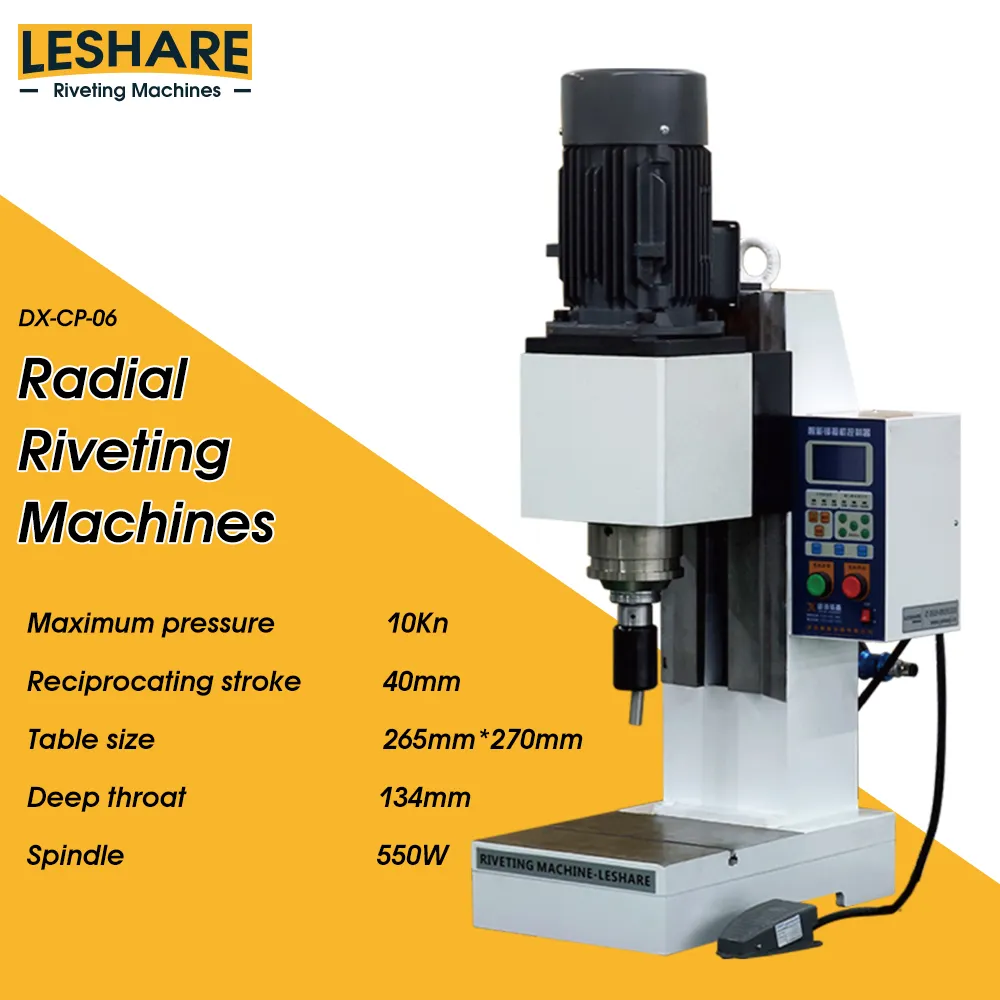
The automotive manufacturing industry has witnessed a remarkable transformation in recent years, driven by the need for lighter, stronger, and more cost-effective production methods. Among the various technological advancements reshaping the sector, clinching machines have emerged as a game-changing solution for automotive suppliers worldwide. These innovative fastening systems are revolutionizing how components are assembled, offering unprecedented advantages in terms of efficiency, reliability, and environmental sustainability. As automotive manufacturers face increasing pressure to deliver high-quality vehicles while maintaining competitive pricing, the adoption of advanced joining technologies has become not just beneficial but essential for survival in today's market.
The shift towards clinching technology represents a fundamental change in automotive assembly processes, moving away from traditional welding and riveting methods that have dominated the industry for decades. This transition is particularly evident among tier-one and tier-two suppliers who are constantly seeking ways to optimize their production capabilities while meeting stringent automotive quality standards. The technology's ability to create strong, permanent joints without the need for additional fasteners or consumables has made it an attractive option for manufacturers dealing with complex multi-material assemblies that are increasingly common in modern vehicle construction.
Understanding Clinching Technology in Automotive Applications
Fundamentals of Mechanical Joining
Clinching technology operates on the principle of mechanical deformation, creating interlocking joints between metal sheets through controlled plastic deformation. Unlike traditional joining methods that rely on heat, adhesives, or separate fasteners, clinching machines utilize precisely engineered dies and punches to form permanent connections directly from the base materials. This process involves pressing the materials together under high force, causing them to flow and interlock in a button-like formation that provides exceptional shear and tensile strength. The resulting joint maintains the integrity of both materials while creating a connection that can withstand the demanding conditions typical in automotive applications.
The mechanical nature of clinching makes it particularly suitable for joining dissimilar materials, a critical requirement in modern automotive construction where aluminum, steel, and advanced high-strength materials are often combined in single assemblies. This capability addresses one of the most significant challenges facing automotive suppliers today: the need to create reliable joints between materials with different thermal expansion coefficients, melting points, and metallurgical properties. Traditional welding methods often struggle with such combinations, leading to weak joints, material degradation, or complete joining failure, making clinching an increasingly valuable alternative.
Process Advantages Over Traditional Methods
The clinching process offers numerous advantages that directly address the evolving needs of automotive suppliers. Unlike welding, which requires extensive surface preparation, controlled atmospheres, and skilled operators, clinching can be performed on materials with various surface treatments including painted, coated, or galvanized surfaces. This flexibility significantly reduces pre-processing requirements and associated costs while maintaining consistent joint quality. Additionally, the process generates no heat-affected zones, preserving the mechanical properties of the base materials and eliminating concerns about thermal distortion that can compromise dimensional accuracy in precision automotive components.
Energy efficiency represents another compelling advantage of clinching machines compared to traditional joining methods. The process requires significantly less energy than resistance welding or other thermal joining techniques, contributing to reduced operational costs and smaller environmental footprints. This energy efficiency is particularly valuable in high-volume automotive production environments where energy costs can represent a substantial portion of manufacturing expenses. Furthermore, the elimination of consumables such as welding wire, flux, or separate fasteners reduces material costs and simplifies inventory management for suppliers.
Market Drivers Behind Clinching Adoption
Lightweighting Requirements
The automotive industry's relentless pursuit of vehicle lightweighting has created significant opportunities for clinching technology adoption. As manufacturers strive to meet increasingly stringent fuel economy standards and emissions regulations, the use of lightweight materials such as aluminum, magnesium, and advanced high-strength steels has become commonplace. However, joining these materials using traditional methods often presents substantial challenges, particularly when different material types must be combined in single assemblies. Clinching machines excel in these applications, providing reliable joining solutions that maintain the weight-saving benefits of lightweight materials while ensuring structural integrity.
The technology's ability to create joints without adding significant weight through separate fasteners or extensive weld material makes it particularly attractive for body-in-white construction and structural components where every gram matters. This weight-neutral joining capability allows automotive designers to optimize material usage and component design without compromising joint strength or durability. Additionally, the consistent joint geometry achieved through clinching enables more predictable structural behavior, supporting advanced simulation and optimization efforts that are crucial for lightweight vehicle development programs.
Multi-Material Assembly Challenges
Modern automotive design increasingly relies on multi-material construction strategies that combine different materials to optimize performance, cost, and weight simultaneously. These approaches present unique joining challenges that traditional methods struggle to address effectively. For example, joining aluminum outer panels to steel structural components requires techniques that can accommodate different thermal expansion rates, corrosion compatibility, and mechanical properties. Clinching machines provide elegant solutions to these challenges by creating mechanical joints that maintain material separation while providing robust structural connections.
The galvanic corrosion concerns associated with dissimilar metal joining are significantly reduced through clinching technology since the process maintains physical separation between different materials while creating the mechanical interlock. This characteristic is particularly valuable in automotive applications where long-term durability and corrosion resistance are critical performance requirements. The ability to join materials without introducing heat also eliminates concerns about intermetallic compound formation that can compromise joint integrity in traditional fusion welding of dissimilar materials.
Operational Benefits for Automotive Suppliers
Production Efficiency Improvements
Automotive suppliers utilizing clinching machines report significant improvements in production efficiency compared to traditional joining methods. The process typically requires shorter cycle times than resistance welding or mechanical fastening, enabling higher throughput rates that are essential for meeting automotive production volumes. The elimination of pre-processing steps such as surface cleaning, primer removal, or hole drilling further reduces overall cycle times and simplifies production workflows. These efficiency gains translate directly to improved capacity utilization and reduced per-unit manufacturing costs, critical factors in the highly competitive automotive supply chain.
Quality consistency represents another significant operational advantage of clinching technology. The process parameters can be precisely controlled and monitored, resulting in highly repeatable joint characteristics that meet automotive quality standards. This consistency reduces the need for extensive quality control measures and rework, further improving overall equipment effectiveness. Additionally, the visual nature of clinched joints allows for straightforward quality verification, enabling real-time process monitoring and immediate corrective action when required.
Cost Reduction Strategies
The economic benefits of clinching machines extend beyond direct material and energy savings to include significant reductions in tooling and maintenance costs. Unlike welding systems that require regular electrode replacement, extensive maintenance schedules, and specialized consumables, clinching tools typically demonstrate exceptional longevity with minimal maintenance requirements. This reliability reduces downtime and associated production losses while lowering overall operating costs. The simplicity of the clinching process also reduces training requirements for operators, enabling faster workforce development and greater operational flexibility.
Investment costs for clinching systems are generally lower than comparable welding installations when considering the complete system requirements including power supplies, cooling systems, gas handling equipment, and ventilation systems. This cost advantage makes clinching technology particularly attractive for smaller suppliers or those entering new market segments where capital efficiency is paramount. The technology's scalability also allows suppliers to implement clinching solutions incrementally, starting with specific applications and expanding as experience and confidence grow.
Technical Performance and Quality Considerations
Joint Strength and Durability
The mechanical properties of clinched joints have been extensively validated for automotive applications through rigorous testing programs that demonstrate performance equivalent to or exceeding traditional joining methods. Static strength testing consistently shows that properly formed clinched joints can achieve tensile and shear strengths approaching those of resistance spot welds in similar materials and thicknesses. More importantly, the fatigue performance of clinched joints often exceeds that of welded joints due to the absence of heat-affected zones and associated microstructural changes that can reduce fatigue life.
Dynamic loading conditions common in automotive applications are particularly well-suited to clinching technology characteristics. The mechanical interlock created during the clinching process provides excellent resistance to vibrational loading and impact forces while maintaining joint integrity throughout the vehicle's service life. Environmental testing has demonstrated that clinched joints maintain their strength characteristics under extreme temperature conditions, humidity exposure, and corrosive environments typically encountered in automotive service. This durability performance is critical for meeting automotive warranty requirements and customer expectations for long-term reliability.
Quality Control and Testing Methods
Quality assurance for clinching machines in automotive applications relies on well-established testing protocols and measurement techniques that ensure consistent joint quality. Non-destructive testing methods such as ultrasonic inspection and visual assessment provide immediate feedback on joint formation quality, enabling real-time process control and correction. These techniques allow operators to verify proper die penetration, material flow, and interlock formation without compromising the joint integrity, supporting high-volume production requirements while maintaining quality standards.
Destructive testing protocols including cross-sectional analysis, strength testing, and fatigue evaluation provide comprehensive characterization of joint performance for process qualification and ongoing validation. These testing methods have been standardized through industry organizations and automotive OEM specifications, providing suppliers with clear guidelines for quality assurance implementation. The availability of established testing standards facilitates supplier qualification processes and supports confident adoption of clinching technology across the automotive supply chain.
Industry Applications and Case Studies
Body Structure Applications
Automotive body structure applications represent one of the largest growth areas for clinching technology adoption. In these applications, clinching machines provide efficient solutions for joining floor pans, side panels, roof structures, and other structural components that form the vehicle's primary load-bearing framework. The technology's ability to create strong, permanent joints without generating heat makes it particularly valuable for joining pre-painted or coated materials commonly used in modern body construction. This capability eliminates the need for post-joining finishing operations and reduces the risk of coating damage that can compromise corrosion protection.
Case studies from major automotive suppliers demonstrate significant cost savings and quality improvements through clinching adoption in body structure applications. One prominent example involves a tier-one supplier that replaced resistance welding with clinching for a complex multi-material door frame assembly, resulting in a 30% reduction in cycle time and elimination of post-weld finishing requirements. The improved joint consistency also reduced warranty claims related to body panel fit and finish issues, providing additional value beyond direct manufacturing cost savings.
Chassis and Suspension Components
Chassis and suspension applications present unique requirements for joint strength, durability, and environmental resistance that make clinching technology particularly attractive. Components such as control arm brackets, suspension mounting points, and chassis reinforcements often involve joining high-strength steels or aluminum alloys under demanding load conditions. Clinching machines excel in these applications by providing joints that maintain full material strength while creating reliable mechanical connections that resist fatigue and environmental degradation.
The elimination of heat input during the joining process preserves the heat-treated properties of high-strength materials commonly used in chassis applications. This preservation of material properties is critical for maintaining the structural performance required for safety-critical suspension and chassis components. Additionally, the consistent joint geometry achieved through clinching enables more accurate finite element analysis and optimization of component designs, supporting the development of lighter, more efficient chassis systems.
FAQ
What are the main advantages of clinching machines over traditional welding methods in automotive applications
Clinching machines offer several key advantages over traditional welding methods, including the ability to join dissimilar materials without heat input, elimination of consumables, reduced energy consumption, and consistent joint quality. The process can work with coated or painted surfaces, preserves material properties, and creates joints with excellent fatigue resistance. Additionally, clinching requires less skilled operators and minimal maintenance compared to welding systems, resulting in lower operational costs and improved production efficiency.
How does clinching technology address the challenges of lightweight automotive construction
Clinching technology directly supports lightweight automotive construction by enabling the reliable joining of aluminum, advanced high-strength steels, and other lightweight materials commonly used in modern vehicle design. The process creates strong mechanical joints without adding significant weight through separate fasteners or extensive weld material. This weight-neutral joining capability allows designers to optimize material usage while maintaining structural integrity, supporting overall vehicle lightweighting objectives and fuel economy improvements.
What quality control measures are used to ensure consistent clinching performance in automotive production
Quality control for automotive clinching applications involves both non-destructive and destructive testing methods. Non-destructive techniques include visual inspection, ultrasonic testing, and real-time process monitoring to verify proper joint formation. Destructive testing protocols encompass cross-sectional analysis, tensile and shear strength testing, and fatigue evaluation to characterize joint performance. Modern clinching systems also incorporate integrated sensors and monitoring capabilities that provide continuous process feedback and enable predictive quality control strategies.
How do clinching machines contribute to environmental sustainability in automotive manufacturing
Clinching machines support environmental sustainability through reduced energy consumption compared to thermal joining methods, elimination of consumables and associated packaging waste, and extended tool life that reduces replacement requirements. The process generates no emissions or fumes, eliminating the need for extensive ventilation systems and improving workplace air quality. Additionally, the ability to join recyclable materials without introducing dissimilar metals or adhesives supports end-of-life vehicle recycling efforts and circular economy initiatives in the automotive industry.
Table of Contents
- Understanding Clinching Technology in Automotive Applications
- Market Drivers Behind Clinching Adoption
- Operational Benefits for Automotive Suppliers
- Technical Performance and Quality Considerations
- Industry Applications and Case Studies
-
FAQ
- What are the main advantages of clinching machines over traditional welding methods in automotive applications
- How does clinching technology address the challenges of lightweight automotive construction
- What quality control measures are used to ensure consistent clinching performance in automotive production
- How do clinching machines contribute to environmental sustainability in automotive manufacturing