 EN
EN

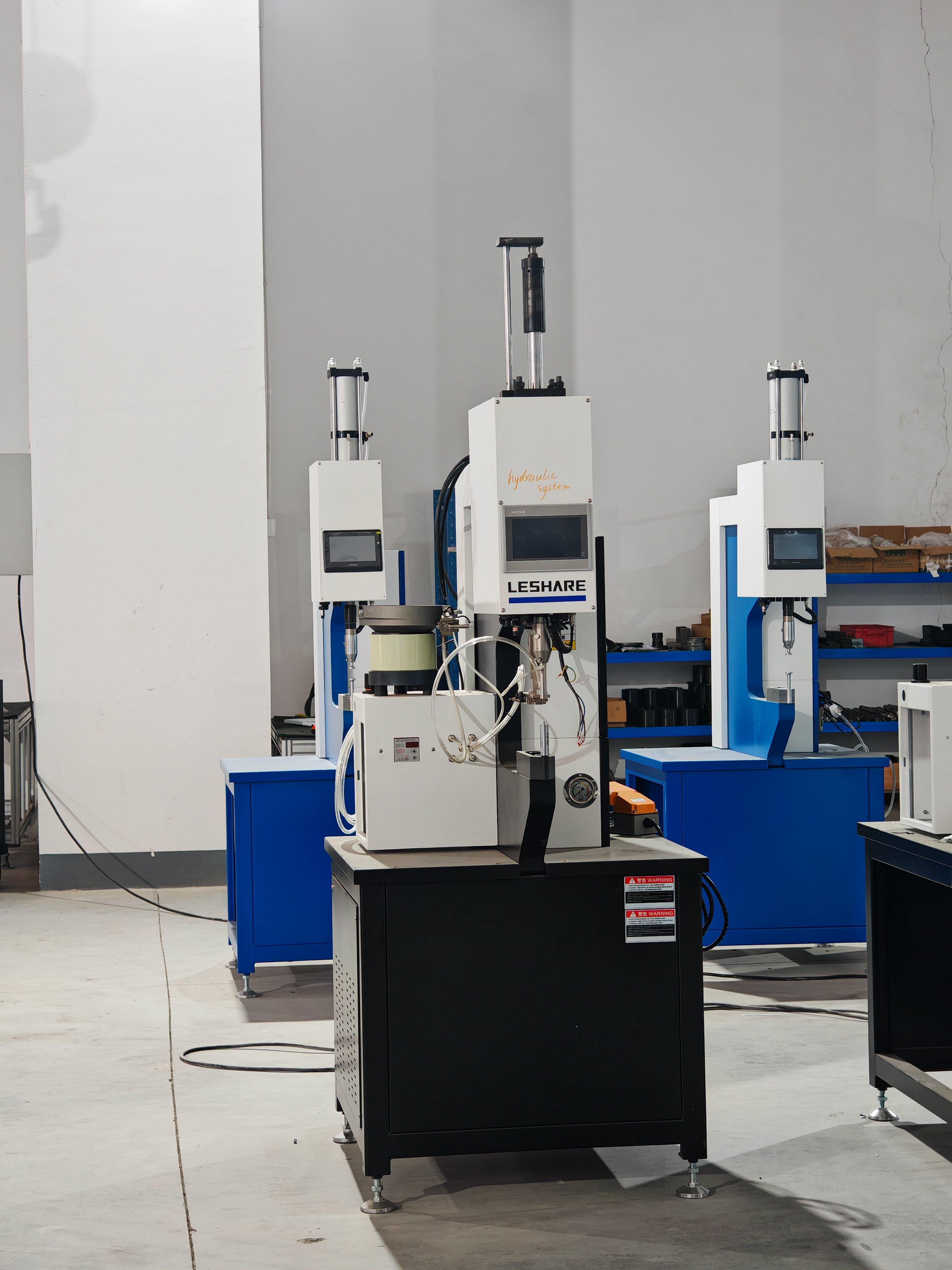
In appliance manufacturing, the structural integrity of a housing panel directly affects product safety, durability, and brand reputation. As production volumes grow and tolerances tighten, factories increasingly depend on an automatic clinching machine to join metal sheets without the weaknesses associated with welding or adhesive bonding. The automatic clinching machine has become a core piece of equipment on modern appliance assembly lines precisely because it delivers consistent, high-speed joining with minimal operator involvement.

The demand for an automatic clinching machine in housing production is not a passing trend. It reflects a deep shift in how appliance manufacturers approach quality control, cycle time reduction, and material efficiency. Every automatic clinching machine deployed on a production floor represents a deliberate engineering decision to replace slower, less repeatable joining methods with a process that can scale alongside output targets. Understanding why factories make this choice requires a close look at the mechanical, operational, and economic advantages the automatic clinching machine provides.
Structural Advantages for Metal Housing Assemblies
Cold-Joining Without Heat Distortion
One of the primary reasons appliance factories adopt an automatic clinching machine is the ability to join metal sheets through cold-forming rather than heat application. When a factory uses welding on thin steel or aluminum housing panels, thermal distortion becomes a persistent problem that requires grinding, straightening, and rework. The automatic clinching machine eliminates this issue entirely by pressing a punch and die through stacked metal layers to create a permanent, interlocked joint without any heat. This cold-joining capability is especially valuable for visible housing surfaces where cosmetic quality must meet strict appearance standards.
The automatic clinching machine also preserves the integrity of pre-coated or galvanized steel sheets. Because no heat is introduced, the surface coating remains undamaged at the joint location, which reduces the risk of corrosion over the product lifecycle. For appliance housings that must pass long-term environmental testing, this protection is a significant engineering benefit that justifies the use of an automatic clinching machine on coated material lines.
High Joint Strength in Thin-Gauge Materials
Appliance housings are frequently fabricated from thin-gauge steel or aluminum to reduce product weight and material cost. Joining these materials reliably is a challenge when using conventional fasteners, because screws and rivets can deform thin sheets or create stress concentrations that lead to fatigue failure. An automatic clinching machine creates an interlocking clinch point that distributes the clamping force evenly across the joint footprint, achieving high shear and peel strength without the stress risks of traditional fasteners. This mechanical characteristic makes the automatic clinching machine especially suited to the structural demands of refrigerator panels, washing machine frames, and oven housings.
Production Efficiency and Automation Compatibility
High-Speed Cycle Times at Scale
Appliance factories operate under tight cycle time targets where every second of delay accumulates into significant throughput loss over a shift. An automatic clinching machine is designed to complete each clinch cycle in a fraction of a second, enabling it to keep pace with high-volume conveyor lines without becoming a bottleneck. The automatic clinching machine can be programmed to execute multiple clinch points per housing in a single automated sequence, reducing the number of handling steps between joining operations. This speed advantage is one of the most compelling reasons production engineers specify an automatic clinching machine when designing new housing assembly cells.
Unlike manual riveting or spot welding stations that require skilled operators and periodic electrode maintenance, the automatic clinching machine runs with minimal consumable requirements. The punch and die tooling on a well-maintained automatic clinching machine lasts for hundreds of thousands of cycles before requiring replacement, which lowers per-unit joining costs substantially over the production life of a model run.
Seamless Integration with Robotic and Transfer Line Systems
Modern appliance assembly lines increasingly rely on robotic arms and automated transfer systems to move housing components between stations. The automatic clinching machine is engineered to accept signals from programmable logic controllers and robotic integration interfaces, making it straightforward to embed an automatic clinching machine directly into an automated cell. Factories can configure the automatic clinching machine to activate only when a housing is correctly positioned, reducing misfire rates and scrap. This integration capability allows the automatic clinching machine to function as a synchronized node within a larger smart manufacturing environment rather than as a standalone manual workstation.
Quality Consistency and Traceability in Housing Production
Repeatable Joint Quality Across Every Cycle
One of the persistent challenges in high-volume manufacturing is maintaining consistent joint quality across thousands of housing units per day. An automatic clinching machine addresses this challenge through controlled force application and stroke monitoring on every cycle. The automatic clinching machine applies a precisely defined force profile to each clinch point, ensuring that joint geometry remains within specification regardless of minor variations in sheet thickness or material hardness. This repeatability is critical for appliance housings that undergo vibration and mechanical stress during shipping and consumer use, and it is a primary reason quality managers advocate for the automatic clinching machine over manual methods.
Process Monitoring and Defect Prevention
Advanced automatic clinching machine models include real-time force and displacement monitoring that flags joints falling outside the acceptable process window before they leave the station. This closed-loop capability transforms the automatic clinching machine from a simple joining tool into an active quality assurance device. When a housing sheet has a surface defect, an incorrect stack-up, or a tooling wear issue, the automatic clinching machine detects the anomaly through its force signature and alerts the operator immediately. Factories that implement this monitoring capability reduce the rate of defective housings reaching downstream assembly, which lowers warranty costs and protects brand quality standards.
FAQ
What materials can an automatic clinching machine join in appliance housings?
An automatic clinching machine is suitable for joining steel, aluminum, galvanized sheet, and pre-coated metal commonly used in appliance housings. The automatic clinching machine performs best on ductile materials that can deform plastically to form the interlocked clinch geometry without cracking.
How does an automatic clinching machine compare to spot welding for housing panels?
An automatic clinching machine joins panels without heat, which prevents surface distortion and protects coatings that spot welding would damage. The automatic clinching machine also requires no electrode consumables and produces no spatter, making it cleaner and lower maintenance than spot welding for thin housing sheets.
Can an automatic clinching machine be retrofitted into an existing appliance production line?
Yes, an automatic clinching machine is designed with standard electrical and pneumatic interfaces that allow integration into existing production lines with moderate engineering effort. Many factories introduce the automatic clinching machine at a specific housing assembly station without redesigning the entire line layout.