 EN
EN

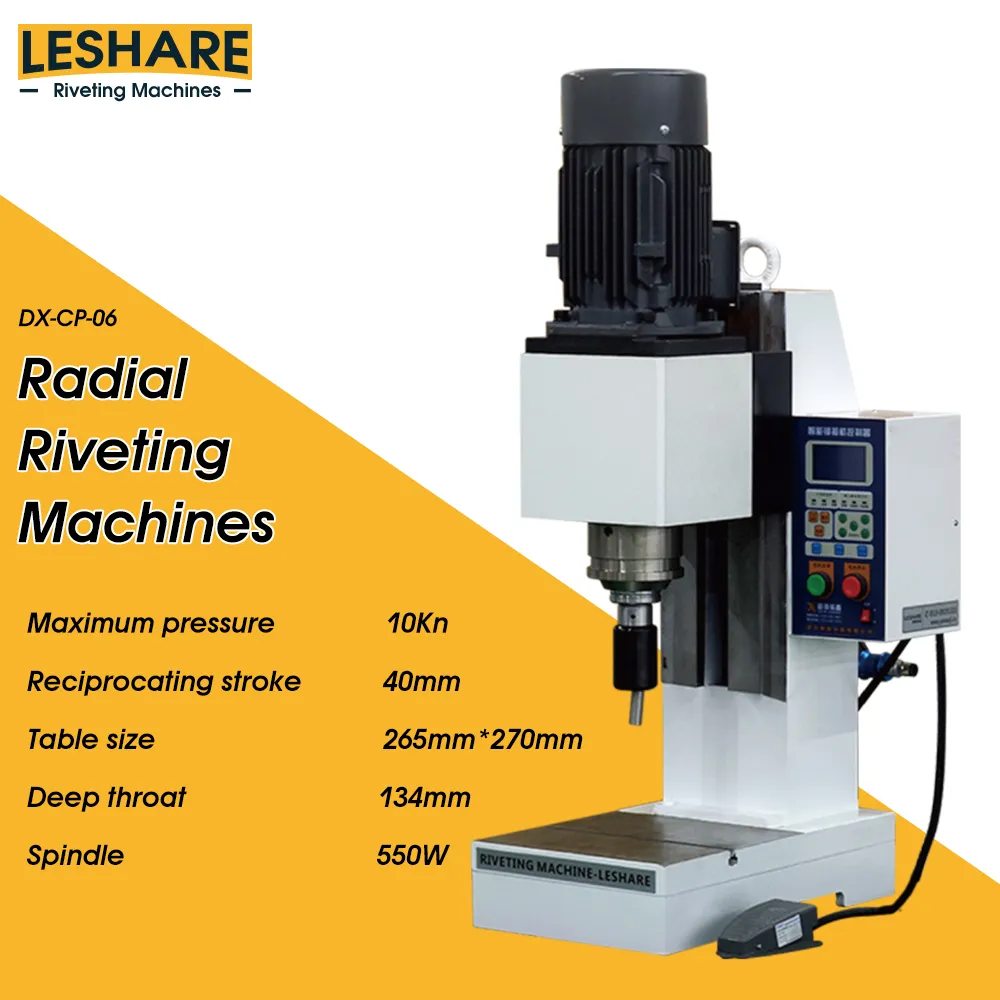
In precision manufacturing environments where component integrity and assembly quality determine product success, the choice of joining technology becomes paramount. A nonrotating shaft radial riveter represents a specialized solution engineered specifically for delicate assemblies that cannot tolerate the rotational forces and material stress associated with conventional riveting methods. This advanced riveting technology delivers controlled radial expansion forces while maintaining the workpiece in a stationary position, preventing damage to sensitive components and ensuring consistent joint quality across diverse manufacturing applications.
Understanding Nonrotating Shaft Radial Riveting Technology
Core Mechanics and Operating Principles
The fundamental advantage of a nonrotating shaft radial riveter lies in its unique mechanical design that eliminates rotational movement during the riveting process. Unlike traditional orbital or spin riveting systems, this technology applies radial expansion forces through multiple anvils or forming tools that move simultaneously inward toward the rivet shank. The stationary nature of the riveting head ensures that delicate components remain undisturbed while the rivet material flows uniformly to create a secure mechanical joint.
The riveting cycle begins when the workpiece is positioned and secured within the fixture system. Pneumatic or hydraulic actuators drive the forming anvils radially inward, applying controlled pressure to the protruding rivet shank. This radial compression causes the rivet material to flow outward, creating a formed head that secures the joint without subjecting the assembly to torsional stresses or rotational forces that could compromise delicate components.
Material Flow Control and Joint Formation
Precise material flow control distinguishes a nonrotating shaft radial riveter from alternative joining methods. The radial forming action creates uniform material displacement around the entire circumference of the rivet, resulting in a symmetrical formed head with consistent mechanical properties. This controlled deformation process eliminates the uneven stress distribution patterns commonly associated with impact riveting or rotational forming methods.
The forming process maintains constant contact pressure throughout the rivet expansion cycle, ensuring complete material flow without void formation or incomplete joint development. Advanced nonrotating shaft radial riveter systems incorporate force monitoring capabilities that provide real-time feedback on the forming process, enabling operators to optimize parameters for different rivet materials and assembly configurations.
Critical Applications in Delicate Assembly Manufacturing
Electronics and Semiconductor Component Assembly
Electronics manufacturing demands joining solutions that protect sensitive components from mechanical shock and electromagnetic interference. A nonrotating shaft radial riveter proves essential in these applications by providing vibration-free operation that prevents damage to delicate circuit boards, semiconductor devices, and miniaturized components. The absence of rotational motion eliminates the risk of component displacement or electrical connection disruption during the riveting process.
The controlled force application characteristic of nonrotating radial riveting technology ensures that pressure-sensitive components such as MEMS devices, crystal oscillators, and optical sensors remain within their operational tolerance ranges. This precision control becomes particularly critical in aerospace electronics assemblies where component failure can have catastrophic consequences.
Medical Device and Surgical Instrument Manufacturing
Medical device manufacturing requires joining processes that maintain sterile conditions while ensuring biocompatible material integrity. The nonrotating shaft radial riveter eliminates contamination risks associated with rotating tool surfaces while providing the precise joint quality required for surgical instruments and implantable devices. The clean forming action prevents particle generation that could compromise sterile manufacturing environments.
Surgical instrument assemblies often incorporate multiple materials with varying hardness properties, requiring controlled joining forces to prevent material distortion or component damage. The radial riveting process accommodates these material property differences through programmable force profiles that optimize joint formation for each specific application requirement.
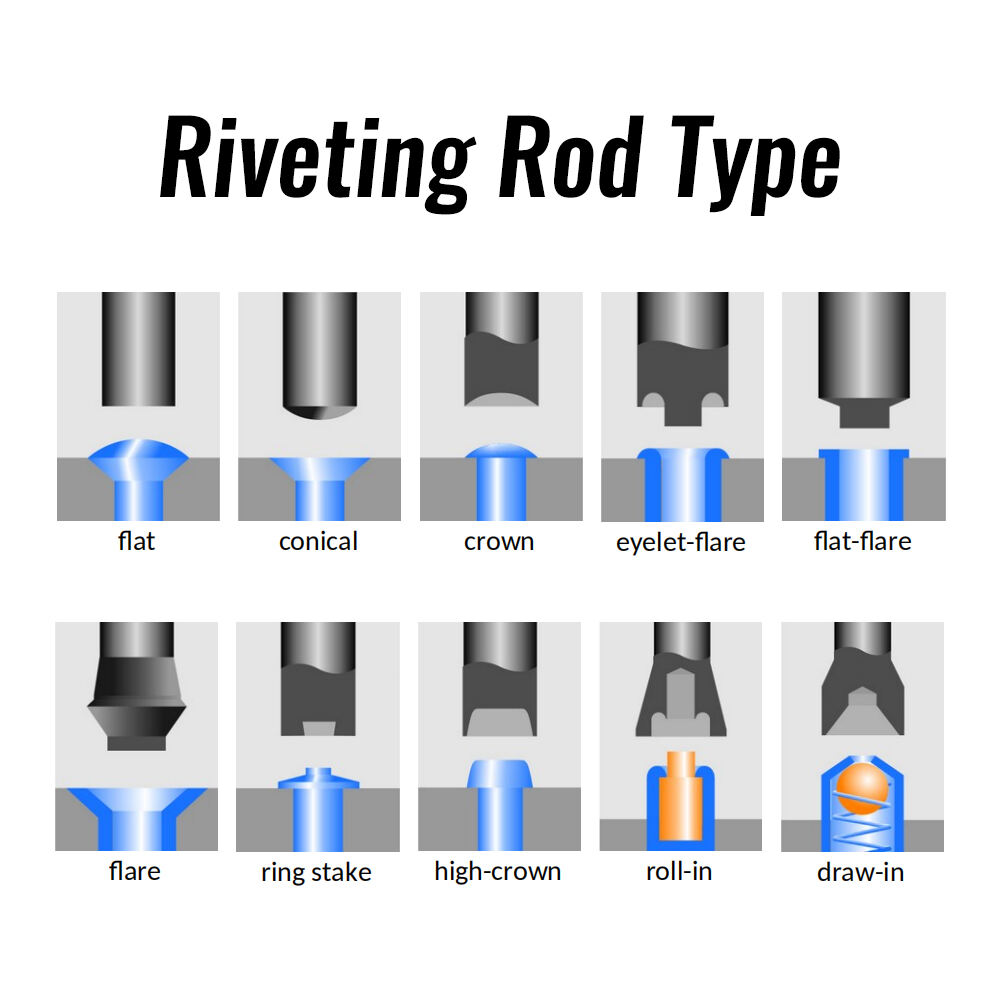
Quality Advantages Over Alternative Joining Methods
Joint Strength and Reliability Characteristics
The mechanical properties of joints created through nonrotating shaft radial riveting consistently exceed those achieved through conventional joining methods. The radial expansion process creates uniform stress distribution around the joint periphery, eliminating stress concentration points that commonly lead to premature failure in traditional riveted assemblies. This uniform stress distribution contributes to enhanced fatigue resistance and extended service life in dynamic loading applications.
Laboratory testing demonstrates that nonrotating radial riveted joints exhibit superior shear strength and tensile resistance compared to spin-riveted or orbital-formed connections. The controlled material flow characteristic of the radial forming process ensures complete rivet head formation without the material thinning or void formation associated with high-speed rotational riveting methods.
Surface Finish and Cosmetic Quality
Surface finish quality becomes critical in applications where visual appearance affects product acceptance or where smooth surfaces are required for functional performance. A nonrotating shaft radial riveter produces consistently smooth formed heads with minimal surface marking or tool impression artifacts. The absence of rotational contact eliminates the circumferential scoring patterns characteristic of spin riveting processes.
The controlled forming pressure available through radial riveting technology enables operators to optimize surface finish quality for specific cosmetic requirements. Advanced systems provide programmable pressure profiles that can minimize surface marking while ensuring complete joint formation, making nonrotating shaft radial riveter technology ideal for visible joint applications in consumer products and architectural hardware.
Process Control and Automation Integration
Force Monitoring and Quality Assurance
Modern nonrotating shaft radial riveter systems incorporate sophisticated force monitoring capabilities that provide real-time process verification and quality control feedback. Load cell technology integrated into the forming mechanism measures applied forces throughout the riveting cycle, enabling operators to establish process windows that ensure consistent joint quality while preventing component damage through excessive forming pressure.
Statistical process control integration allows manufacturers to track forming force variations and identify process trends that might indicate tool wear or setup issues. This predictive maintenance capability minimizes unexpected downtime while ensuring continued production of high-quality riveted assemblies. The force signature analysis capabilities of advanced nonrotating shaft radial riveter systems can detect incomplete rivet insertion, material property variations, or fixture positioning errors before defective assemblies are produced.
Automation and Robotic Integration Capabilities
The stationary workpiece characteristic of nonrotating radial riveting technology simplifies robotic integration and automated handling requirements. Unlike orbital or spin riveting processes that may require complex workpiece clamping systems to resist rotational forces, a nonrotating shaft radial riveter allows for simplified fixture designs that facilitate automated part loading and unloading operations.
Programmable logic controller integration enables seamless coordination between riveting operations and upstream or downstream manufacturing processes. The predictable cycle times and consistent force requirements of nonrotating radial riveting make it particularly suitable for high-volume automated production lines where process repeatability directly impacts manufacturing efficiency and product quality.
Economic Benefits and Production Efficiency
Tool Life and Maintenance Requirements
The operational characteristics of a nonrotating shaft radial riveter contribute to extended tool life and reduced maintenance requirements compared to alternative joining technologies. The absence of high-speed rotation eliminates bearing wear and lubrication requirements associated with spindle-based riveting systems. The controlled radial forming action distributes tool wear evenly across multiple forming surfaces, extending replacement intervals and reducing per-piece tooling costs.
Maintenance scheduling becomes more predictable with nonrotating radial riveting technology due to the consistent loading patterns and controlled operating environment. The sealed hydraulic or pneumatic actuation systems require minimal routine maintenance while providing reliable operation over extended production runs. This reliability characteristic makes nonrotating shaft radial riveter systems particularly attractive for critical production applications where unexpected downtime has significant cost implications.
Energy Consumption and Environmental Impact
Energy efficiency represents a significant advantage of nonrotating shaft radial riveter technology in modern manufacturing environments focused on sustainability and operational cost reduction. The elimination of continuous spindle rotation reduces power consumption compared to conventional orbital riveting systems, particularly in high-volume production applications where energy costs contribute significantly to overall manufacturing expenses.
The clean forming process characteristic of radial riveting technology minimizes waste generation and eliminates the need for secondary finishing operations often required with alternative joining methods. This waste reduction contributes to improved environmental performance while reducing material handling and disposal costs associated with manufacturing operations.
Selection Criteria and Implementation Considerations
Application Assessment and Technology Matching
Successful implementation of a nonrotating shaft radial riveter requires careful evaluation of assembly requirements, material properties, and production volume considerations. Joint strength requirements, component sensitivity, and cosmetic quality specifications all influence the selection of appropriate riveting parameters and equipment configuration options. Engineering analysis of loading conditions and service environment helps determine optimal rivet materials and joint designs for specific applications.
Material compatibility assessment becomes critical when evaluating nonrotating radial riveting for new applications. Different rivet materials exhibit varying flow characteristics under radial forming forces, requiring process optimization to achieve consistent joint quality. The controlled nature of the radial forming process provides excellent adaptability to diverse material combinations, but initial process development ensures optimal results for each specific application.
Equipment Sizing and Capacity Planning
Proper equipment sizing ensures adequate forming capacity while avoiding over-specification that increases capital costs unnecessarily. A nonrotating shaft radial riveter must provide sufficient force to complete rivet forming while maintaining precise control for delicate assembly requirements. Force capacity selection considers rivet size range, material properties, and safety factors required for consistent production quality.
Production volume analysis helps determine appropriate automation levels and cycle time requirements for economical operation. High-volume applications may justify advanced automation features and multiple-head configurations, while lower-volume specialty applications might benefit from manual or semi-automatic operation modes that provide maximum flexibility for diverse assembly requirements.
FAQ
What makes a nonrotating shaft radial riveter suitable for delicate components
The stationary operation eliminates vibration and rotational forces that could damage sensitive components. The controlled radial expansion process applies uniform pressure without subjecting assemblies to torsional stress or dynamic loading that might compromise delicate parts. This makes it ideal for electronics, medical devices, and precision instruments where component integrity is critical.
How does joint quality compare to conventional riveting methods
Nonrotating radial riveting produces superior joint strength through uniform material flow and stress distribution. The controlled forming process eliminates void formation and ensures complete rivet head development, resulting in enhanced fatigue resistance and longer service life compared to impact or rotational riveting methods.
What maintenance requirements are associated with this technology
Maintenance requirements are minimal due to the absence of high-speed rotating components. The sealed actuator systems require periodic inspection and fluid replacement according to manufacturer recommendations. Tool wear occurs gradually and predictably, allowing for planned replacement scheduling that minimizes production disruption.
Can nonrotating radial riveting accommodate different rivet materials and sizes
Yes, the technology adapts well to various rivet materials including aluminum, steel, copper, and specialty alloys. The programmable force control allows optimization for different material flow characteristics and hardness properties. Equipment can typically handle a range of rivet diameters within the specified capacity limits of the particular system configuration.
Table of Contents
- Understanding Nonrotating Shaft Radial Riveting Technology
- Critical Applications in Delicate Assembly Manufacturing
- Quality Advantages Over Alternative Joining Methods
- Process Control and Automation Integration
- Economic Benefits and Production Efficiency
- Selection Criteria and Implementation Considerations
- FAQ