 EN
EN

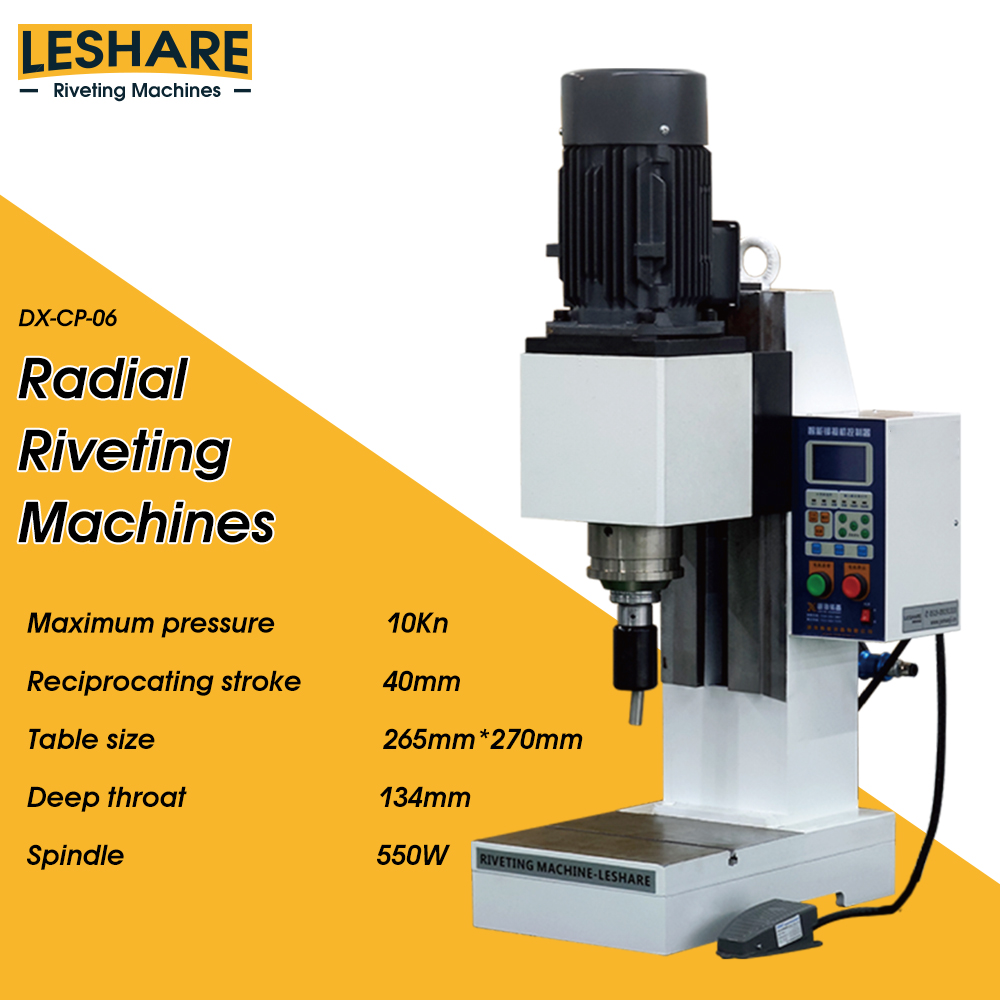
Precision manufacturing demands exceptional reliability and accuracy in every assembly process. When working with delicate electronic components, aerospace assemblies, or medical devices, selecting the right nonrotating shaft radial riveter becomes critical for maintaining quality standards while ensuring consistent results. These specialized fastening tools deliver controlled deformation forces without introducing rotational stress that could damage sensitive components or compromise joint integrity.
Understanding the fundamental operating principles behind radial riveting technology helps manufacturers make informed equipment decisions. Unlike traditional impact riveting methods, nonrotating shaft radial riveting applies uniform pressure through multiple forming tools that move inward simultaneously. This approach eliminates the spinning motion that could introduce unwanted stresses or misalignment in precision assemblies.
Understanding Nonrotating Shaft Technology
Operational Mechanics and Force Distribution
The nonrotating shaft radial riveter operates through a sophisticated mechanism where multiple forming tools converge radially toward the rivet head. This convergent action creates uniform material flow without introducing torsional forces that could affect component alignment. The controlled pressure application ensures consistent rivet head formation while maintaining precise dimensional tolerances throughout the fastening process.
Force distribution patterns in nonrotating systems differ significantly from traditional rotary methods. The radial compression occurs simultaneously from all directions, creating a more balanced stress field within the rivet material. This balanced approach reduces the likelihood of material cracking or uneven deformation that could compromise joint strength or appearance in critical applications.
Precision Control Features
Modern nonrotating shaft radial riveters incorporate advanced control systems that monitor force application, displacement, and cycle timing. These features enable operators to establish repeatable parameters for different rivet materials and component configurations. Programmable force profiles allow for gradual pressure increase during the forming cycle, preventing sudden stress concentrations that might damage delicate substrates.
Position feedback systems ensure accurate tool placement and consistent forming depth across production runs. These control mechanisms work together to maintain the tight tolerances required for precision component assembly while providing real-time process monitoring capabilities that enhance quality assurance protocols.
Application Requirements Analysis
Component Material Considerations
Different substrate materials require specific force characteristics and forming approaches when using a nonrotating shaft radial riveter. Brittle materials such as ceramics or hardened metals demand carefully controlled pressure application to prevent cracking or chipping around the rivet location. Ductile materials like aluminum or copper alloys can accommodate higher forming forces but still benefit from the controlled deformation that nonrotating systems provide.
Thermal considerations become important when working with materials that have different expansion coefficients or temperature sensitivities. The nonrotating approach generates less heat through friction compared to spinning methods, making it suitable for temperature-sensitive electronic components or polymer-based assemblies that could degrade under excessive thermal stress.
Dimensional Accuracy Requirements
Precision manufacturing often involves components with extremely tight dimensional tolerances that must be maintained throughout the assembly process. A properly selected nonrotating shaft radial riveter can achieve repeatability within micrometers, ensuring that critical dimensions remain within specification limits. This level of precision becomes essential in applications where component alignment affects overall system performance.
Surface finish requirements also influence equipment selection decisions. The controlled pressure application of nonrotating systems typically produces smoother rivet head profiles with less surface disturbance compared to impact or rotary methods. This characteristic proves valuable when aesthetic appearance or aerodynamic smoothness affects product functionality.
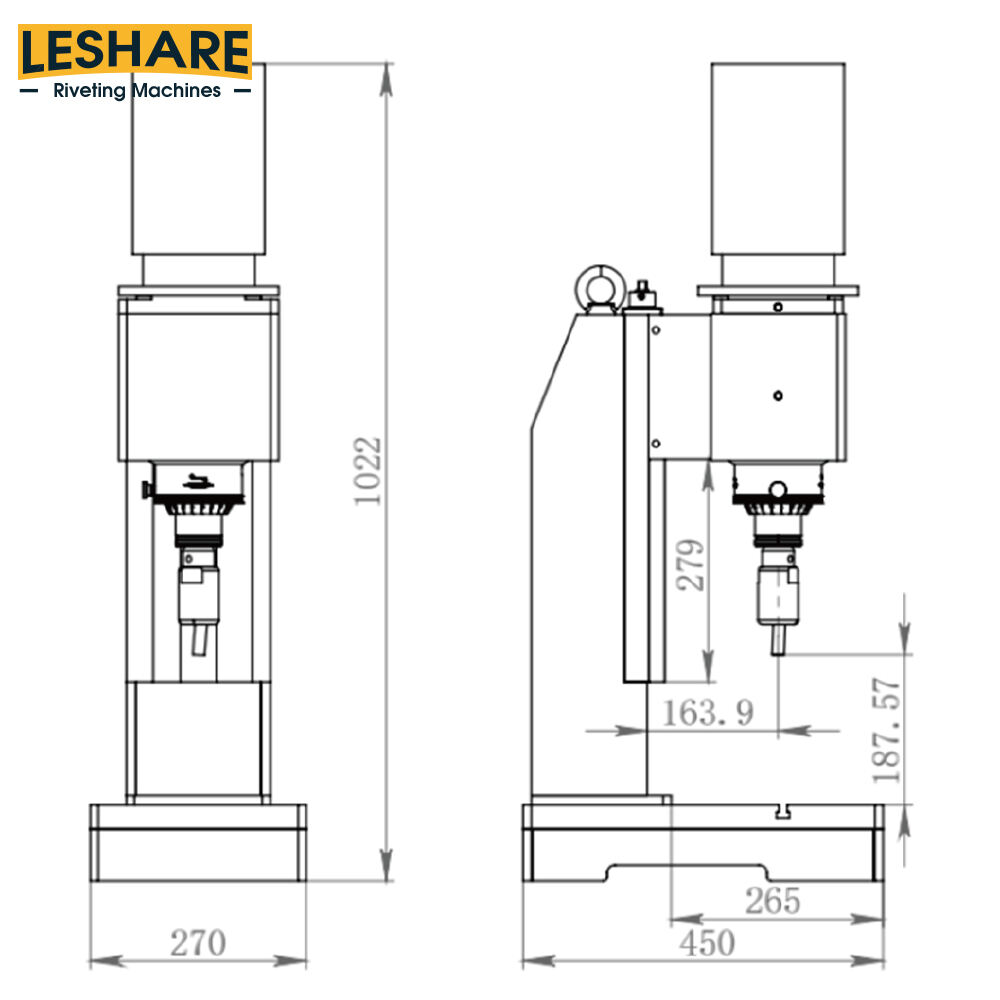
Technical Specifications and Performance Parameters
Force Capacity and Speed Considerations
Selecting the appropriate force capacity for a nonrotating shaft radial riveter requires careful analysis of rivet material properties, diameter, and required deformation characteristics. Higher capacity systems provide greater versatility for handling various rivet sizes and materials, but may offer less precision control for small, delicate applications. Matching force capacity to application requirements ensures optimal performance without over-engineering the solution.
Cycle speed capabilities affect production throughput and must be balanced against precision requirements. Faster cycling systems can increase productivity but may sacrifice some control precision during the forming process. The optimal balance depends on production volume requirements and the criticality of dimensional accuracy in the specific application.
Tooling Compatibility and Flexibility
Tool compatibility represents a crucial factor in nonrotating shaft radial riveter selection, as different applications may require specialized forming tools or adapters. Modular tooling systems offer greater flexibility for handling diverse rivet types and sizes within a single production environment. Quick-change capabilities reduce setup time when transitioning between different component configurations.
Custom tooling options become important for unique rivet head shapes or special forming requirements. The ability to accommodate custom tools without major machine modifications provides manufacturing flexibility and supports product development initiatives that may require non-standard fastening solutions.
Quality Control and Process Monitoring
Real-Time Monitoring Capabilities
Advanced nonrotating shaft radial riveting systems incorporate comprehensive monitoring capabilities that track key process parameters throughout each cycle. Force monitoring ensures that applied pressure remains within predetermined limits, while displacement sensors verify proper tool positioning and forming depth. These monitoring systems provide immediate feedback when process variations occur, enabling quick corrective action.
Data logging capabilities allow manufacturers to maintain detailed records of riveting parameters for traceability and quality documentation purposes. This information proves valuable for process optimization, troubleshooting, and compliance with quality management system requirements in regulated industries such as aerospace or medical device manufacturing.
Statistical Process Control Integration
Integration with statistical process control systems enables continuous monitoring of nonrotating shaft radial riveter performance over extended production runs. Trend analysis helps identify gradual process drift before it affects product quality, while control charts provide visual indicators of process stability and capability.
Automated alarm systems notify operators when process parameters exceed control limits, preventing the production of nonconforming parts. These quality control features become increasingly important as manufacturing volumes increase and manual inspection becomes less practical for maintaining consistent quality standards.
Installation and Maintenance Considerations
Facility Requirements and Integration
Proper installation of a nonrotating shaft radial riveter requires adequate structural support and vibration isolation to maintain precision capabilities. Foundation requirements vary based on machine size and force capacity, with larger systems requiring more substantial mounting arrangements. Environmental factors such as temperature stability and contamination control also affect installation planning.
Integration with existing production lines may require custom fixtures or conveyor modifications to accommodate the nonrotating riveting process. Planning for material handling, part positioning, and quality inspection workflows ensures smooth integration without disrupting other manufacturing operations.
Preventive Maintenance Programs
Establishing comprehensive preventive maintenance programs helps ensure consistent performance from nonrotating shaft radial riveting equipment. Regular lubrication schedules, tool inspection protocols, and calibration verification procedures maintain accuracy and prevent unexpected downtime. Component wear monitoring helps predict replacement needs before failures occur.
Training programs for maintenance personnel ensure proper care and troubleshooting capabilities for these specialized systems. Understanding the unique requirements of nonrotating radial riveting technology enables maintenance teams to identify and address potential issues before they affect production quality or throughput.
Cost-Benefit Analysis and Return on Investment
Initial Investment Considerations
The initial cost of a nonrotating shaft radial riveter typically exceeds that of conventional riveting equipment due to the sophisticated control systems and precision manufacturing required. However, this investment must be evaluated against the long-term benefits of improved quality, reduced rework, and enhanced production capabilities that these systems provide.
Financing options and equipment leasing programs can help manage the initial capital requirements while allowing immediate access to advanced riveting capabilities. The total cost of ownership includes not only the equipment purchase price but also installation, training, and ongoing maintenance expenses that should be factored into the investment decision.
Productivity and Quality Improvements
Quality improvements achieved through nonrotating shaft radial riveting often result in reduced scrap rates, lower rework costs, and improved customer satisfaction. These benefits translate directly to cost savings that contribute to the return on investment calculation. Additionally, the enhanced precision capabilities may enable access to new market opportunities or premium product segments.
Productivity gains from automated operation and consistent cycle times can increase throughput while reducing labor requirements. The reliability of nonrotating systems typically results in higher uptime percentages compared to conventional riveting methods, further enhancing the economic benefits of the technology investment.
FAQ
What are the main advantages of nonrotating shaft radial riveters over traditional riveting methods?
Nonrotating shaft radial riveters provide superior precision control and eliminate rotational stresses that could damage sensitive components. They offer consistent force application from multiple directions simultaneously, resulting in more uniform rivet head formation and better dimensional accuracy. The reduced heat generation and controlled deformation make them ideal for precision manufacturing applications where traditional impact or rotary methods might cause component damage.
How do I determine the appropriate force capacity for my application?
Force capacity selection depends on rivet material properties, diameter, and required deformation characteristics. Consult material specifications and conduct test samples to determine optimal forming forces. Consider future application requirements and material variations when selecting capacity to ensure adequate capability without over-engineering the solution. Professional application engineering support can help optimize force requirements for specific manufacturing needs.
What maintenance requirements are typical for nonrotating shaft radial riveting equipment?
Regular maintenance includes lubrication of moving components, tool inspection and replacement, calibration verification, and control system updates. Preventive maintenance schedules should be based on production volume and operating conditions, typically ranging from daily inspections to annual overhauls. Proper maintenance ensures consistent accuracy and prevents unexpected downtime that could disrupt production schedules.
Can nonrotating shaft radial riveters handle different rivet materials and sizes?
Modern nonrotating shaft radial riveters offer excellent versatility for various rivet materials including aluminum, steel, copper, and specialty alloys. Modular tooling systems enable quick changeover between different rivet sizes and head configurations. Programmable control systems allow optimization of forming parameters for each material type, ensuring consistent results across diverse applications within a single production environment.
Table of Contents
- Understanding Nonrotating Shaft Technology
- Application Requirements Analysis
- Technical Specifications and Performance Parameters
- Quality Control and Process Monitoring
- Installation and Maintenance Considerations
- Cost-Benefit Analysis and Return on Investment
-
FAQ
- What are the main advantages of nonrotating shaft radial riveters over traditional riveting methods?
- How do I determine the appropriate force capacity for my application?
- What maintenance requirements are typical for nonrotating shaft radial riveting equipment?
- Can nonrotating shaft radial riveters handle different rivet materials and sizes?