 EN
EN

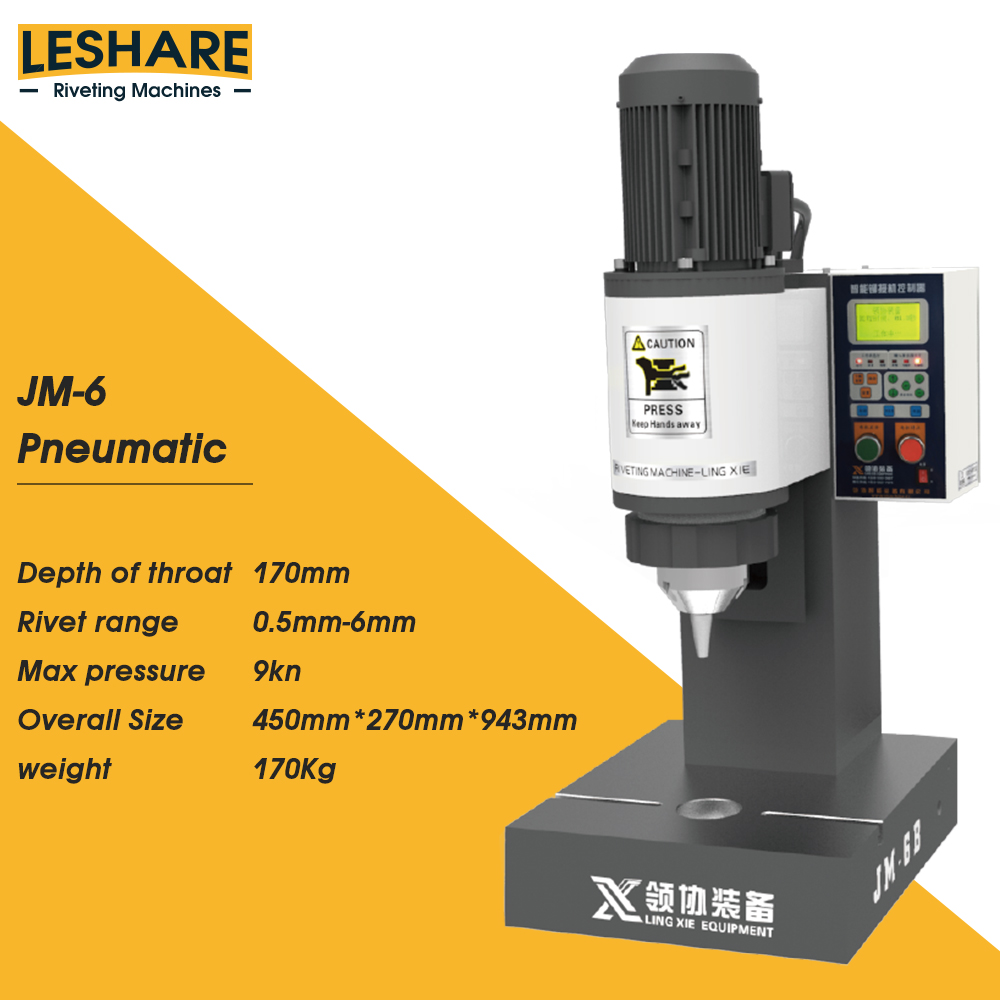
Manufacturing industries constantly seek solutions to minimize production failures and enhance product reliability. Radial riveting machines have emerged as a critical technology for achieving superior joint quality in mass production environments. These advanced systems deliver consistent, controlled joining processes that significantly reduce the likelihood of assembly failures compared to traditional fastening methods. By implementing precise radial force application and automated control systems, these machines eliminate many variables that contribute to production inconsistencies.
Understanding Radial Riveting Technology
Core Operating Principles
Radial riveting machines operate by applying controlled radial force around the circumference of a rivet or fastener. This process creates uniform material deformation that forms a strong, permanent joint without the thermal stress associated with welding or the loosening potential of threaded fasteners. The technology ensures consistent force distribution across the entire joint interface, eliminating weak points that commonly develop in conventional assembly methods.
The precision control systems integrated into modern radial riveting machines monitor force application, displacement, and cycle time to maintain optimal joining parameters. This real-time feedback mechanism prevents over-forming or under-forming conditions that frequently cause joint failures in production environments. Advanced sensors detect material variations and automatically adjust processing parameters to accommodate different workpiece characteristics.
Material Compatibility and Applications
These machines demonstrate exceptional versatility across diverse material combinations including aluminum, steel, copper, and composite materials. The radial forming process adapts to varying material properties without compromising joint integrity or requiring extensive tooling changes. This flexibility enables manufacturers to process multiple product lines using the same equipment configuration, reducing capital investment requirements.
Automotive, aerospace, electronics, and appliance manufacturers have successfully integrated radial riveting machines into their production lines for critical assemblies. The technology proves particularly valuable for applications requiring high vibration resistance, electrical conductivity, or structural integrity under dynamic loading conditions. These demanding applications highlight the superior performance characteristics achieved through radial joining processes.
Failure Rate Reduction Mechanisms
Process Consistency and Repeatability
The primary advantage of radial riveting machines lies in their ability to deliver identical joining results across millions of production cycles. Programmable control systems maintain precise force profiles and displacement parameters that eliminate operator variability and human error factors. This consistency directly translates to predictable joint strength and durability characteristics that traditional manual or semi-automated processes cannot achieve.
Statistical process control integration enables continuous monitoring of joint quality parameters throughout production runs. These systems detect process drift before defective joints are produced, triggering automatic corrections or operator alerts. Real-time quality feedback prevents the accumulation of defective products that would require costly rework or field failures.
Stress Distribution Optimization
Unlike impact or compression riveting methods, radial riveting machines create uniform stress patterns that avoid stress concentrations and micro-fractures. The gradual, controlled deformation process preserves material grain structure and minimizes work hardening effects that can lead to premature failure. This stress optimization contributes significantly to extended joint service life in demanding applications.
The radial forming process also eliminates the sharp transitions and geometric discontinuities that serve as crack initiation sites in conventional joints. Smooth material flow and gradual transitions create joints with superior fatigue resistance and damage tolerance characteristics. These improvements directly reduce field failure rates and warranty claims for manufacturers.
Quality Control and Monitoring Systems
Real-Time Process Monitoring
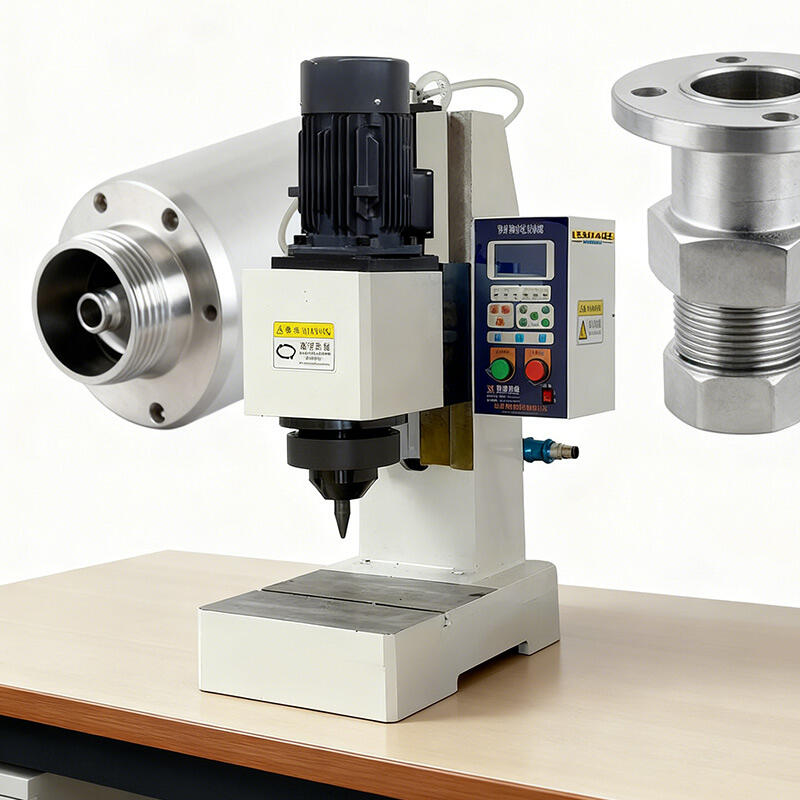
Modern radial riveting machines incorporate sophisticated monitoring systems that track multiple process variables simultaneously. Force sensors, displacement transducers, and timing circuits provide comprehensive data about each joining cycle. This information enables immediate detection of process anomalies that could indicate impending quality problems.
Data logging capabilities create permanent records of all joining operations, enabling traceability and quality assurance documentation required by aerospace and automotive standards. These records support failure analysis investigations and continuous improvement initiatives by providing detailed process history for problematic assemblies. Statistical analysis of logged data reveals trends and patterns that guide preventive maintenance and process optimization efforts.
Automatic Rejection Systems
Advanced radial riveting machines feature integrated quality gates that automatically reject parts falling outside acceptable parameter ranges. These systems prevent defective assemblies from proceeding to subsequent manufacturing operations or reaching customers. Immediate feedback allows operators to investigate and correct process issues before significant quantities of defective products are produced.
Vision systems and post-process inspection capabilities verify joint geometry and surface finish quality after forming operations. Dimensional measurements confirm proper rivet head formation and detect incomplete or excessive deformation conditions. This comprehensive quality verification approach ensures that only acceptable assemblies continue through the production process.
Operational Efficiency and Cost Benefits
Reduced Rework and Scrap
The precision and consistency of radial riveting machines dramatically reduce rework requirements compared to conventional assembly methods. First-pass yield rates typically exceed ninety-eight percent when proper setup and maintenance procedures are followed. This high success rate eliminates the labor, material, and overhead costs associated with reprocessing defective assemblies.
Scrap generation decreases significantly because radial riveting processes rarely damage workpieces during joining operations. Unlike welding or adhesive bonding methods that can create irreparable damage when problems occur, radial riveting typically allows workpiece recovery through rivet removal and replacement. This capability preserves valuable components and reduces material waste in production environments.
Maintenance and Lifecycle Considerations
Radial riveting machines require minimal maintenance compared to impact-based joining equipment due to their controlled, gradual forming processes. The absence of high-impact forces reduces wear on tooling and machine components, extending service intervals and reducing replacement part costs. Predictive maintenance systems monitor machine condition and schedule service activities to minimize production disruptions.
Tool life in radial riveting applications typically exceeds that of conventional riveting methods by significant margins. The controlled deformation process reduces tool stress and wear, enabling extended production runs without tool changes. This reliability improvement reduces downtime and maintains consistent product quality throughout extended production campaigns.
Implementation Strategies for Mass Production
Integration Planning and Setup
Successful implementation of radial riveting machines in mass production environments requires careful planning and systematic approach to integration. Production line layout must accommodate machine footprint, operator access, and material handling requirements while maintaining efficient workflow patterns. Proper integration ensures maximum utilization and return on investment for these advanced systems.
Training programs for operators and maintenance personnel ensure optimal machine performance and longevity. Comprehensive understanding of process parameters, troubleshooting procedures, and preventive maintenance requirements enables production teams to maximize the failure reduction benefits of radial riveting technology. Ongoing training updates keep personnel current with evolving best practices and system capabilities.
Process Optimization and Continuous Improvement
Data analysis from radial riveting machines provides valuable insights for continuous process improvement initiatives. Statistical process control charts identify opportunities for parameter optimization and help establish optimal operating windows for specific applications. This analytical approach ensures that failure reduction benefits continue to improve over time through systematic refinement.
Regular process audits and capability studies verify that radial riveting machines continue to meet quality requirements and identify potential improvement opportunities. These assessments help maintain peak performance and prevent gradual degradation that could compromise failure reduction benefits. Proactive monitoring ensures sustained quality improvements throughout the equipment lifecycle.
Frequently Asked Questions
What types of materials can radial riveting machines process effectively
Radial riveting machines successfully process a wide range of materials including aluminum alloys, steel grades, copper, brass, and certain composite materials. The key requirement is that the rivet material must be sufficiently ductile to undergo controlled plastic deformation without cracking or fracturing. Most common engineering materials meet this requirement, making radial riveting suitable for diverse manufacturing applications across multiple industries.
How do radial riveting machines compare to traditional impact riveting in terms of joint quality
Radial riveting machines produce superior joint quality compared to impact methods through controlled, gradual deformation that preserves material properties and creates uniform stress distributions. Impact riveting can cause material damage, inconsistent forming, and stress concentrations that reduce joint durability. The precise control available with radial riveting machines ensures repeatable, high-quality results that significantly reduce failure rates in demanding applications.
What maintenance requirements should manufacturers expect with radial riveting machines
Maintenance requirements for radial riveting machines are typically minimal due to their controlled operating characteristics that reduce component wear. Regular tasks include lubrication of moving parts, inspection of forming tools, and calibration of control systems. Preventive maintenance schedules vary based on production volume but generally require less frequent attention than impact-based equipment. Proper maintenance ensures sustained performance and failure reduction benefits throughout the machine lifecycle.
Can existing production lines accommodate radial riveting machine integration
Most existing production lines can accommodate radial riveting machine integration with appropriate planning and modification. These machines offer flexible mounting options and can be configured for manual loading, semi-automatic operation, or full automation depending on production requirements. Manufacturers should evaluate current line capacity, operator workflow, and quality control procedures to optimize integration and maximize the failure reduction benefits of radial riveting technology.
Table of Contents
- Understanding Radial Riveting Technology
- Failure Rate Reduction Mechanisms
- Quality Control and Monitoring Systems
- Operational Efficiency and Cost Benefits
- Implementation Strategies for Mass Production
-
Frequently Asked Questions
- What types of materials can radial riveting machines process effectively
- How do radial riveting machines compare to traditional impact riveting in terms of joint quality
- What maintenance requirements should manufacturers expect with radial riveting machines
- Can existing production lines accommodate radial riveting machine integration