 EN
EN

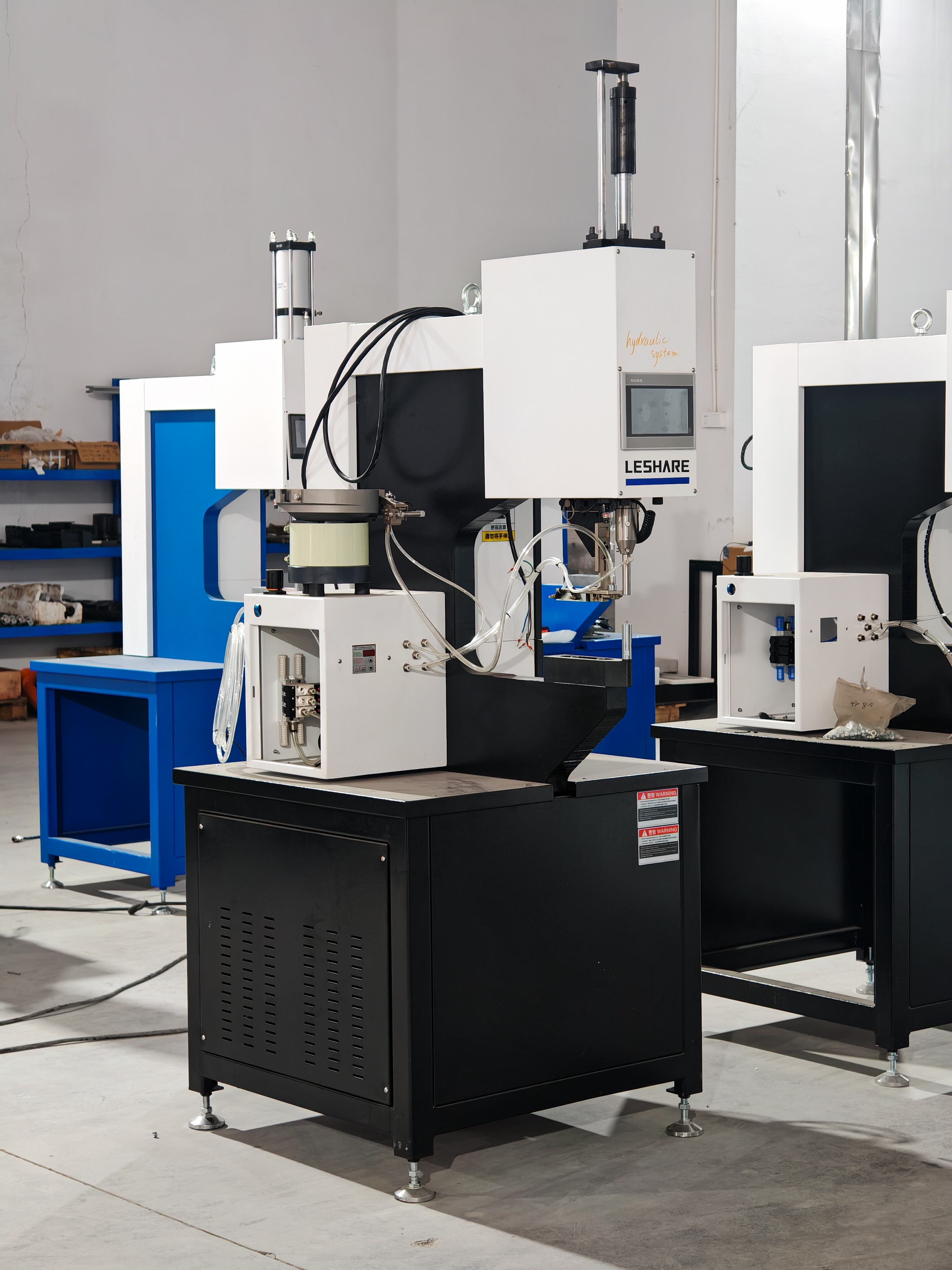
In modern sheet metal fabrication, the demand for faster production cycles, tighter tolerances, and consistent joint quality has never been higher. A fastener insertion machine addresses these demands directly by automating the process of pressing threaded fasteners—such as studs, nuts, and standoffs—into sheet metal panels with repeatable precision. Rather than relying on manual hammering or bench-press methods that introduce variability and operator fatigue, this technology brings controlled, measurable force to every insertion cycle.
Understanding how a fastener insertion machine contributes to assembly efficiency requires looking beyond simple cycle time. The real gains come from the compounding effect of reduced rework, lower scrap rates, better workforce utilization, and predictable throughput. This article explores the core mechanisms behind that efficiency improvement and provides practical insight for fabricators evaluating whether this equipment belongs in their production workflow.
The Role of Consistent Force Control in Assembly Quality
Why Manual Insertion Creates Downstream Problems
Manual fastener installation in sheet metal assemblies is deceptively error-prone. An operator pressing a clinch nut or self-clinching stud by hand or with a simple arbor press applies inconsistent force from part to part. This inconsistency leads to fasteners that are under-pressed, leaving them proud of the panel surface, or over-pressed, which distorts the surrounding material and compromises the base metal's structural integrity.
These defects rarely surface at the insertion stage. They appear later during sub-assembly, when a mating component refuses to seat flush, or during final inspection, when torque testing reveals that a fastener spins freely in its hole. At that point, the cost of rework has multiplied several times over compared to catching the issue at the source.
A fastener insertion machine eliminates this variability by delivering a precisely controlled insertion force on every cycle. The pneumatic or hydraulic actuator applies the same pressure whether it is the first part of a shift or the last, regardless of operator experience or fatigue level. This consistency is the foundational reason why switching to a fastener insertion machine reduces downstream quality issues.
Force Calibration and Material Compatibility
Different sheet metal gauges and alloys require different insertion forces. Thin cold-rolled steel tolerates far less compressive load than thick stainless plate, and aluminum requires careful force management to avoid material extrusion around the fastener boss. A well-configured fastener insertion machine allows the operator or process engineer to dial in the exact force required for each combination of fastener type, sheet material, and thickness.
This calibration capability means a single fastener insertion machine can serve multiple product lines without the guesswork associated with manual methods. Process engineers can document the correct pressure settings for each part number, store them as named configurations, and retrieve them instantly when a job changes over. The result is a process that is both flexible and repeatable—two qualities that are difficult to achieve simultaneously with manual insertion techniques.
From a quality management perspective, documented force settings also support traceability requirements. When a customer or internal audit asks how fastener integrity was assured, the process has a clear, verifiable answer tied to specific machine parameters rather than a general reference to operator skill.
Cycle Time Reduction and Throughput Gains
Where Time Is Lost in Manual Fastener Assembly
To understand where a fastener insertion machine recovers time, it helps to map the steps in a manual insertion process. The operator locates the correct fastener from a bin, positions it in the punched hole by hand, aligns it under the press anvil, applies downward pressure, checks the result visually, and moves to the next location. For a panel with fifteen insertion points, these micro-steps accumulate into significant handling time per part.
Beyond the physical motions, manual processes also carry a higher rate of misalignment, which requires the operator to stop, reposition, and re-press. Each correction adds time and increases the chance of surface marking or burr displacement. In a high-mix, moderate-volume environment, these interruptions can consume a disproportionate share of available shift time.
A fastener insertion machine compresses this workflow. The operator loads the panel onto the machine bed, positions it against a locating fixture, and activates the press. The machine delivers the insertion force in a fraction of a second. With a well-designed fixture and a practiced operator, panel changeover between insertion points becomes a fluid, low-effort motion rather than a careful manual operation.
The Compounding Effect on Daily Output
Time savings per insertion cycle may appear modest in isolation—perhaps a few seconds per fastener compared to a manual method. But those seconds multiply across every part, every shift, and every working day. A fabrication cell processing five hundred panels per shift, each requiring ten fastener insertions, accumulates thousands of insertion cycles daily. Even a three-second improvement per cycle translates into hours of recovered capacity over a month.
That recovered capacity can be redirected toward higher-value operations, used to absorb demand increases without adding headcount, or simply reduce overtime costs. The fastener insertion machine does not just speed up one step—it creates slack across the entire production schedule, which downstream operations can absorb without creating new bottlenecks.
Fabricators who track overall equipment effectiveness and value-stream metrics consistently find that introducing a fastener insertion machine improves not just insertion throughput but the flow efficiency of the entire assembly cell. Reduced waiting, less rework queuing, and more predictable takt times contribute to a measurable shift in cell-level productivity.
Workforce Utilization and Ergonomic Impact
Reducing Operator Fatigue and Injury Risk
Repetitive manual pressing operations carry a well-documented ergonomic cost. Operators performing hundreds of arbor press strokes per shift develop cumulative stress in the wrist, elbow, and shoulder joints. Over time, this contributes to musculoskeletal disorders, increased absenteeism, and rising workers' compensation claims—none of which appear on a simple time-study but all of which affect the true cost of manual insertion processes.
A fastener insertion machine transfers the physical work of insertion from the operator's body to the machine's actuator. The operator's role shifts to panel positioning, fixture engagement, and cycle initiation—tasks that involve far less repetitive strain. This ergonomic improvement sustains operator performance across a full shift rather than allowing quality and speed to degrade as fatigue accumulates in the afternoon hours.
For manufacturers facing labor shortages or operating in regions with strict occupational health regulations, the ergonomic argument for a fastener insertion machine carries significant weight beyond simple productivity metrics. A process that is easier to perform safely also broadens the pool of workers who can perform it reliably.
Skill Accessibility and Training Time
Manual fastener insertion, done well, requires a degree of tactile skill that takes time to develop. A new operator learns through trial and error what a properly seated fastener feels like, how much pressure is too much for a given gauge, and how to recover when a fastener misaligns mid-press. This learning curve represents a real cost in scrap, rework, and supervisor time.
A fastener insertion machine encodes much of this expertise into its settings and tooling. The correct force is set by the process engineer, the locating fixture ensures consistent positioning, and the machine delivers the same result regardless of the operator's tenure. A new employee can reach full productivity on this operation in a fraction of the time required for manual proficiency.
This skill accessibility is particularly valuable in high-turnover environments or during rapid headcount expansion to meet seasonal demand. The fastener insertion machine makes the process more robust to workforce variability, which is itself a form of efficiency that does not always appear in standard productivity reports but is acutely felt by production managers.
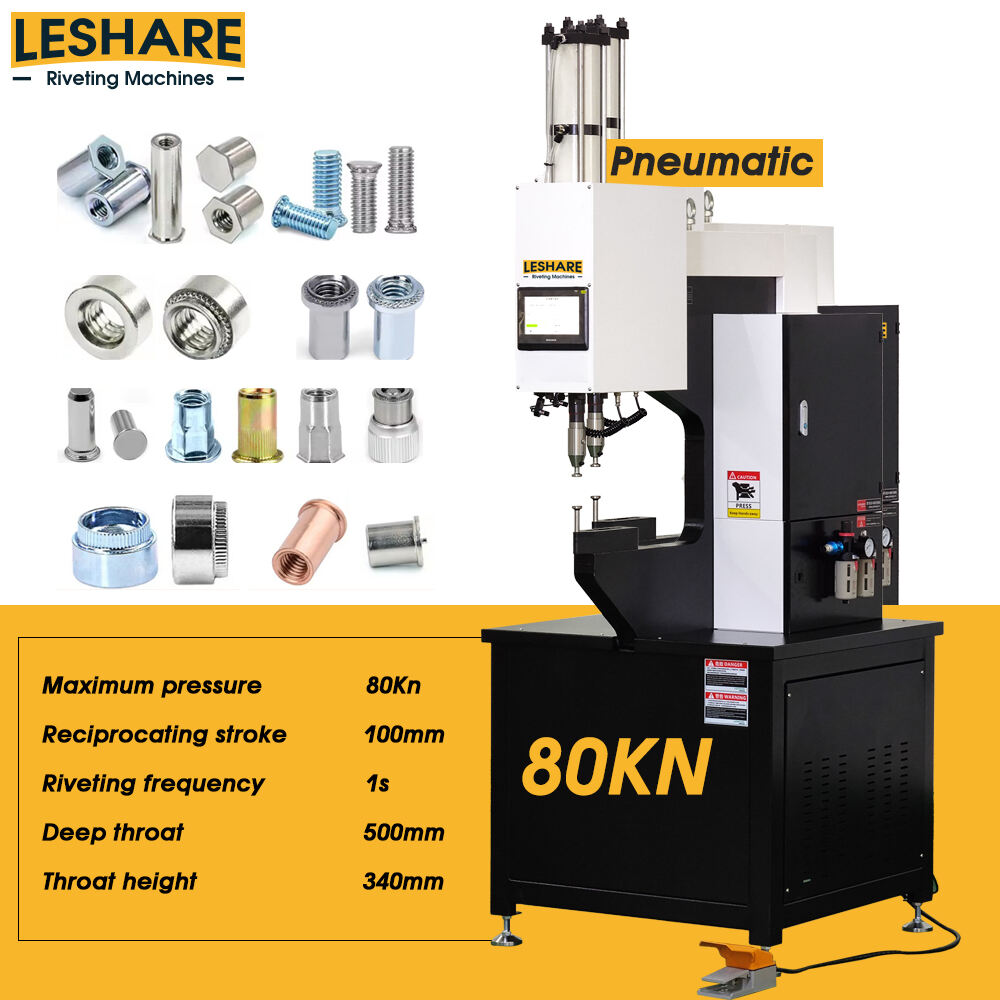
Integration with Sheet Metal Fabrication Workflows
Positioning the Machine Within the Cell Layout
The efficiency gains from a fastener insertion machine are maximized when the equipment is integrated thoughtfully into the surrounding fabrication cell rather than treated as a standalone island. Ideally, the machine is positioned immediately downstream of the punching or laser cutting operation, before any forming steps that would make panel handling more complex.
Flat panels are easier to fixture and index on a fastener insertion machine than formed parts. Performing insertion while the panel is still flat reduces the fixture complexity required and allows higher positioning accuracy. This sequencing decision—insert before bend where possible—is a practical workflow optimization that compounds the machine's inherent efficiency advantages.
Where insertion must occur after forming, custom tooling and bridge-style machine frames can accommodate complex panel geometries. The investment in application-specific tooling is generally recovered quickly through the quality and throughput improvements the fastener insertion machine delivers across the product's run life.
Fixture Design as a Force Multiplier
The fastener insertion machine itself provides consistent force, but the fixture it works with determines how quickly operators can position panels accurately and how many insertion errors occur due to part movement during the press stroke. A well-designed fixture is not a luxury—it is a critical component of the efficiency equation.
Good fixture design for a fastener insertion machine locates the panel from reference features that are already present in the punched blank, such as pilot holes or edge datums. This eliminates the need for the operator to measure or estimate positioning, reducing setup time to a simple load-and-locate motion. Quick-release clamping further reduces the time the panel spends in the machine per cycle.
Fabricators who invest in purpose-built fixtures for their fastener insertion machine consistently report higher utilization rates and lower defect rates than those who rely on adjustable generic tooling. The fixture is where the machine's mechanical capability is translated into part-specific process control, and it deserves the same engineering attention as the machine itself.
Evaluating the Efficiency Case for Your Operation
Key Metrics to Assess Before and After Implementation
Making the efficiency case for a fastener insertion machine requires establishing clear baseline metrics before implementation and comparing them rigorously after a run-in period. The most relevant metrics include average insertion cycle time per panel, fastener-related defect rate and rework hours, operator injury or ergonomic incident frequency, and overall cell throughput in panels per shift.
Secondary metrics worth tracking include training time for new operators on the insertion operation, changeover time between part numbers, and the frequency of machine-related stoppages versus manual-method interruptions. Together, these data points provide a complete picture of how the fastener insertion machine is affecting efficiency rather than isolating a single variable.
Operations with high part mix and frequent changeovers should also evaluate how quickly the fastener insertion machine can be retooled between jobs. If changeover time is long relative to batch sizes, the machine's cycle time advantage may be partially offset at the job level, and investment in additional tooling sets or a quick-change system may be warranted.
Scenarios Where the Efficiency Gain Is Strongest
The fastener insertion machine delivers its strongest efficiency improvements in operations characterized by high insertion volume per shift, thin or sensitive sheet materials where manual force control is particularly unreliable, and products with strict torque or pull-out strength requirements that demand documented process control.
It is also highly effective in environments where labor availability is constrained, because it allows a single operator to maintain higher output with less physical effort. For contract fabricators competing on price, the cost-per-part reduction achievable with a fastener insertion machine can be the difference between winning and losing a bid on a high-volume job.
Lower-volume job shops with wide part variety and small batch sizes can still benefit, but the efficiency case rests more on quality and rework reduction than on raw throughput. In these environments, the fastener insertion machine pays back through fewer customer returns, reduced inspection time, and the ability to guarantee insertion quality without depending on the skill level of the operator assigned to the job on a given day.
FAQ
What types of fasteners can be installed with a fastener insertion machine?
A fastener insertion machine is typically designed to install self-clinching fasteners including threaded studs, clinch nuts, standoffs, and panel fasteners into sheet metal. The specific range of fastener types and sizes depends on the machine's force rating and the available tooling. Most pneumatic or hydraulic models used in sheet metal fabrication can accommodate the full standard range of metric and imperial self-clinching hardware used in enclosure and chassis manufacturing.
Does a fastener insertion machine work with all sheet metal materials?
A fastener insertion machine can process most common sheet metal materials including cold-rolled steel, stainless steel, and aluminum, provided the machine's force output and tooling are matched to the material. Softer materials like aluminum require careful force calibration to avoid over-insertion or material extrusion. Most machines intended for industrial fabrication offer adjustable force settings that accommodate the range of gauges and alloys typical in sheet metal assembly work.
How does a fastener insertion machine reduce rework compared to manual methods?
The primary rework reduction comes from the machine's ability to deliver consistent, calibrated insertion force on every cycle. Manual methods introduce variability in both force and alignment, leading to fasteners that are incorrectly seated, tilted, or surface-proud. These defects require time-consuming correction or panel scrapping. A fastener insertion machine minimizes these outcomes by encoding the correct process parameters into the machine setup rather than relying on individual operator judgment.
Is a fastener insertion machine suitable for low-volume or prototype production?
Yes, a fastener insertion machine can be used effectively in low-volume and prototype environments, particularly when the parts involve thin or precise materials where manual insertion risk is high. In prototype work, the machine ensures that sample panels meet the same fastener integrity standards as production parts, which is important for accurate functional testing. The efficiency gains in terms of cycle time are less pronounced at low volumes, but the quality and repeatability benefits apply regardless of batch size.
Table of Contents
- The Role of Consistent Force Control in Assembly Quality
- Cycle Time Reduction and Throughput Gains
- Workforce Utilization and Ergonomic Impact
- Integration with Sheet Metal Fabrication Workflows
- Evaluating the Efficiency Case for Your Operation
-
FAQ
- What types of fasteners can be installed with a fastener insertion machine?
- Does a fastener insertion machine work with all sheet metal materials?
- How does a fastener insertion machine reduce rework compared to manual methods?
- Is a fastener insertion machine suitable for low-volume or prototype production?