 EN
EN

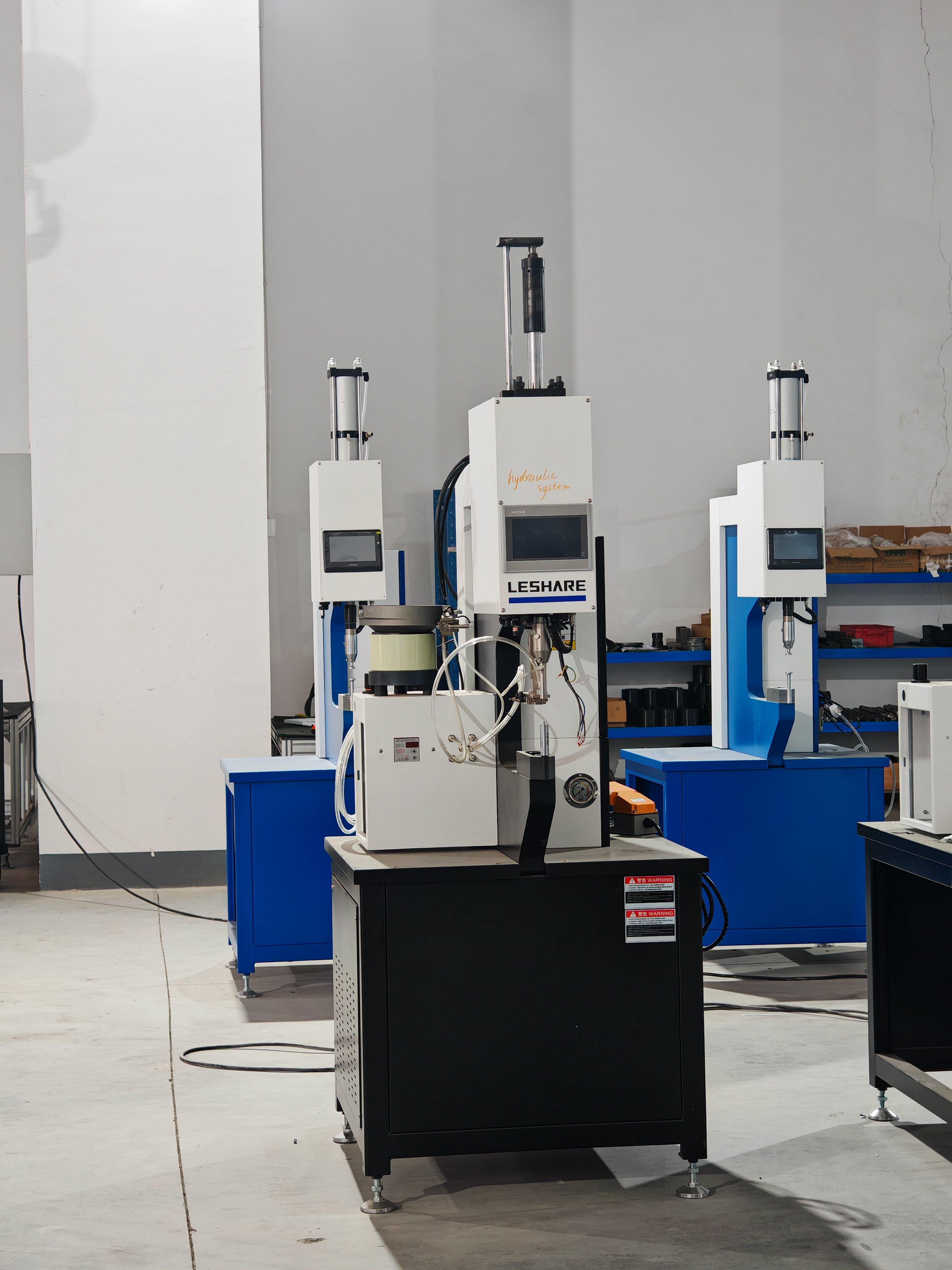
Sheet metal assembly has long relied on welding as the default method for joining metal components, but the landscape is shifting. Manufacturers across automotive, electronics, HVAC, and appliance industries are discovering that an automatic clinching machine can replace welding in a wide range of assembly scenarios — delivering cleaner joints, faster cycle times, and significant cost savings without the heat, fumes, or post-processing that welding demands. Understanding exactly how this replacement works requires a close look at the mechanism, the production conditions where it excels, and the practical trade-offs involved.
The core promise of an automatic clinching machine is mechanical joining through controlled deformation rather than fusion. A punch and die system forces two or more layers of sheet metal to interlock at a localized point, forming a button-shaped joint with measurable shear and tensile strength. No heat is applied, no filler material is consumed, and no surface coating is burned away. For production engineers evaluating their assembly process, this distinction is not merely technical — it has direct implications for quality consistency, throughput, worker safety, and total operating cost. This article walks through the specific mechanisms that allow an automatic clinching machine to substitute for welding and the conditions under which that substitution makes the most sense.
The Mechanical Principle Behind Clinching and Why It Matters
How the Joining Process Works Without Heat
An automatic clinching machine operates on a cold-forming principle. A hardened punch descends under hydraulic or pneumatic pressure, pressing the sheet metal layers into a precision-ground die cavity. The material flows laterally, creating an undercut interlock — a mushroom-shaped neck that mechanically locks the layers together. The entire process takes less than a second per joint, and because no thermal energy is introduced, the metallurgical properties of the base material remain unchanged.
This matters because welding inevitably creates a heat-affected zone where grain structure changes, hardness fluctuates, and residual stress accumulates. An automatic clinching machine eliminates this zone entirely. For high-strength steels, aluminum alloys, and pre-coated or galvanized sheet metal, the absence of heat-related distortion is a decisive advantage. The joint geometry is predictable and repeatable across thousands of cycles without operator-dependent variation.
The strength characteristics of a clinched joint depend on material thickness, ductility, and the tooling geometry programmed into the automatic clinching machine. For thin-gauge applications — typically 0.5 mm to 3 mm per layer — clinching achieves joint strength that is fully adequate for structural panel assemblies, bracket mounting, and enclosure fabrication. Engineers who test clinched joints under shear and peel loading consistently find performance within the range delivered by resistance spot welding on equivalent gauges.
Comparing the Joining Footprint to Welding
A welded spot requires a cleaned, bare-metal surface, proper electrode pressure, and a controlled current pulse. Any surface contamination, coating layer, or gap between sheets introduces variability. An automatic clinching machine, by contrast, can join coated, painted, or lubricated sheet metal without surface preparation. The clinch point is self-contained — it requires no consumables and leaves no spatter, slag, or discoloration on adjacent surfaces.
From a footprint perspective, the clinch point is slightly raised on the die side, which is a predictable and dimensionally controlled feature. Welded spots, depending on technique and operator skill, can vary in diameter, penetration depth, and surface profile. For assemblies where dimensional consistency directly affects downstream fit-up or cosmetic appearance, an automatic clinching machine provides a more controlled result across high-volume production runs.
Where an Automatic Clinching Machine Replaces Welding Most Effectively
Pre-Coated and Sensitive Surface Materials
One of the most compelling scenarios for replacing welding with an automatic clinching machine is the joining of pre-coated, galvanized, or powder-coated sheet metal. Welding burns through surface treatments, requiring post-weld recoating or touch-up — both of which add cost and introduce quality risk. An automatic clinching machine joins the material through the coating layer without destroying it. The coating remains intact at the joint periphery, preserving corrosion protection and eliminating re-treatment steps.
This applies equally to aluminum sheet metal with anodized finishes and to stainless steel components where weld discoloration would require electropolishing. Industries such as HVAC ductwork, electrical enclosures, and domestic appliance manufacturing have adopted the automatic clinching machine precisely because their materials arrive at the assembly stage already finished, and any process that damages the finish adds cost without adding value.
Mixed-Material and Dissimilar Metal Assemblies
Welding dissimilar metals — such as steel to aluminum, or copper to stainless — is technically challenging. Differences in melting point, thermal conductivity, and metallurgical compatibility create brittle intermetallic compounds at the weld interface, weakening the joint. An automatic clinching machine joins dissimilar metals through mechanical interlocking, bypassing the metallurgical incompatibility problem entirely. No fusion occurs, so no intermetallic phase forms.
This capability is increasingly relevant as manufacturers design lighter assemblies by combining aluminum structural panels with steel reinforcements or mounting brackets. An automatic clinching machine handles these combinations reliably provided the softer material has sufficient ductility to flow into the die cavity. Process engineers can validate joint strength through prototype testing before committing to production tooling, giving them a clear decision basis for replacing welded joints in mixed-material designs.
High-Volume Thin-Gauge Production Lines
Welding thin-gauge sheet metal — below 1 mm — is prone to burn-through, warping, and inconsistent penetration. Skilled welders and tightly controlled resistance welding equipment can manage thin material, but the process window is narrow and rework rates tend to be higher than on thicker stock. An automatic clinching machine handles thin-gauge sheet metal with high consistency because the forming force is precisely controlled and the tooling geometry is designed specifically for the material thickness range in use.
In high-volume environments — stamping lines, progressive die operations, and robotic assembly cells — an automatic clinching machine integrates naturally into the production flow. Cycle time per joint is comparable to resistance spot welding, but without electrode wear, tip dressing, or weld schedule adjustments. Over a production run of hundreds of thousands of parts, the elimination of consumables and the reduction in process monitoring overhead translate into a measurable cost advantage.
Process Integration and Automation Compatibility
Fitting an Automatic Clinching Machine Into Existing Lines
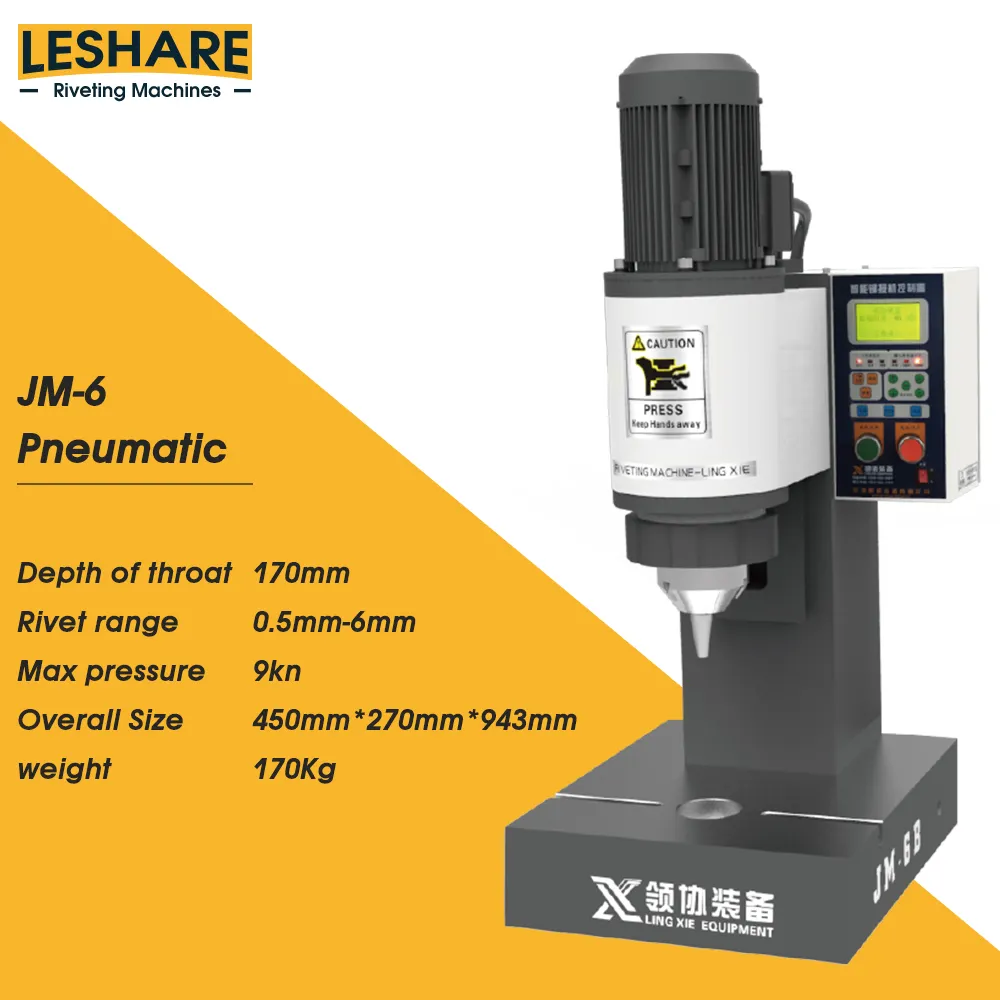
Replacing welding stations with an automatic clinching machine does not require rebuilding the entire production line. The machine footprint is typically compact, and the tooling changeover for different joint patterns or material combinations is faster than recalibrating welding equipment. Pneumatic or hydraulic actuation systems on an automatic clinching machine are straightforward to interface with programmable logic controllers already managing conveyor timing, fixture sequencing, and quality inspection triggers.
For robotic integration, the clinching head can be mounted on a robot arm as an end-of-arm tool, allowing the system to reach multiple joint positions on a complex assembly in a single fixture setup. This is a direct functional parallel to robotic resistance spot welding, but the automatic clinching machine variant eliminates the water cooling lines, transformer maintenance, and electrode change intervals that robotic welding requires. The result is a leaner cell with fewer maintenance touchpoints.
Quality Monitoring and In-Process Verification
An automatic clinching machine can be equipped with force-displacement monitoring that records the punch force curve for every joint cycle. A correctly formed clinch produces a characteristic force signature, and deviations from that signature — caused by material thickness variation, misalignment, or tooling wear — are immediately detectable. This in-process monitoring capability is comparable to the weld quality monitoring built into modern resistance welding controllers, and it provides a digital quality record for each joint without destructive testing.
By contrast, verifying weld quality non-destructively is more demanding. Ultrasonic testing, X-ray inspection, or destructive peel testing are the standard methods, and none of them are as fast or as naturally integrated as the force monitoring built into a well-configured automatic clinching machine. For manufacturers operating under quality management systems that require joint-level traceability, this monitoring capability is a practical advantage that welding does not easily match at the same cost point.
Limitations and the Conditions Where Welding Remains Preferable
Material and Thickness Constraints
An automatic clinching machine requires that at least one of the materials being joined has sufficient ductility to deform into the die cavity without cracking. Hardened steels, cast components, and very thick plate — generally above 4 mm per layer — may not be suitable for clinching. Welding remains the appropriate choice for thick structural members, load-bearing frames, and any application where the joint must transfer loads that exceed what cold-forming can achieve in the available material thickness.
It is also worth noting that an automatic clinching machine creates a localized raised feature on one side of the joint. Where completely flush surfaces are required on both faces — such as in certain precision enclosures or aerodynamic panel assemblies — the clinch geometry may not be acceptable. In these cases, adhesive bonding, laser welding with minimal distortion, or hybrid clinch-adhesive approaches may be more suitable than either standard welding or standard clinching alone.
Structural Weld Requirements in Regulated Industries
Certain industries operate under standards and regulations that explicitly specify welded joints for load-bearing or pressure-containing assemblies. In pressure vessel fabrication, structural steelwork governed by building codes, or safety-critical automotive structural components, the qualification path for welding is well-established and the replacement of welded joints with clinched alternatives requires formal re-qualification. An automatic clinching machine is not a universal drop-in replacement in these contexts without engineering review and, where applicable, regulatory approval.
This does not diminish the value of an automatic clinching machine in the broad range of non-regulated sheet metal assembly applications — it simply clarifies where the replacement decision requires additional engineering diligence. For the majority of industrial enclosures, HVAC components, appliance panels, lighting fixtures, and automotive interior structures, clinching has already been validated and adopted at scale, and the automatic clinching machine is a proven production tool rather than an experimental alternative.
FAQ
Can an automatic clinching machine join more than two layers of sheet metal at once?
Yes, an automatic clinching machine can join multiple layers in a single stroke, provided the combined material stack is within the force and ductility parameters of the tooling configuration. Three-layer joins are common in assembly brackets and panel reinforcements. The tooling geometry and punch force must be matched to the specific stack-up, which is determined during the tooling qualification phase before production begins.
Does the clinched joint require any sealing if used in outdoor or wet environments?
A standard clinched joint produced by an automatic clinching machine is not inherently sealed against liquid ingress because the interlock is mechanical rather than fused. For outdoor enclosures, HVAC ducting, or assemblies exposed to moisture, a clinch-plus-sealant approach is commonly used — the automatic clinching machine forms the structural joint, and a bead of sealant or adhesive is applied along the joint line to provide the barrier function. This hybrid method is well-established in the industry.
How does the tooling life of an automatic clinching machine compare to welding electrodes?
Clinching tooling — punch and die sets — typically achieves hundreds of thousands to over a million cycles before requiring replacement, depending on the material being joined and the joint geometry. Resistance welding electrodes require dressing or replacement every few thousand welds on steel and even more frequently on aluminum. This difference in tooling longevity is one of the operational cost advantages that make an automatic clinching machine attractive for high-volume production environments where minimizing downtime for consumable changes is a priority.
Is it possible to disassemble a clinched joint if rework is needed?
Clinched joints formed by an automatic clinching machine are permanent mechanical connections and are not designed for non-destructive disassembly. Rework typically requires drilling out the clinch point and re-joining with a new clinch in the same or an adjacent location. This is comparable to the rework approach for spot welds, which also require drilling out if the joint must be separated. For assemblies where disassembly is a design requirement, mechanical fasteners or removable clip systems are more appropriate than clinching or welding.
Table of Contents
- The Mechanical Principle Behind Clinching and Why It Matters
- Where an Automatic Clinching Machine Replaces Welding Most Effectively
- Process Integration and Automation Compatibility
- Limitations and the Conditions Where Welding Remains Preferable
-
FAQ
- Can an automatic clinching machine join more than two layers of sheet metal at once?
- Does the clinched joint require any sealing if used in outdoor or wet environments?
- How does the tooling life of an automatic clinching machine compare to welding electrodes?
- Is it possible to disassemble a clinched joint if rework is needed?