 EN
EN

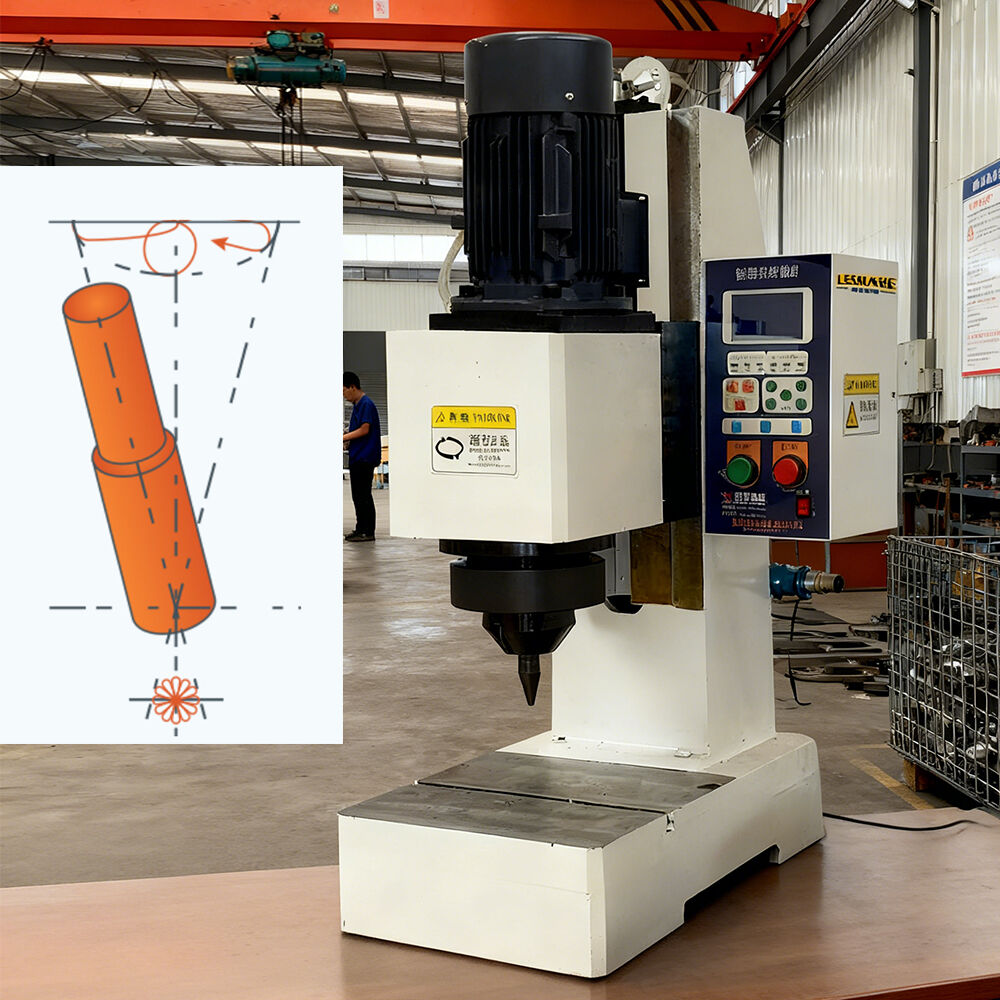
Manufacturing industries constantly seek innovative solutions to enhance assembly efficiency while maintaining superior product quality. An orbital riveting machine represents a breakthrough technology that revolutionizes traditional fastening methods by providing precise, controlled, and repeatable riveting operations. This advanced equipment utilizes a unique orbital motion that creates stronger joints with minimal material stress, making it an indispensable tool for modern production lines across aerospace, automotive, electronics, and medical device manufacturing sectors.
Understanding Orbital Riveting Technology
Fundamental Operating Principles
The orbital riveting machine operates through a sophisticated mechanism that combines rotational and axial movements to form perfect rivet joints. Unlike traditional impact riveting methods, this technology applies controlled pressure while the riveting tool moves in a precise orbital pattern around the rivet shaft. The process creates a mushroom-shaped head formation without the shock loads typically associated with conventional riveting techniques. This gentle yet effective approach ensures consistent joint quality while preserving the integrity of delicate components and substrates.
During operation, the orbital riveting machine maintains constant contact between the forming tool and rivet material throughout the entire forming cycle. The orbital motion distributes forming forces evenly across the rivet head, eliminating stress concentrations that could lead to material failure or component damage. This controlled environment allows operators to achieve precise rivet head dimensions and surface finishes that meet the most stringent quality standards required in critical applications.
Key Components and Design Features
Modern orbital riveting machines incorporate advanced servo-motor systems that provide exceptional control over forming parameters including orbital diameter, forming speed, and applied pressure. The machine frame typically features robust construction with precision linear guides that ensure accurate tool positioning throughout the riveting cycle. Programmable logic controllers enable operators to store multiple riveting programs, facilitating quick changeovers between different product configurations without manual adjustments.
The forming tooling system represents another critical component that directly influences riveting quality and efficiency. Specialized forming tools are designed with specific geometries to accommodate various rivet materials, sizes, and head configurations. Tool holders incorporate quick-change mechanisms that minimize setup times while maintaining precise tool alignment. Additionally, integrated force monitoring systems provide real-time feedback on forming parameters, enabling immediate detection of process variations that could affect joint quality.
Efficiency Advantages in Manufacturing Operations
Cycle Time Reduction and Throughput Enhancement
Implementation of an orbital riveting machine delivers significant improvements in manufacturing cycle times compared to traditional riveting methods. The continuous forming action eliminates the multiple impact cycles required by pneumatic riveting guns, reducing typical riveting times from several seconds to under one second per joint. This dramatic time reduction translates directly into increased production throughput, allowing manufacturers to meet growing demand without proportional increases in labor costs or facility requirements.
The consistent and repeatable nature of orbital riveting eliminates the need for extensive quality inspections that often slow down conventional riveting operations. Each rivet joint forms under identical conditions, producing uniform results that reduce statistical process control sampling requirements. Operators can maintain higher production rates while confidence in joint quality remains consistently high throughout extended production runs.
Labor Efficiency and Ergonomic Benefits
Orbital riveting machines significantly reduce physical demands on operators compared to handheld riveting tools. The automated forming process eliminates repetitive stress injuries commonly associated with manual riveting operations, while programmable controls reduce the skill level required for consistent results. Operators can focus on material handling and quality monitoring rather than controlling forming forces and tool positioning, leading to improved job satisfaction and reduced training requirements.
The reduced noise levels generated by orbital riveting machines create a more comfortable working environment compared to impact riveting methods. This improvement in workplace conditions contributes to better employee retention while complying with occupational health and safety regulations. Additionally, the elimination of shock loads reduces vibration transmission to surrounding equipment, preventing interference with sensitive measuring instruments or nearby precision operations.
Quality Improvements and Process Control
Enhanced Joint Strength and Reliability
The gentle forming action of an orbital riveting machine creates stronger, more reliable joints compared to impact riveting methods. The controlled deformation process maintains optimal material grain structure while achieving complete filling of rivet holes, resulting in joints that exhibit superior tensile and shear strength characteristics. This enhanced joint integrity proves particularly valuable in applications where component failure could result in safety hazards or significant economic losses.
Consistent forming parameters eliminate the joint strength variations commonly observed with manual riveting techniques. Each orbital riveting machine cycle applies identical forming forces and motions, producing joints with minimal strength scatter throughout production runs. This reliability enables designers to optimize joint configurations with confidence in achieving predicted performance levels, potentially reducing material usage and component weight while maintaining safety margins.
Precision Control and Repeatability
Advanced process monitoring capabilities integrated into modern orbital riveting machines provide unprecedented control over joint formation parameters. Real-time force and displacement monitoring enables immediate detection of process deviations, allowing corrective action before defective joints are produced. Data logging capabilities support statistical process control initiatives while providing traceability documentation required for aerospace and medical device applications.
The programmable nature of orbital riveting systems ensures consistent results regardless of operator skill level or fatigue factors. Once optimal forming parameters are established and programmed into the machine controller, subsequent rivets form under identical conditions without variation. This repeatability proves especially valuable in high-volume production environments where maintaining consistent quality across thousands of joints presents significant challenges with manual methods.
Applications Across Industries
Aerospace and Defense Manufacturing
Aerospace manufacturers rely heavily on orbital riveting machines for assembling critical components where joint integrity directly impacts flight safety. The technology excels in forming rivets in thin-walled structures without causing material distortion or stress concentrations that could compromise structural performance. Applications include aircraft panel assembly, control surface manufacturing, and helicopter rotor blade construction where precise joint formation ensures optimal aerodynamic characteristics.
The ability to form rivets in heat-treated aluminum alloys without affecting material properties makes orbital riveting particularly valuable for aerospace applications. Traditional impact methods often cause work hardening or material property changes that require subsequent heat treatment processes, while orbital forming maintains original material characteristics throughout the joint formation process. This capability simplifies manufacturing workflows while ensuring consistent material properties in finished assemblies.
Automotive and Transportation Industries
Automotive manufacturers utilize orbital riveting machines extensively for assembling electronic components, interior trim pieces, and structural elements where appearance and reliability are paramount. The smooth, consistent rivet heads produced by orbital forming eliminate the need for secondary finishing operations while providing joints that withstand vibration and thermal cycling throughout vehicle service life. Applications range from dashboard assembly to brake component manufacturing where joint failure could compromise vehicle safety.
The versatility of orbital riveting technology accommodates the diverse material combinations common in modern automotive applications. Whether joining dissimilar metals, composites, or hybrid material combinations, the controlled forming process adapts to different material properties while maintaining consistent joint quality. This flexibility proves essential as automotive manufacturers increasingly adopt lightweight materials to improve fuel efficiency while maintaining structural integrity requirements.
Cost-Benefit Analysis and Return on Investment
Direct Cost Savings and Productivity Gains
Investment in orbital riveting machine technology generates measurable cost savings through multiple channels including reduced labor requirements, improved material utilization, and decreased quality-related expenses. The faster cycle times enable manufacturers to increase production capacity without proportional increases in facility space or equipment investment, improving overall capital efficiency. Additionally, the elimination of rework and scrap associated with inconsistent manual riveting reduces material costs while improving delivery performance.
Energy consumption represents another area where orbital riveting machines deliver cost advantages compared to pneumatic systems. Electric servo drives operate more efficiently than compressed air systems while providing superior control precision. The reduced maintenance requirements of electric systems further contribute to lower operating costs over the equipment lifecycle, making orbital riveting an attractive long-term investment for manufacturers focused on operational efficiency.
Quality-Related Cost Reductions
The consistent quality output of orbital riveting machines significantly reduces costs associated with quality control inspections, rework, and warranty claims. The elimination of joint strength variations reduces the need for extensive testing protocols while providing confidence in meeting customer specifications without over-engineering joint designs. This quality consistency enables manufacturers to optimize inventory levels and reduce safety stock requirements, improving cash flow and reducing carrying costs.
Long-term reliability improvements resulting from superior joint quality translate into reduced field service costs and enhanced customer satisfaction. Products assembled using orbital riveting technology typically exhibit extended service life and reduced maintenance requirements, creating competitive advantages in markets where total cost of ownership influences purchasing decisions. These benefits often justify premium pricing strategies that improve profit margins while strengthening customer relationships.
Implementation Considerations and Best Practices
Equipment Selection and Configuration
Successful implementation of orbital riveting machine technology requires careful consideration of application-specific requirements including joint configurations, production volumes, and quality specifications. Manufacturers must evaluate forming force requirements, workspace constraints, and integration needs when selecting appropriate equipment configurations. Collaboration with experienced equipment suppliers ensures optimal machine specifications that balance performance capabilities with cost considerations while providing flexibility for future application expansion.
The selection of appropriate tooling and fixturing represents another critical implementation factor that directly influences riveting quality and efficiency. Custom tooling design should consider part geometry, material properties, and access limitations while incorporating features that facilitate rapid changeovers between product variants. Proper fixturing ensures consistent part positioning and supports the orbital riveting machine forming forces without introducing distortion or stress concentrations that could compromise joint quality.
Training and Process Development
Effective operator training programs ensure maximum benefit realization from orbital riveting machine investments while maintaining consistent quality standards. Training should encompass equipment operation, tooling setup, quality monitoring, and troubleshooting procedures that enable operators to optimize performance while identifying potential issues before they affect production. Regular refresher training and skills assessment help maintain proficiency levels while incorporating process improvements and technology updates.
Process development activities should include comprehensive joint qualification testing to establish optimal forming parameters for each application. This testing validates joint strength characteristics while determining process windows that accommodate normal material and dimensional variations. Documentation of qualified processes enables consistent reproduction across multiple shifts and production locations while providing evidence of process control for customer audits and certification requirements.
FAQ
What types of materials can be processed using orbital riveting machines
Orbital riveting machines can effectively process a wide range of materials including aluminum alloys, steel, stainless steel, copper, brass, and various plastic materials. The gentle forming action makes this technology particularly suitable for soft materials that might be damaged by impact riveting methods. Material thickness ranges from thin foils up to several millimeters, depending on the specific machine capacity and tooling configuration. The key requirement is that the rivet material must be sufficiently ductile to undergo plastic deformation during the forming process.
How does orbital riveting compare to traditional impact riveting in terms of joint quality
Orbital riveting produces superior joint quality compared to impact methods through several mechanisms. The controlled forming process creates more uniform material flow that completely fills rivet holes while maintaining optimal grain structure. Joint strength consistency improves significantly due to repeatable forming conditions, while the absence of shock loads prevents stress concentrations that can lead to premature failure. Additionally, the smooth forming action produces better surface finishes that enhance corrosion resistance and appearance in visible applications.
What maintenance requirements should be expected for orbital riveting equipment
Orbital riveting machines typically require minimal maintenance compared to pneumatic systems due to their electric drive systems and precision construction. Regular maintenance activities include lubrication of linear guides, inspection of tooling wear patterns, and periodic calibration of force monitoring systems. The absence of compressed air systems eliminates concerns about contamination and filter replacement, while servo motor systems provide long service life with minimal intervention. Most manufacturers recommend comprehensive maintenance intervals of 6-12 months depending on usage intensity and operating environment conditions.
Can orbital riveting machines be integrated into automated production systems
Modern orbital riveting machines are designed with automation integration capabilities including programmable logic controllers, communication protocols, and standardized mounting interfaces. Integration with robotic systems, conveyor lines, and material handling equipment enables fully automated riveting cells that operate with minimal human intervention. The programmable nature of orbital riveting controllers facilitates integration with manufacturing execution systems for production tracking and quality data collection. Many installations include vision systems for automatic part positioning and quality verification to create complete automated assembly solutions.
Table of Contents
- Understanding Orbital Riveting Technology
- Efficiency Advantages in Manufacturing Operations
- Quality Improvements and Process Control
- Applications Across Industries
- Cost-Benefit Analysis and Return on Investment
- Implementation Considerations and Best Practices
-
FAQ
- What types of materials can be processed using orbital riveting machines
- How does orbital riveting compare to traditional impact riveting in terms of joint quality
- What maintenance requirements should be expected for orbital riveting equipment
- Can orbital riveting machines be integrated into automated production systems