 EN
EN

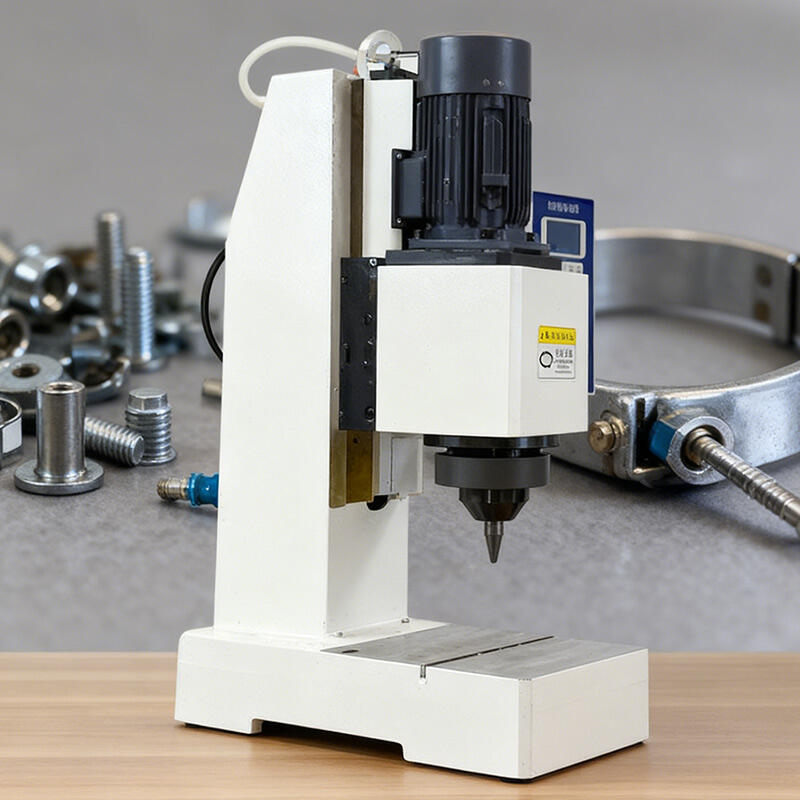
Manufacturing excellence in modern production environments demands precision joining techniques that deliver consistent results while maintaining operational efficiency. Lowspeed radial riveting has emerged as a cornerstone technology for automated assembly lines, offering unparalleled control over fastening operations across diverse industrial applications. This advanced joining method transforms traditional riveting processes by introducing controlled rotational forces that create superior mechanical bonds between components.
The implementation of lowspeed radial riveting systems requires careful consideration of production line architecture, tooling specifications, and quality control parameters. Unlike conventional high-speed riveting processes, this methodology prioritizes precision over speed, enabling manufacturers to achieve exceptional joint quality while reducing material stress and component deformation. Strategic integration of these systems can significantly enhance production reliability and reduce downstream quality issues.
Understanding Lowspeed Radial Riveting Technology
Fundamental Operating Principles
Lowspeed radial riveting operates through controlled rotational motion combined with axial pressure to form permanent mechanical joints. The process involves gradual material deformation that preserves component integrity while creating robust connections. This methodology differs substantially from impact riveting by eliminating shock forces that can compromise delicate assemblies or precision components.
The technology employs specialized tooling that rotates at predetermined speeds while applying consistent downward pressure. This dual-action approach ensures uniform material flow during rivet formation, resulting in predictable joint characteristics and enhanced fatigue resistance. Process parameters can be precisely controlled to accommodate various material combinations and thickness specifications.
Key Advantages Over Traditional Methods
Implementation of lowspeed radial riveting delivers measurable improvements in joint quality and production consistency. The controlled nature of the process minimizes component distortion while maximizing material utilization efficiency. These benefits translate directly into reduced scrap rates and improved product reliability in demanding applications.
Energy consumption profiles demonstrate significant advantages compared to traditional riveting methods. The gradual forming process requires less instantaneous power while achieving superior results, making it an environmentally conscious choice for modern manufacturing facilities. Additionally, reduced noise levels contribute to improved workplace conditions and regulatory compliance.
Production Line Integration Strategies
Equipment Selection and Positioning
Successful lowspeed radial riveting integration begins with strategic equipment placement within existing production workflows. Pneumatic systems offer excellent controllability and can be precisely positioned to accommodate various component geometries. Consider clearance requirements, accessibility for maintenance, and integration with existing conveyor systems when determining optimal placement.
Force requirements vary significantly based on material specifications and joint configurations. Proper equipment sizing ensures consistent performance while avoiding over-specification that increases capital costs. Modular system designs provide flexibility for future expansion and allow manufacturers to scale operations efficiently as production demands evolve.
Automation Integration Requirements
Modern lowspeed radial riveting systems integrate seamlessly with programmable logic controllers and manufacturing execution systems. This connectivity enables real-time process monitoring, quality data collection, and predictive maintenance scheduling. Sensor integration provides continuous feedback on critical parameters including force application, rotation speed, and cycle completion status.
Communication protocols must align with existing factory automation standards to ensure compatibility and minimize integration complexity. Standardized interfaces facilitate data exchange between riveting systems and upstream quality management platforms. This integration capability supports Industry 4.0 initiatives and enables comprehensive production traceability.
Process Parameter Optimization
Speed and Force Control
Optimal lowspeed radial riveting performance requires precise calibration of rotational speed and applied force parameters. Material properties, component thickness, and joint design specifications influence these critical settings. Systematic testing protocols help establish baseline parameters that can be refined through production experience and quality feedback.
Force monitoring systems provide real-time feedback that enables automatic adjustments during production runs. This capability ensures consistent joint formation even when material properties vary within acceptable tolerances. Advanced systems incorporate learning algorithms that continuously optimize parameters based on quality outcomes and production efficiency metrics.
Quality Control Integration
Implementing robust quality control measures ensures lowspeed radial riveting operations maintain specified standards throughout production runs. In-process monitoring systems track critical parameters and trigger alerts when deviations occur. This proactive approach prevents defective products from progressing through downstream operations.
Statistical process control methods provide valuable insights into process capability and stability. Regular sampling protocols combined with dimensional inspection verify joint integrity and compliance with engineering specifications. Documentation systems maintain comprehensive records supporting traceability requirements and continuous improvement initiatives.
Material Compatibility and Applications
Suitable Material Combinations
Lowspeed radial riveting demonstrates exceptional versatility across diverse material combinations including aluminum alloys, steel grades, and composite materials. The controlled deformation process accommodates materials with varying hardness levels while maintaining joint integrity. Understanding material behavior under radial forming conditions enables optimal process parameter selection.
Dissimilar material joining capabilities expand application opportunities in industries requiring lightweight construction or specialized performance characteristics. The gradual forming process minimizes galvanic corrosion risks by reducing material mixing at joint interfaces. This advantage proves particularly valuable in aerospace and automotive applications where long-term durability is critical.
Industry Applications
Automotive manufacturing extensively utilizes lowspeed radial riveting for structural components, interior assemblies, and electronic housings. The process excels in applications requiring consistent appearance and dimensional accuracy. Production volumes benefit from reduced cycle times and improved quality consistency compared to alternative joining methods.
Electronics manufacturing leverages the precision capabilities of lowspeed radial riveting for component assembly and enclosure fabrication. The controlled process prevents damage to sensitive components while creating reliable mechanical connections. Heat-sensitive applications particularly benefit from the room-temperature joining process that eliminates thermal stress concerns.
Implementation Best Practices
Training and Skill Development
Successful lowspeed radial riveting implementation requires comprehensive operator training programs that cover both theoretical principles and practical applications. Understanding process fundamentals enables operators to identify potential issues and make appropriate adjustments. Hands-on training with actual production components builds confidence and competency in real-world scenarios.
Maintenance personnel require specialized knowledge of pneumatic systems, tooling requirements, and troubleshooting procedures. Regular training updates ensure teams stay current with technology advances and best practice developments. Cross-training initiatives provide operational flexibility and reduce dependency on individual expertise.
Maintenance and Troubleshooting
Preventive maintenance protocols maximize lowspeed radial riveting system reliability and extend equipment service life. Regular inspection schedules identify wear patterns and potential failure points before they impact production. Lubrication requirements, seal replacements, and tooling condition assessments form the foundation of effective maintenance programs.
Troubleshooting procedures should address common issues including inconsistent joint formation, excessive tool wear, and parameter drift. Systematic diagnostic approaches help identify root causes and implement corrective actions efficiently. Documentation of recurring issues supports continuous improvement efforts and equipment modification decisions.
Cost-Benefit Analysis
Initial Investment Considerations
Capital investment requirements for lowspeed radial riveting systems vary based on force requirements, automation level, and integration complexity. Pneumatic systems typically offer lower initial costs compared to servo-electric alternatives while providing adequate performance for most applications. Total cost of ownership calculations should include installation, training, and ongoing maintenance expenses.
Return on investment calculations must consider both direct cost savings and quality improvements achieved through lowspeed radial riveting implementation. Reduced scrap rates, improved cycle times, and enhanced product reliability contribute to overall profitability. Long-term benefits often justify initial investment costs within reasonable payback periods.
Operational Cost Benefits
Energy efficiency advantages of lowspeed radial riveting translate into reduced operational costs over equipment lifetime. Lower power consumption during forming cycles and elimination of heating requirements contribute to sustainable manufacturing practices. Reduced consumable costs from improved tool life further enhance economic benefits.
Quality improvements resulting from lowspeed radial riveting implementation reduce warranty costs and customer complaints. Consistent joint formation eliminates field failures and associated service expenses. These intangible benefits often provide greater value than direct cost savings in competitive market environments.
FAQ
What force levels are typically required for lowspeed radial riveting operations
Force requirements for lowspeed radial riveting vary significantly based on rivet diameter, material properties, and joint configuration. Typical applications range from 2kN to 15kN depending on specific requirements. Aluminum applications generally require lower forces compared to steel or stainless steel materials. Proper force selection ensures complete joint formation while avoiding component damage or excessive tool wear.
How does lowspeed radial riveting compare to orbital riveting in terms of cycle times
Lowspeed radial riveting typically achieves faster cycle times than orbital riveting methods due to continuous rotational motion versus oscillating movements. Cycle times generally range from 2-8 seconds depending on rivet size and material combination. The continuous motion approach reduces vibration and noise levels while maintaining consistent joint quality throughout production runs.
What maintenance intervals are recommended for lowspeed radial riveting equipment
Preventive maintenance schedules for lowspeed radial riveting systems typically include daily lubrication checks, weekly tool inspection, and monthly system calibration verification. Pneumatic components require quarterly seal inspections and annual overhaul procedures. High-volume applications may require more frequent maintenance intervals to ensure optimal performance and prevent unexpected downtime.
Can lowspeed radial riveting systems handle multiple rivet sizes without tooling changes
Most lowspeed radial riveting systems require tooling changes when switching between significantly different rivet sizes. However, some systems accommodate limited size ranges through adjustable tooling configurations. Quick-change tooling systems minimize changeover times and enable efficient multi-product manufacturing. Automation systems can facilitate rapid tooling changes and parameter adjustments for improved operational flexibility.
Table of Contents
- Understanding Lowspeed Radial Riveting Technology
- Production Line Integration Strategies
- Process Parameter Optimization
- Material Compatibility and Applications
- Implementation Best Practices
- Cost-Benefit Analysis
-
FAQ
- What force levels are typically required for lowspeed radial riveting operations
- How does lowspeed radial riveting compare to orbital riveting in terms of cycle times
- What maintenance intervals are recommended for lowspeed radial riveting equipment
- Can lowspeed radial riveting systems handle multiple rivet sizes without tooling changes