 EN
EN

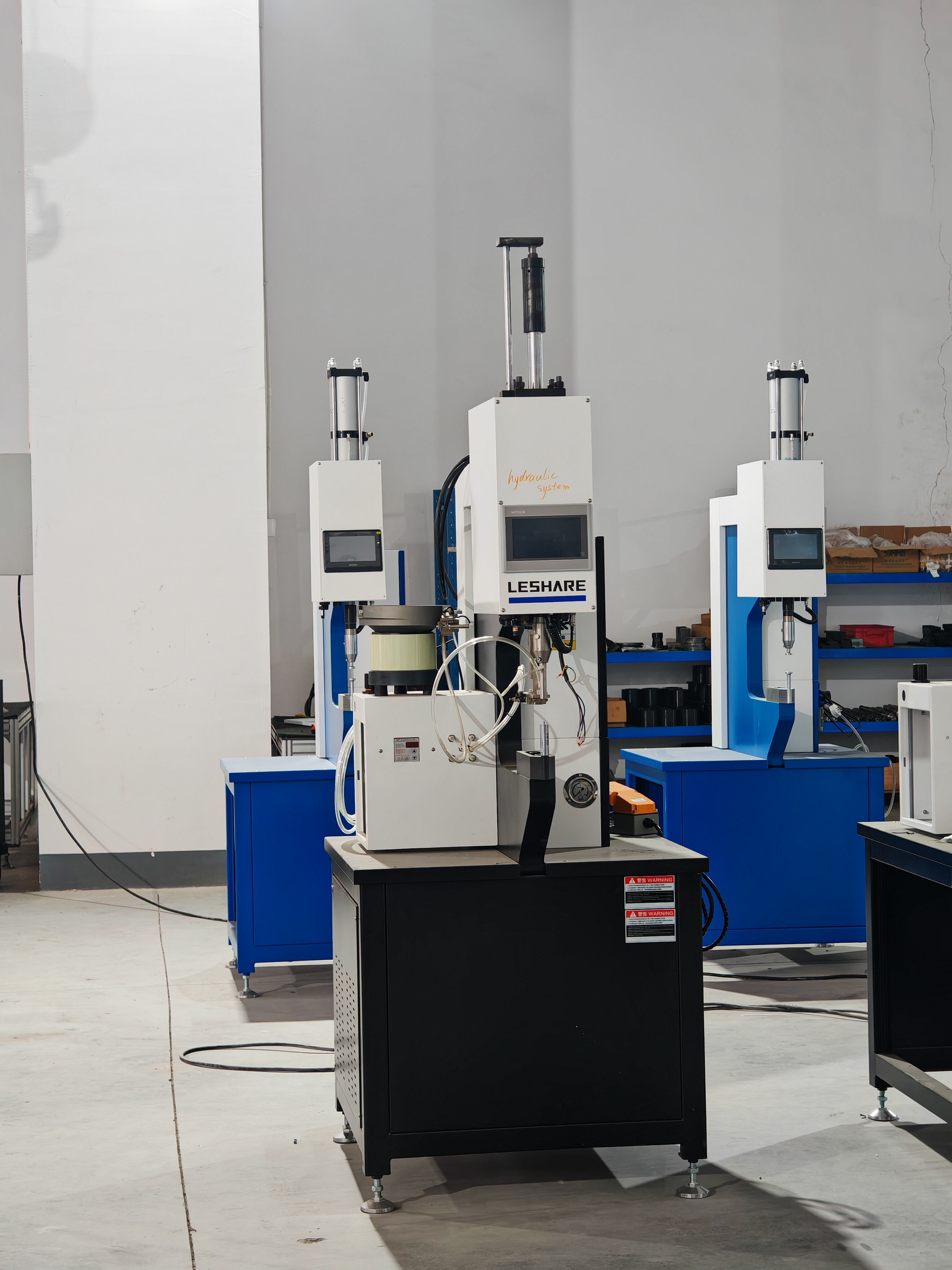
When manufacturers evaluate assembly technologies for joining metal components, the choice between hydraulic riveting machines and welding machines significantly impacts production efficiency, quality outcomes, and operational costs. This decision directly affects throughput rates, labor requirements, quality consistency, and long-term manufacturing competitiveness in industries ranging from aerospace to automotive manufacturing.
Production efficiency depends on multiple factors including cycle times, setup requirements, operator skill demands, quality rejection rates, and downstream processing needs. Hydraulic riveting machines excel in specific applications where mechanical fastening provides superior joint integrity without heat-affected zones, while welding machines dominate scenarios requiring permanent fusion joints with minimal material addition. Understanding these efficiency drivers enables manufacturers to select the optimal joining technology for their specific production requirements.
Cycle Time Analysis and Throughput Comparison
Hydraulic Riveting Machine Cycle Performance
Hydraulic riveting machines typically complete riveting cycles in 2-8 seconds depending on rivet diameter, material thickness, and machine specifications. Modern hydraulic riveting machines achieve consistent cycle times through programmable force profiles and precise positioning systems. The riveting process involves rapid advancement, controlled deformation, and immediate retraction, creating repeatable cycle times that support high-volume production schedules.
Advanced hydraulic riveting machines incorporate servo-controlled positioning and force monitoring systems that optimize cycle efficiency. These systems reduce non-productive time through rapid approach speeds and immediate force application upon contact. Manufacturers report cycle time improvements of 15-25% when upgrading from pneumatic to hydraulic riveting systems, particularly in applications requiring higher forming forces.
The mechanical nature of riveting eliminates cooling time requirements, enabling immediate handling of completed assemblies. This characteristic of hydraulic riveting machines supports continuous flow manufacturing where assembled components move directly to subsequent operations without waiting periods. Production lines utilizing hydraulic riveting machines maintain consistent throughput rates without thermal-related bottlenecks.
Welding Machine Cycle Considerations
Welding machines exhibit variable cycle times ranging from 5-30 seconds depending on joint configuration, material thickness, welding process, and cooling requirements. Complex geometries or thick sections may require multiple passes, extending effective cycle times beyond initial welding duration. Additionally, welding machines often require pre-heating and post-weld cooling periods that add non-productive time to manufacturing cycles.
Automated welding systems can achieve consistent cycle times through programmed welding parameters and robotic positioning. However, welding machines remain sensitive to material preparation quality, joint fit-up accuracy, and environmental conditions that can extend cycle times unpredictably. Quality welding requires thermal management considerations that limit immediate handling of completed assemblies.
Setup Requirements and Changeover Efficiency
Hydraulic Riveting Machine Setup Characteristics
Hydraulic riveting machines require minimal setup for product changeovers, typically involving rivet feeder adjustments and die changes that complete within 5-15 minutes. Standardized tooling systems enable rapid die exchanges without extensive calibration procedures. Many hydraulic riveting machines utilize quick-change tooling systems that reduce changeover time to under 10 minutes for similar product families.
Modern hydraulic riveting machines store multiple program parameters, enabling instant recall of force profiles, positioning data, and quality monitoring settings for different products. This programmable flexibility reduces setup errors and eliminates trial-and-error adjustments during changeovers. Manufacturers utilizing hydraulic riveting machines report setup time reductions of 40-60% compared to manual adjustment systems.
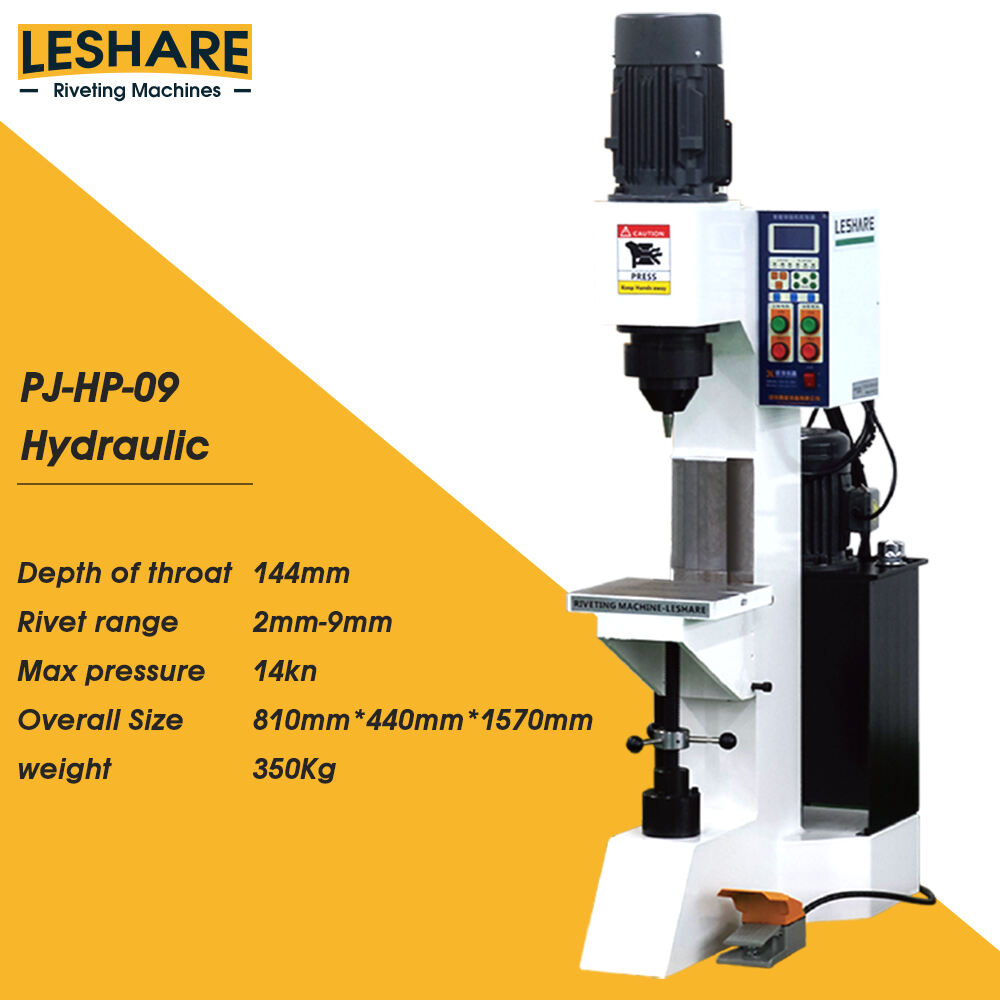
Welding Machine Setup Complexity
Welding machines often require extensive setup procedures including electrode changes, shielding gas adjustments, parameter optimization, and test weld validation. Setup times for welding machines typically range from 15-45 minutes depending on material changes and joint complexity. Complex welding applications may require fixture modifications and positioning system adjustments that extend setup duration.
Welding parameter optimization requires skilled technicians who understand material behavior, thermal effects, and quality requirements. This expertise dependency creates bottlenecks during product changeovers and increases labor costs associated with welding machine operation. Additionally, welding machines require consumable inventory management for electrodes, gases, and flux materials.
Quality Consistency and Rejection Rate Impact
Hydraulic Riveting Machine Quality Control
Hydraulic riveting machines produce highly consistent joint quality through precise force control and repeatable positioning accuracy. The mechanical deformation process eliminates heat-affected zones and metallurgical variations that affect joint properties. Quality monitoring systems in hydraulic riveting machines track force curves, displacement measurements, and cycle parameters to identify potential defects immediately.
Statistical process control data from hydraulic riveting machines typically shows rejection rates below 0.5% for properly maintained equipment. The mechanical nature of riveting creates predictable joint characteristics that remain consistent across production runs. Real-time monitoring capabilities in hydraulic riveting machines enable immediate detection of rivet feeding problems, die wear, or force variations that could compromise quality.
Riveted joints produced by hydraulic riveting machines maintain dimensional stability without shrinkage or distortion effects common in welded assemblies. This consistency reduces downstream machining requirements and improves assembly fit-up in complex products. Quality assurance procedures for hydraulic riveting machines focus on routine calibration and preventive maintenance rather than extensive destructive testing.
Welding Machine Quality Variables
Welding machines introduce multiple variables affecting quality consistency including heat input variations, material contamination, atmospheric conditions, and operator technique. Even automated welding systems experience quality variations due to material property changes, fit-up variations, and equipment drift. Rejection rates for welding operations typically range from 2-8% depending on application complexity and quality requirements.
Welding quality requires extensive inspection procedures including visual examination, penetrant testing, or radiographic evaluation for critical applications. These inspection requirements add time and cost to manufacturing processes while potentially creating production delays. Welding defects often require repair procedures that further reduce overall efficiency and increase material waste.
Labor Requirements and Skill Dependency
Hydraulic Riveting Machine Operation
Hydraulic riveting machines require minimal operator training, typically 2-4 hours for basic operation and quality recognition. The automated nature of hydraulic riveting reduces skill dependency while maintaining consistent results across different operators. Setup and programming of hydraulic riveting machines require technical knowledge but can be centralized among maintenance or engineering personnel.
Modern hydraulic riveting machines incorporate user-friendly interfaces with visual feedback systems that guide operators through proper loading, positioning, and quality verification procedures. Error detection systems in hydraulic riveting machines prevent operation when improper conditions exist, reducing the possibility of operator-induced defects. This automation reduces labor costs and minimizes training requirements for production personnel.
Multi-station hydraulic riveting machines enable one operator to manage multiple workstations simultaneously, improving labor efficiency in high-volume applications. The rapid cycle times of hydraulic riveting machines allow operators to load subsequent parts while machines complete riveting cycles, optimizing human-machine interaction efficiency.
Welding Machine Skill Requirements
Welding machines require skilled operators with extensive training periods ranging from weeks to months depending on application complexity and quality standards. Certified welders command higher wages due to skill requirements and certification maintenance needs. Even automated welding systems require skilled setup personnel and quality inspectors with specialized training.
Welding quality depends heavily on operator skill for manual processes or programming expertise for automated systems. This skill dependency creates vulnerability to personnel availability and increases training costs for manufacturing operations. Additionally, welding certification requirements add administrative overhead and ongoing training expenses.
FAQ
What factors determine whether hydraulic riveting machines or welding machines achieve higher production efficiency?
Production efficiency depends on application-specific factors including material thickness, joint accessibility, quality requirements, production volume, and operator skill availability. Hydraulic riveting machines typically excel in high-volume applications with consistent joint configurations, while welding machines may be more efficient for complex geometries or applications requiring permanent fusion joints without additional fasteners.
How do setup and changeover times compare between hydraulic riveting machines and welding machines?
Hydraulic riveting machines generally require 5-15 minute changeovers involving die changes and parameter recalls, while welding machines typically need 15-45 minutes for electrode changes, parameter optimization, and test validation. The programmable nature of hydraulic riveting machines enables faster product transitions with reduced skill requirements compared to welding setup procedures.
Which technology offers better quality consistency and lower rejection rates?
Hydraulic riveting machines typically achieve rejection rates below 0.5% due to mechanical consistency and real-time monitoring capabilities, while welding operations commonly experience 2-8% rejection rates depending on complexity. The heat-free process of hydraulic riveting eliminates thermal distortion and metallurgical variations that can affect welding quality consistency.
What are the labor cost implications of choosing hydraulic riveting machines versus welding machines?
Hydraulic riveting machines require minimal operator training and can often be operated by general production personnel, while welding machines need skilled certified operators commanding higher wages. The automation capabilities of hydraulic riveting machines enable single operators to manage multiple workstations, improving labor efficiency in high-volume production environments.
Table of Contents
- Cycle Time Analysis and Throughput Comparison
- Setup Requirements and Changeover Efficiency
- Quality Consistency and Rejection Rate Impact
- Labor Requirements and Skill Dependency
-
FAQ
- What factors determine whether hydraulic riveting machines or welding machines achieve higher production efficiency?
- How do setup and changeover times compare between hydraulic riveting machines and welding machines?
- Which technology offers better quality consistency and lower rejection rates?
- What are the labor cost implications of choosing hydraulic riveting machines versus welding machines?