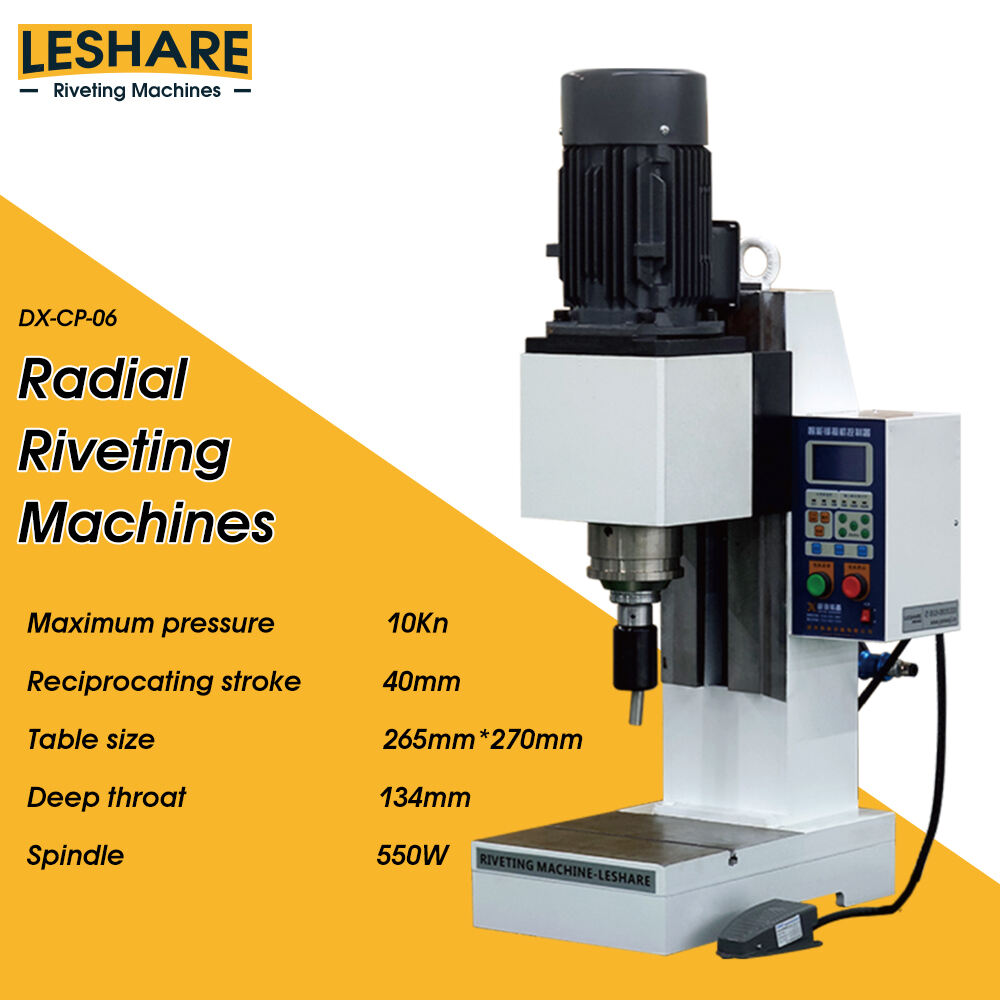
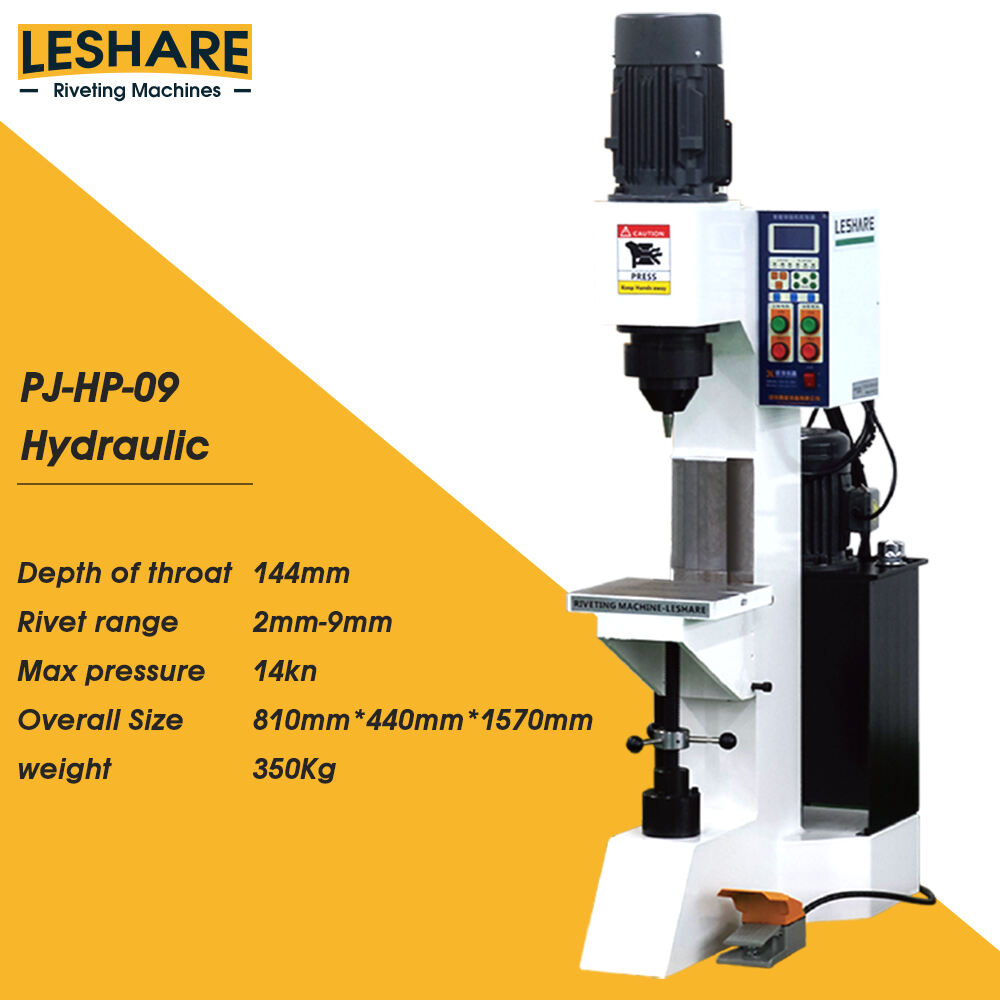
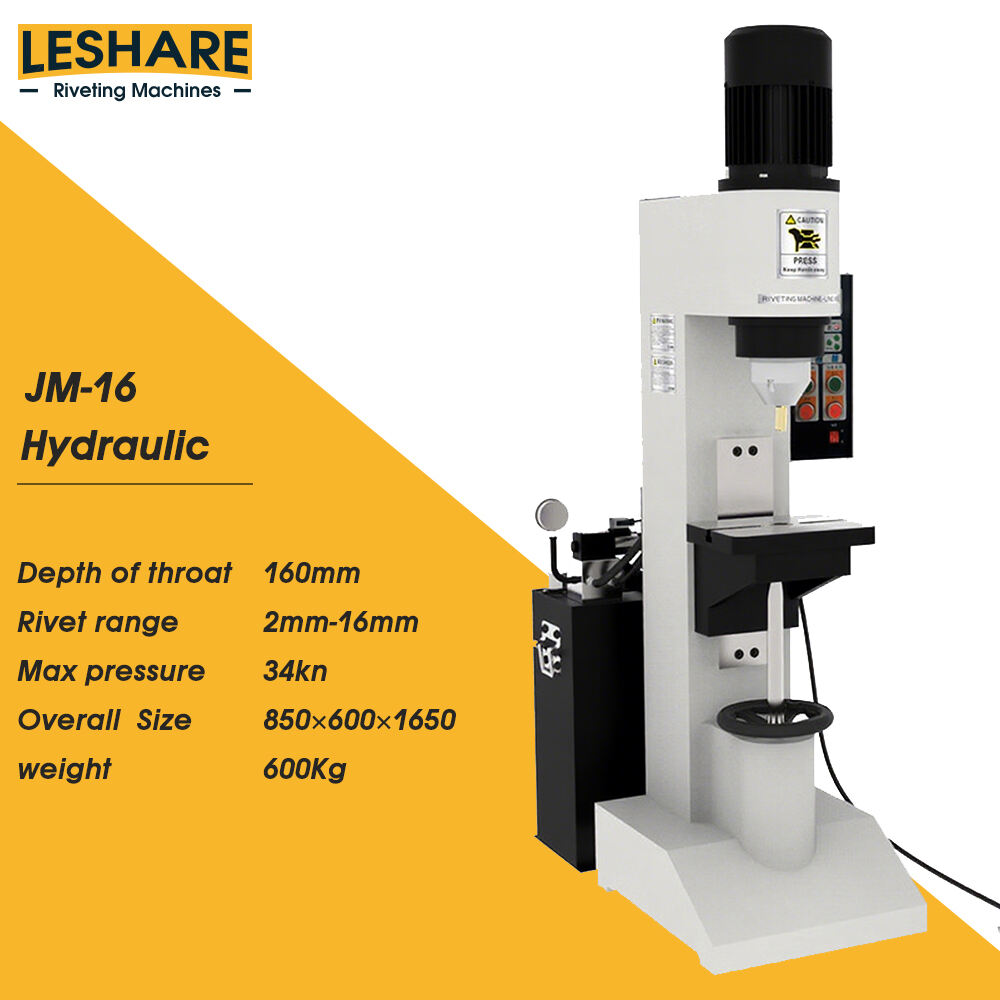
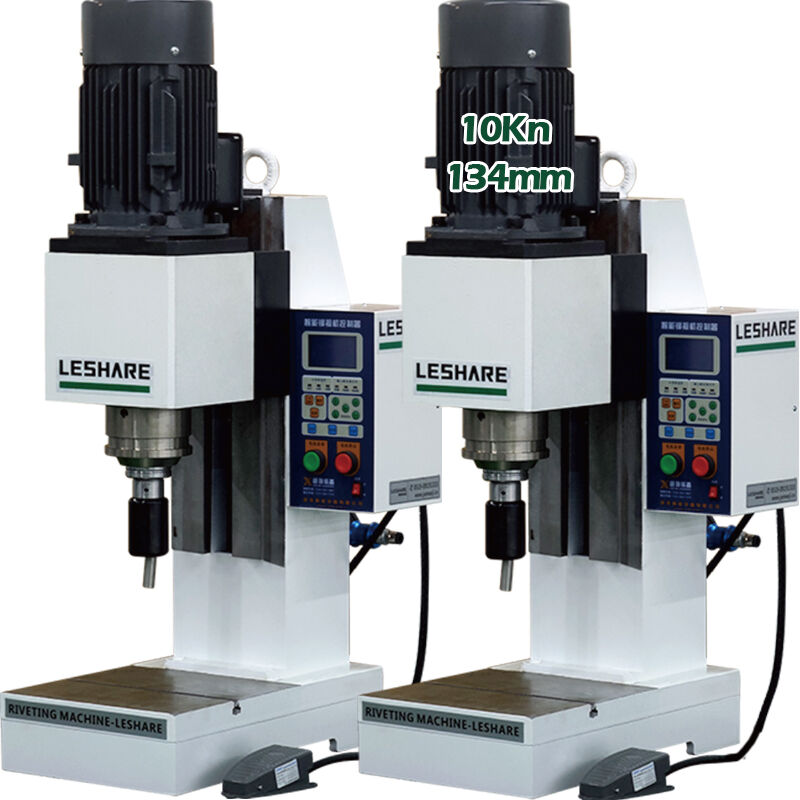
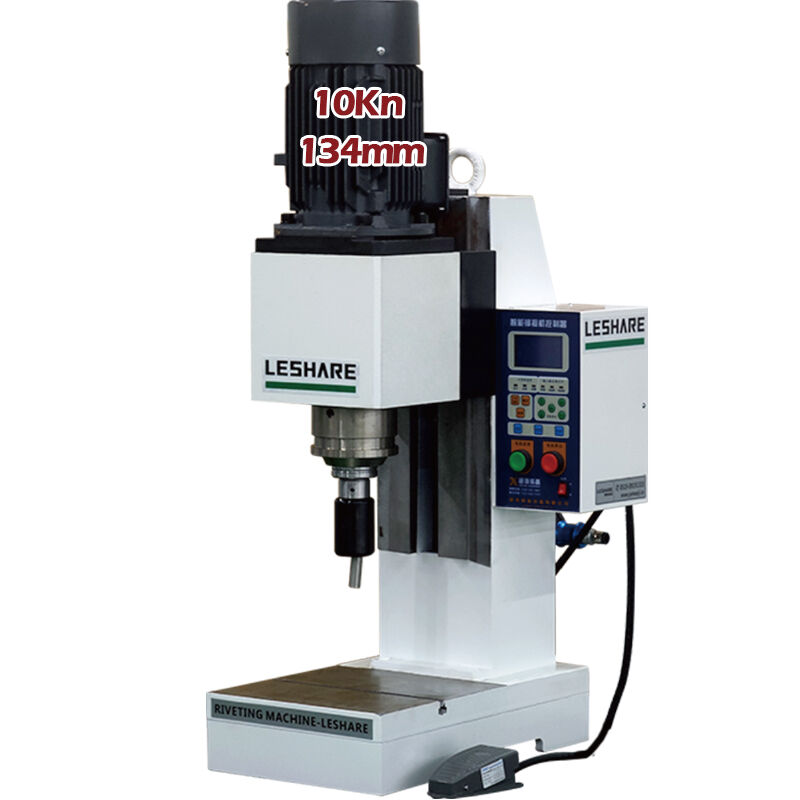
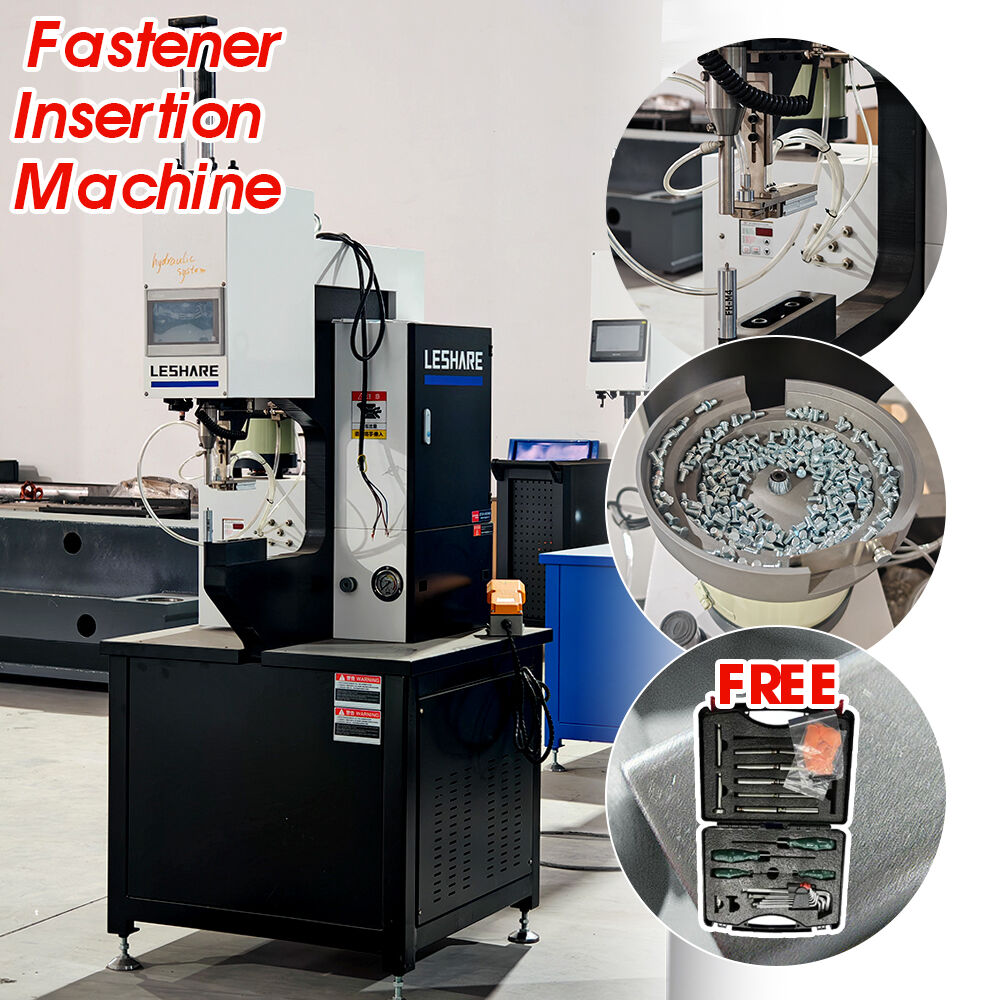
Servoassisted Orbital Riveting Machine - Advanced Precision Fastening Technology for Industrial Manufacturing

Get a Free Quote

Our representative will contact you soon.
Email
Name
Company Name
Message
0/1000

servoassisted orbital riveting machine

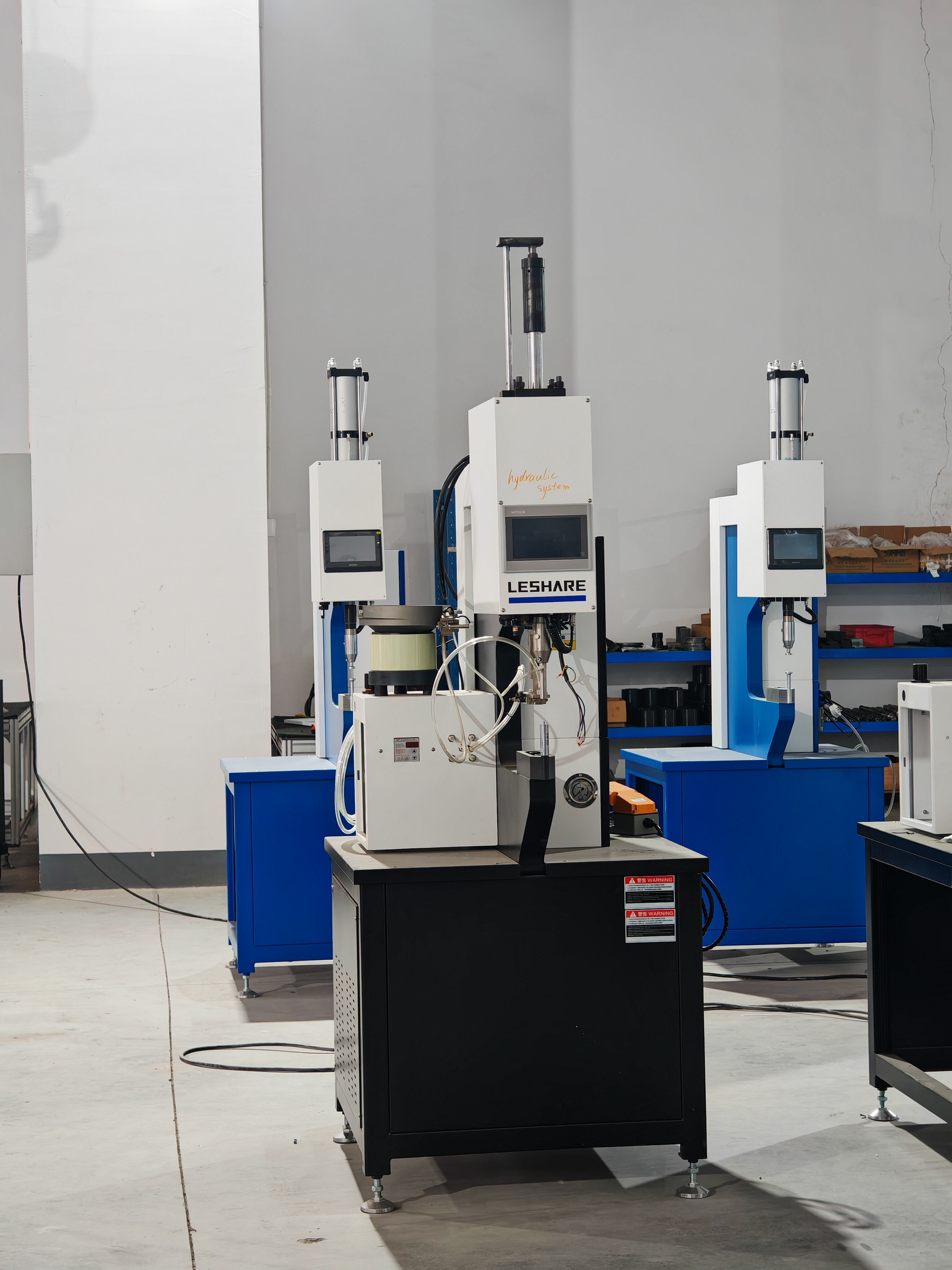
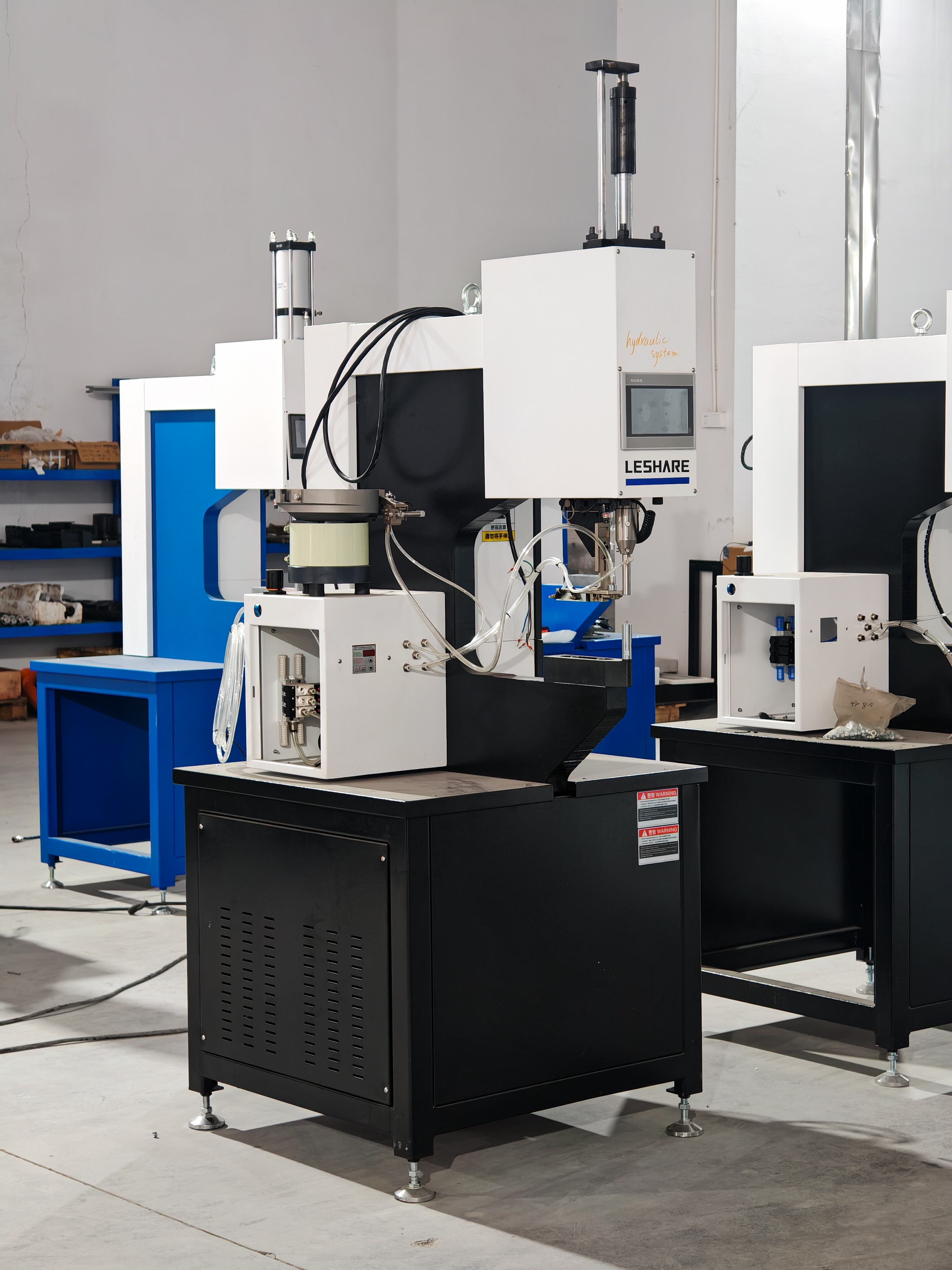
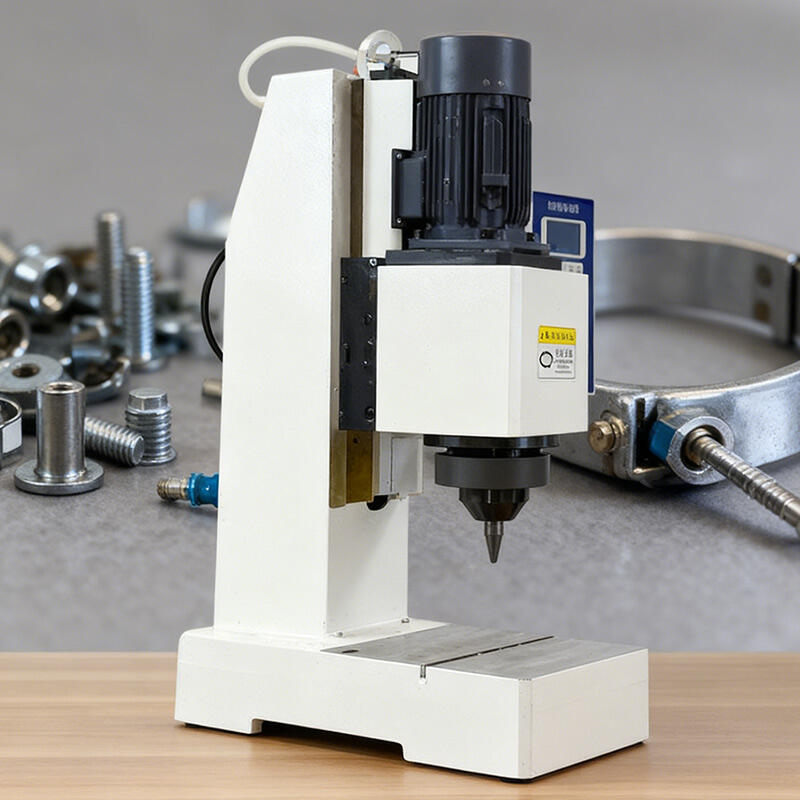
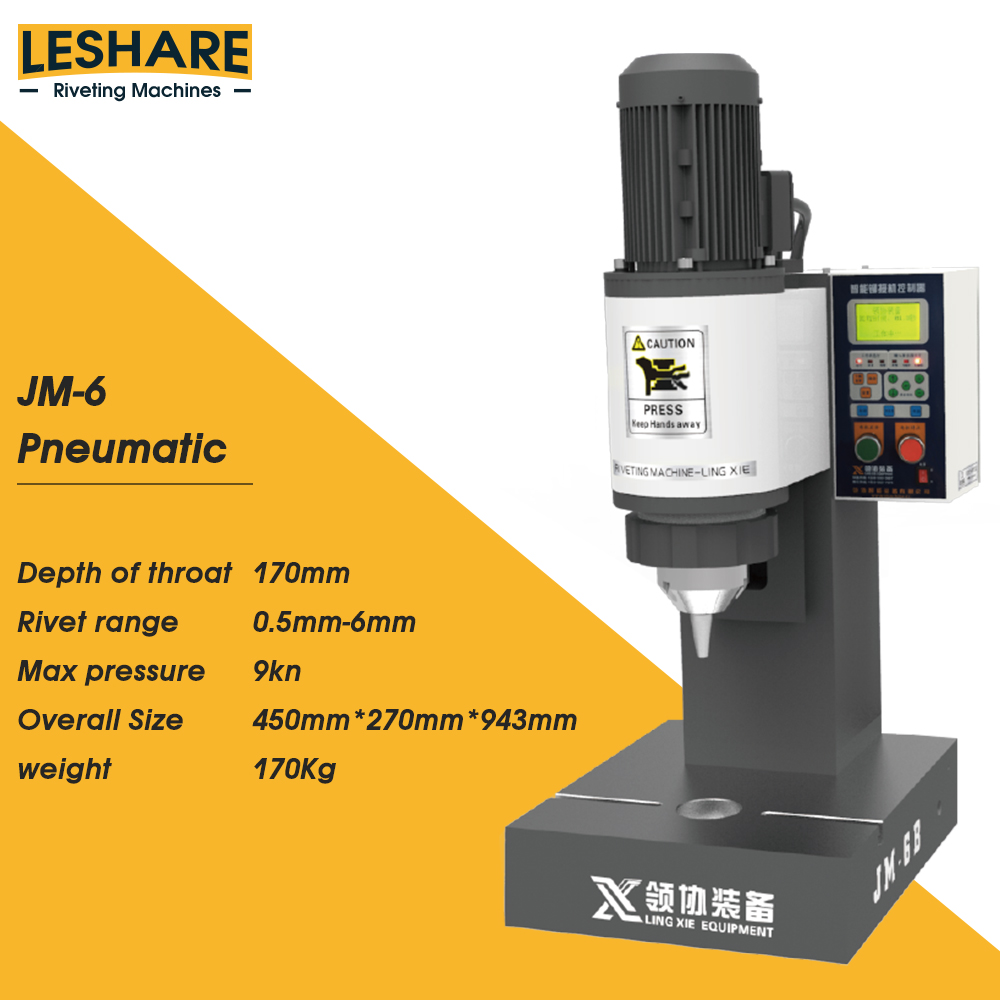
The servoassisted orbital riveting machine represents a revolutionary advancement in precision fastening technology, combining servo motor control with orbital motion mechanics to deliver exceptional performance in industrial assembly applications. This sophisticated equipment utilizes a unique rotational hammering action that creates uniform, high-quality joints while maintaining precise control over the entire riveting process. The servoassisted orbital riveting machine operates through a carefully orchestrated sequence where the servo motor provides exact positioning and force control, while the orbital mechanism ensures consistent material deformation around the rivet circumference. The primary functions of this advanced system include automated rivet insertion, controlled force application, real-time monitoring of joining parameters, and quality assurance through integrated feedback systems. The technological features encompass programmable servo control systems that allow operators to customize riveting parameters for different materials and applications, ensuring optimal results across diverse manufacturing scenarios. The orbital motion technology distributes forming forces evenly around the rivet head, eliminating stress concentrations that could compromise joint integrity. Advanced sensor integration provides continuous feedback on force, displacement, and cycle completion, enabling immediate detection of any process deviations. The servoassisted orbital riveting machine finds extensive applications across automotive manufacturing, aerospace assembly, electronics production, appliance manufacturing, and precision engineering sectors. In automotive applications, these machines excel at joining body panels, interior components, and structural elements with consistent quality and repeatability. Aerospace manufacturers rely on this technology for critical assemblies where joint reliability is paramount, including fuselage construction and component mounting. Electronics manufacturers utilize the precision capabilities for delicate assemblies requiring exact force control to prevent component damage. The versatility of the servoassisted orbital riveting machine makes it suitable for materials ranging from aluminum and steel to composite materials and plastics, accommodating various rivet types including solid rivets, hollow rivets, and specialized fasteners designed for specific applications.

New Product Releases

The servoassisted orbital riveting machine delivers substantial benefits that transform manufacturing operations and enhance production capabilities. Manufacturing efficiency increases dramatically through automated processes that eliminate manual riveting inconsistencies and reduce cycle times significantly. The servo control system provides precise repeatability, ensuring every rivet receives identical treatment regardless of operator variation or environmental factors. This consistency translates directly into higher product quality and reduced rejection rates, saving manufacturers considerable costs associated with rework and quality control issues. The orbital motion technology distributes forming forces uniformly across the rivet head, creating stronger joints with superior fatigue resistance compared to traditional riveting methods. This enhanced joint strength proves particularly valuable in demanding applications where structural integrity remains critical throughout the product lifecycle. Energy efficiency represents another key advantage, as the servoassisted orbital riveting machine consumes significantly less power than pneumatic alternatives while delivering superior performance. The precise servo control eliminates energy waste associated with continuous air compression and reduces overall operational costs. Noise reduction benefits create a more comfortable working environment, as these machines operate much quieter than pneumatic systems, improving workplace conditions and reducing hearing protection requirements. The programmable nature of servo systems allows manufacturers to store multiple riveting programs for different products, enabling quick changeovers and reducing setup times between production runs. This flexibility proves invaluable in modern manufacturing environments where product variety and customization demands continue increasing. Quality monitoring capabilities built into the servoassisted orbital riveting machine provide real-time feedback on joint quality, allowing immediate detection of process variations before they impact product quality. This proactive approach prevents defective products from advancing through the production line, reducing waste and maintaining customer satisfaction. Maintenance requirements decrease substantially compared to pneumatic systems, as servo motors require less frequent service and provide predictable maintenance schedules. The elimination of air compressors, filters, and pneumatic components reduces maintenance complexity and associated downtime. Space efficiency improves through compact designs that eliminate the need for air supply infrastructure, allowing more flexible factory layouts and reducing installation costs. The servoassisted orbital riveting machine also offers superior force control precision, enabling manufacturers to work with delicate materials that might be damaged by traditional riveting methods. This capability opens new market opportunities and application possibilities that were previously unfeasible with conventional equipment.

Tips And Tricks

How Does a Fastener Insertion Machine Improve Productivity in Metal Fabrication?

11

Dec

How Does a Fastener Insertion Machine Improve Productivity in Metal Fabrication?

In today's competitive metal fabrication industry, manufacturers are constantly seeking innovative solutions to enhance production efficiency while maintaining quality standards. A fastener insertion machine represents a revolutionary advancement tha...
View More
Why Is a Fastener Insertion Machine Essential for Consistent Hardware Placement?

18

Dec

Why Is a Fastener Insertion Machine Essential for Consistent Hardware Placement?

Manufacturing precision has become the cornerstone of modern industrial production, where even the smallest components must be installed with exact accuracy and consistent quality. In today's competitive manufacturing landscape, companies are increas...
View More
Why are radial riveting machines preferred for cold forming applications?

28

Jan

Why are radial riveting machines preferred for cold forming applications?

Radial riveting machines have revolutionized the manufacturing landscape by offering superior cold forming capabilities that traditional riveting methods simply cannot match. These sophisticated pieces of equipment utilize a unique radial motion mech...
View More
How can radial riveting machines reduce failure rates in mass production?

28

Jan

How can radial riveting machines reduce failure rates in mass production?

Manufacturing industries constantly seek solutions to minimize production failures and enhance product reliability. Radial riveting machines have emerged as a critical technology for achieving superior joint quality in mass production environments. T...
View More

Get a Free Quote

Our representative will contact you soon.
Email
Name
Company Name
Message
0/1000

servoassisted orbital riveting machine

Advanced Servo Control System for Unmatched Precision

Advanced Servo Control System for Unmatched Precision

The heart of the servoassisted orbital riveting machine lies in its sophisticated servo control system, which revolutionizes the precision and repeatability of riveting operations across industrial applications. This advanced control technology employs high-resolution encoders and precise feedback mechanisms to monitor and adjust every aspect of the riveting process in real-time, ensuring consistent results that meet the most stringent quality requirements. The servo motor system provides exceptional force control accuracy, typically within 1% of the programmed parameters, enabling manufacturers to achieve uniform joint quality regardless of material variations or environmental conditions. This precision proves particularly crucial in aerospace and automotive applications where even minor variations in joint strength can compromise product performance and safety standards. The programmable nature of the servo system allows operators to create and store multiple riveting profiles for different applications, materials, and rivet types, significantly reducing setup times and eliminating the guesswork associated with manual adjustments. The system continuously monitors key parameters including force, displacement, velocity, and time, creating a comprehensive data record for each riveting operation that supports quality assurance and traceability requirements. Advanced algorithms within the servo controller automatically compensate for material variations, tool wear, and other process variables, maintaining consistent output quality throughout extended production runs. The servo control system also enables adaptive force control, where the machine automatically adjusts forming forces based on real-time feedback from the riveting process, ensuring optimal material flow and joint formation while preventing over-forming or under-forming conditions. This intelligent control capability extends tool life significantly by preventing excessive wear and reducing the frequency of maintenance interventions. The precision servo system supports complex riveting sequences that can accommodate multiple forming stages, allowing for specialized applications such as flare riveting, countersinking, and custom forming operations. Error detection and prevention capabilities built into the servo controller identify potential issues before they impact product quality, triggering appropriate responses such as process adjustments, cycle termination, or operator alerts. The integration of Industry 4.0 connectivity features enables remote monitoring and control capabilities, allowing production managers to oversee multiple servoassisted orbital riveting machines from centralized locations while collecting valuable production data for continuous improvement initiatives.
Orbital Motion Technology for Superior Joint Quality

Orbital Motion Technology for Superior Joint Quality

The innovative orbital motion technology integrated into the servoassisted orbital riveting machine represents a fundamental advancement in fastening methodology, delivering superior joint quality through its unique approach to material deformation and force distribution. Unlike traditional riveting methods that apply force in a single direction, the orbital motion system creates a controlled rotational hammering action that progressively forms the rivet head through multiple small impacts distributed around the circumference. This sophisticated approach eliminates the stress concentrations and material inconsistencies commonly associated with single-impact riveting, resulting in joints with enhanced mechanical properties and extended service life. The orbital motion mechanism operates through a precisely controlled eccentric system that converts the linear motion of the servo motor into a smooth, continuous orbital path, ensuring uniform material flow and optimal rivet head formation. The distributed force application characteristic of orbital motion technology proves particularly beneficial when working with sensitive materials such as aluminum alloys, composites, and thin-gauge metals that might be damaged or distorted by conventional riveting methods. The gradual forming process inherent in orbital motion allows the material to flow naturally without inducing excessive stress or heat buildup, preserving the metallurgical properties of both the rivet and the parent materials. Quality improvements achieved through orbital motion technology include increased shear strength, improved fatigue resistance, and enhanced corrosion resistance due to the superior surface finish and material consolidation achieved during the forming process. The technology accommodates a wide range of rivet types and sizes, from micro-rivets used in electronics manufacturing to large structural rivets required in heavy machinery applications, making the servoassisted orbital riveting machine extremely versatile across different industries. Process consistency represents another significant advantage, as the orbital motion system eliminates variations associated with operator technique, tool positioning, and environmental factors that can affect traditional riveting operations. The controlled nature of the orbital forming process enables manufacturers to achieve consistent rivet head geometry, ensuring proper load distribution and optimal joint performance across all production units. Advanced monitoring capabilities integrated with the orbital motion system provide real-time feedback on forming progress, allowing immediate detection of any irregularities in the process and enabling corrective actions before joint quality is compromised. The orbital motion technology also supports specialized forming operations such as semi-tubular rivet installation, blind rivet setting, and custom fastener applications that require precise control over the forming sequence and final geometry.
Enhanced Productivity and Cost-Effectiveness Benefits

Enhanced Productivity and Cost-Effectiveness Benefits

The servoassisted orbital riveting machine delivers exceptional productivity improvements and cost-effectiveness benefits that significantly impact manufacturing operations and bottom-line profitability across diverse industrial applications. Cycle time reductions of 30-50% compared to traditional riveting methods become achievable through the automated operation and optimized forming sequences enabled by servo control technology, allowing manufacturers to increase throughput without compromising quality standards. The elimination of manual positioning and force application reduces operator fatigue and human error, enabling consistent high-quality output throughout entire production shifts while reducing the skill level required for machine operation. Labor cost savings accumulate through reduced training requirements and the ability to reassign skilled technicians to higher-value activities while less experienced operators handle routine riveting operations with confidence. Energy consumption decreases substantially compared to pneumatic systems, typically reducing power requirements by 40-60% while delivering superior performance characteristics, resulting in lower operational costs and reduced environmental impact. The programmable nature of the servoassisted orbital riveting machine enables rapid changeovers between different products and configurations, minimizing downtime and maximizing equipment utilization rates in high-mix manufacturing environments. Quality improvements translate directly into cost savings through reduced scrap rates, decreased rework requirements, and improved customer satisfaction levels that support premium pricing and repeat business opportunities. Maintenance cost reductions result from the inherently reliable nature of servo systems compared to pneumatic alternatives, with predictable service intervals and reduced complexity of maintenance procedures that minimize unplanned downtime. The comprehensive data logging capabilities of the servo system support predictive maintenance strategies that further reduce maintenance costs while improving equipment availability and reliability. Flexibility benefits enable manufacturers to respond quickly to changing market demands and customer requirements without significant equipment modifications or investments, supporting business agility and competitive positioning. The superior joint quality achieved by orbital motion technology reduces warranty claims and field failures, protecting brand reputation while minimizing long-term support costs. Space efficiency improvements through compact designs and elimination of air supply infrastructure reduce facility costs and enable more efficient plant layouts that optimize material flow and worker productivity. Investment recovery typically occurs within 18-24 months through the combination of productivity improvements, quality enhancements, and operational cost reductions, making the servoassisted orbital riveting machine an attractive capital investment for forward-thinking manufacturers seeking competitive advantages in their respective markets.

Get a Free Quote

Our representative will contact you soon.
Email
Name
Company Name
Message
0/1000