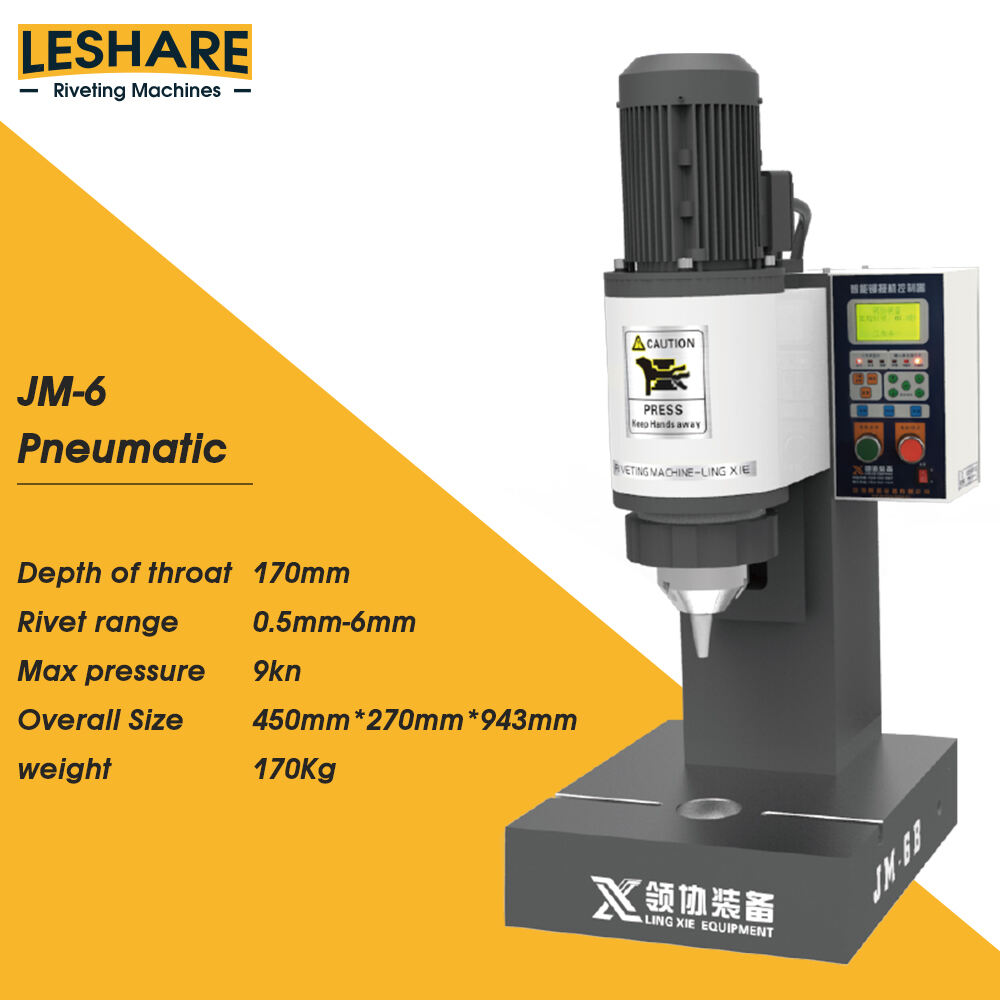
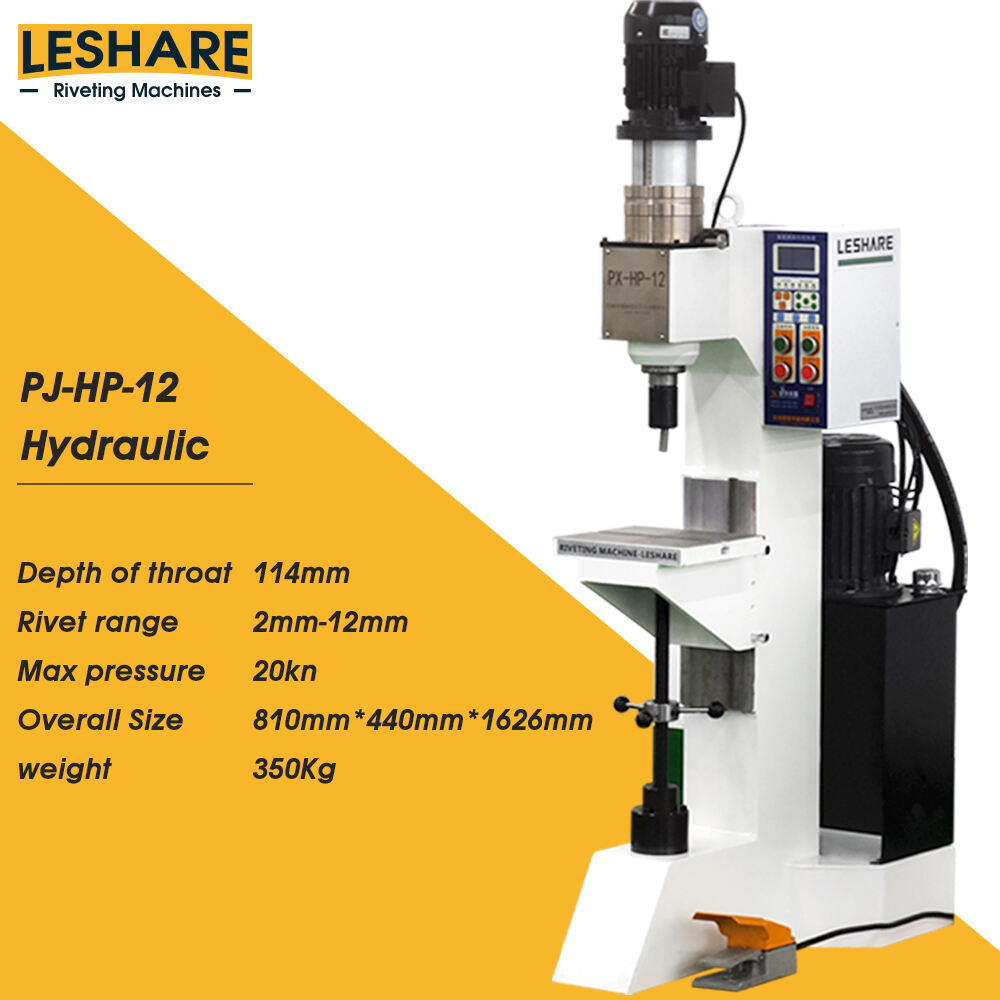
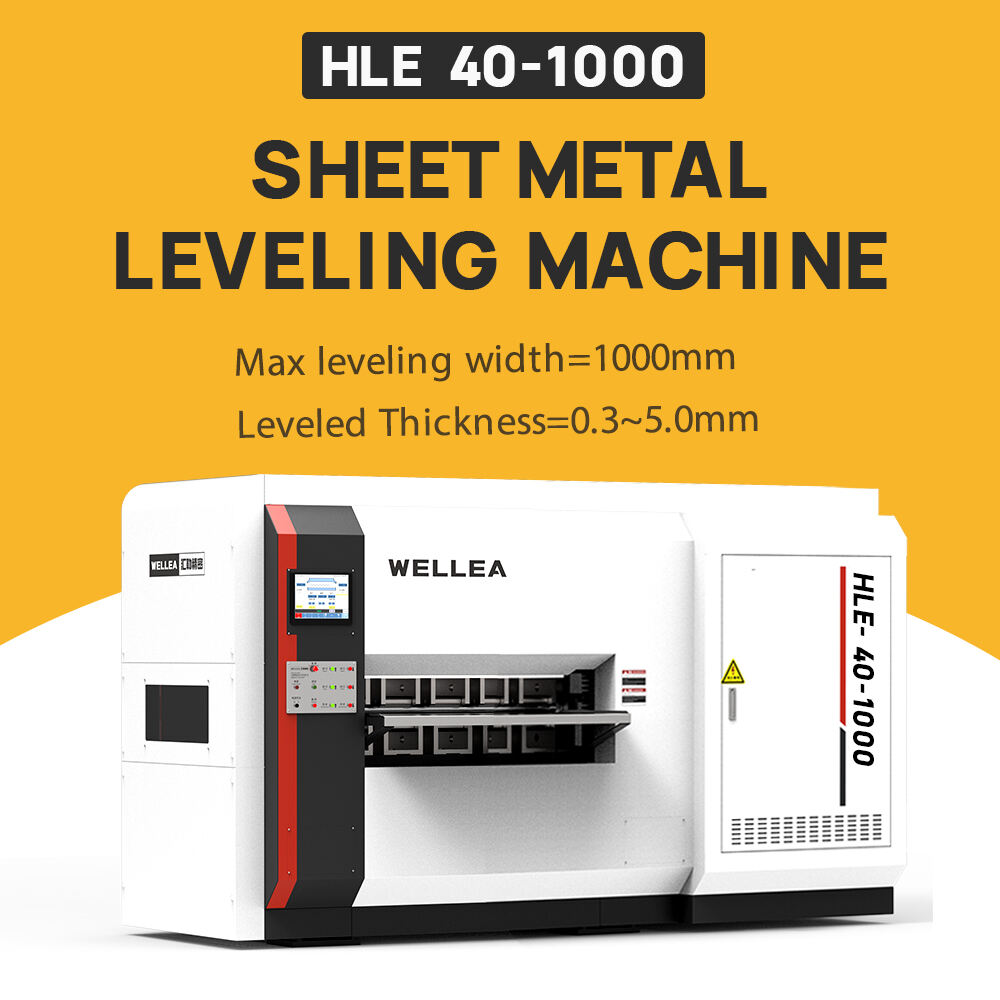
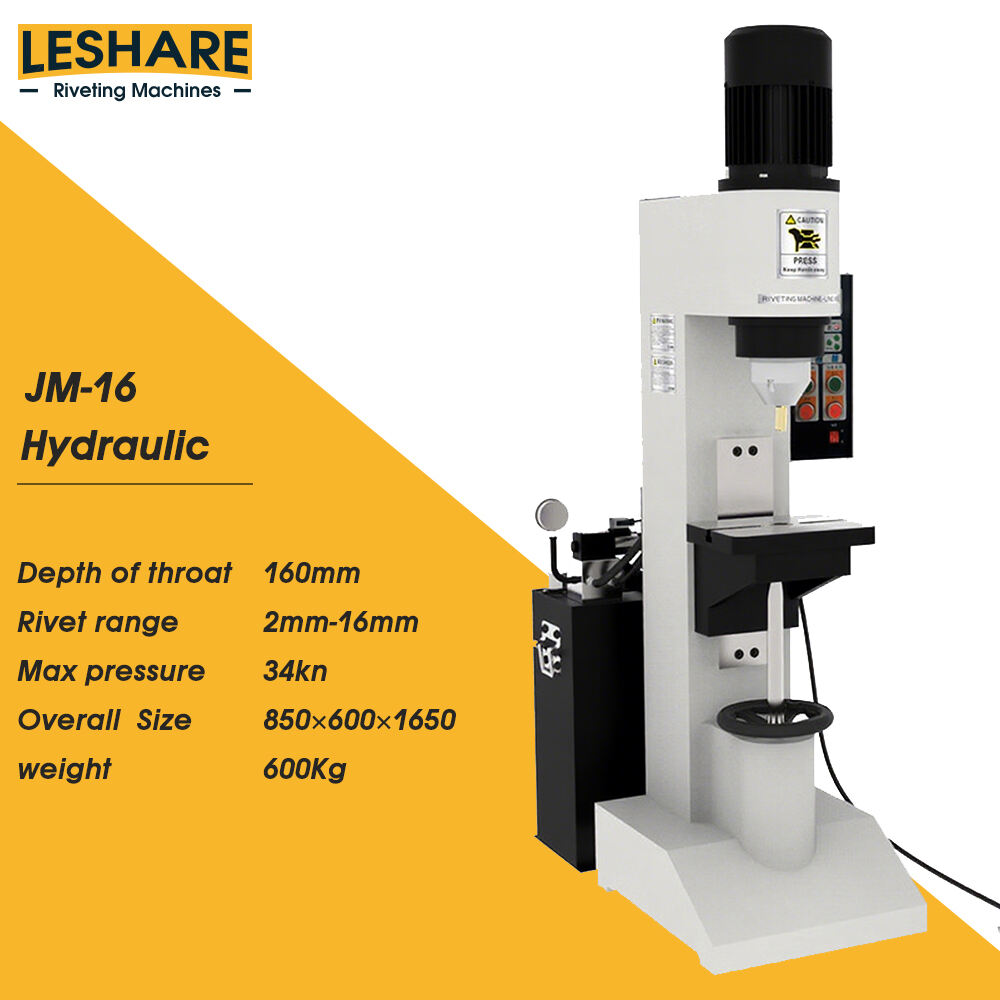
Advanced Clinching Machines - Revolutionary Metal Joining Technology for Modern Manufacturing

Get a Free Quote

Our representative will contact you soon.
Email
Name
Company Name
Message
0/1000

clinching machine

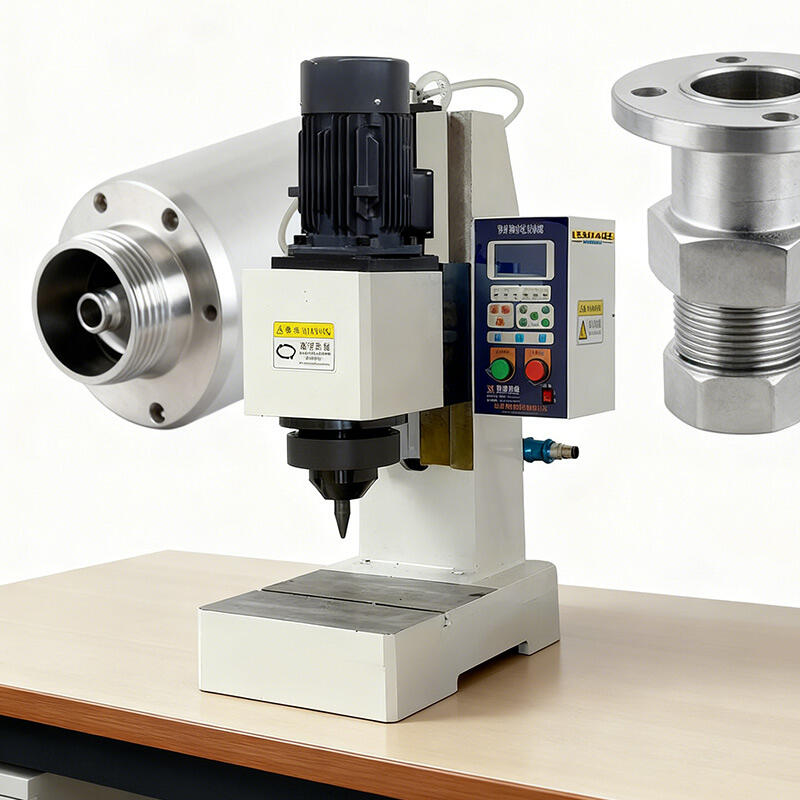
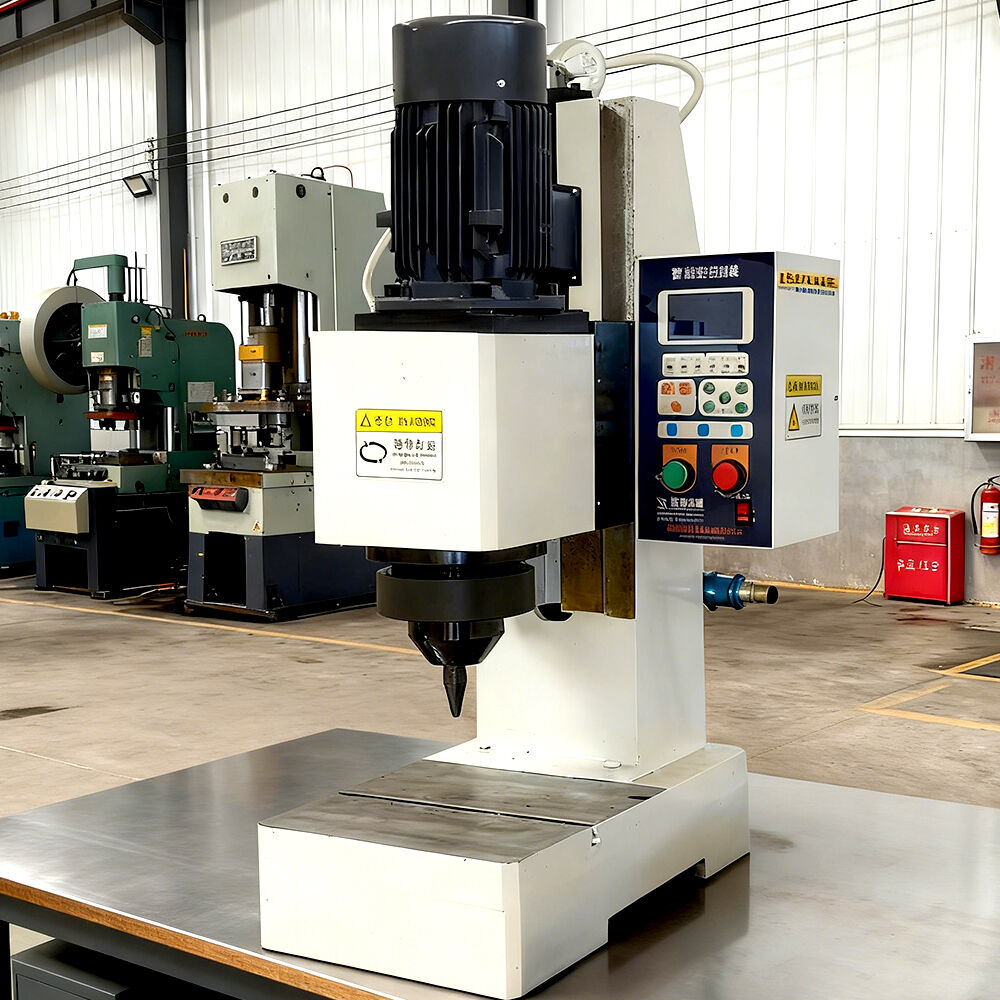
A clinching machine represents a revolutionary fastening technology that joins metal sheets through mechanical deformation without requiring additional fasteners, adhesives, or heat. This innovative equipment creates permanent connections by interlocking sheet materials using specialized tooling that forms mechanical joints through controlled compression and shaping processes. The clinching machine operates by positioning two or more metal sheets between a punch and die system, where the punch penetrates the upper sheet and deforms both materials into an interlocked configuration. This process eliminates the need for screws, rivets, welding, or other traditional joining methods. The machine's precision-engineered components ensure consistent joint formation across various material thicknesses and types, making it an essential tool for modern manufacturing operations. Advanced clinching machines feature programmable control systems that allow operators to adjust parameters such as force application, dwell time, and positioning accuracy. These machines accommodate diverse materials including aluminum, steel, stainless steel, and coated metals with thicknesses ranging from thin gauge sheets to heavy-duty applications. The technology proves particularly valuable in automotive, aerospace, appliance, and electronics industries where reliable, cost-effective joining solutions are paramount. Modern clinching machines incorporate servo-driven mechanisms that provide precise force control and repeatable results, ensuring uniform joint quality across production runs. Safety features include light curtains, emergency stops, and enclosed work areas that protect operators while maintaining productivity. The equipment's modular design allows for easy integration into existing production lines and facilitates quick tooling changes for different applications. Environmental benefits include the elimination of consumable fasteners and reduction of waste materials, making clinching machines an environmentally conscious choice for sustainable manufacturing practices.

New Products

Clinching machines deliver substantial cost savings by eliminating expensive fasteners such as screws, rivets, and welding consumables. Manufacturers reduce material costs significantly since the joining process requires no additional components beyond the base materials being connected. This fastener-free approach translates to immediate bottom-line improvements and simplified inventory management. The speed advantage of clinching machines surpasses traditional joining methods dramatically. Production rates increase substantially because operators complete joints in seconds rather than minutes required for conventional fastening techniques. This efficiency boost enables manufacturers to meet demanding production schedules while reducing labor costs per unit. Quality consistency represents another major benefit as clinching machines produce uniform joints with minimal operator skill requirements. The automated process eliminates human error variables that affect traditional assembly methods, resulting in superior joint reliability and reduced rework. Each connection meets precise specifications regardless of operator experience level. Versatility in material compatibility makes clinching machines invaluable for diverse applications. These systems effectively join dissimilar metals, coated materials, and varying thicknesses that present challenges for welding or other joining methods. This flexibility allows manufacturers to expand their capabilities without investing in multiple specialized equipment types. Environmental advantages position clinching machines as sustainable manufacturing solutions. The process generates no hazardous fumes, requires no consumable materials, and produces minimal waste compared to welding or adhesive bonding. This clean operation meets increasingly stringent environmental regulations while reducing disposal costs. Maintenance requirements remain minimal due to the mechanical nature of the clinching process. Unlike welding equipment that requires regular electrode replacement and gas supplies, clinching machines need only periodic tooling inspection and lubrication. This reliability reduces downtime and maintenance expenses significantly. Space efficiency benefits facilities with limited floor space since clinching machines require smaller footprints than welding stations with their associated ventilation systems. The compact design facilitates flexible production line layouts and easier equipment relocation when needed. Training requirements prove minimal as operators master the straightforward clinching process quickly. This reduces training costs and enables rapid workforce scaling during production increases. The intuitive operation allows existing staff to become proficient without extensive technical education programs.

Latest News

How to select a nonrotating shaft radial riveter for precision components?

28

Jan

How to select a nonrotating shaft radial riveter for precision components?

Precision manufacturing demands exceptional reliability and accuracy in every assembly process. When working with delicate electronic components, aerospace assemblies, or medical devices, selecting the right nonrotating shaft radial riveter becomes c...
View More
Why is a nonrotating shaft radial riveter critical in delicate assemblies?

28

Jan

Why is a nonrotating shaft radial riveter critical in delicate assemblies?

In precision manufacturing environments where component integrity and assembly quality determine product success, the choice of joining technology becomes paramount. A nonrotating shaft radial riveter represents a specialized solution engineered spec...
View More
What to consider when sourcing nonrotating shaft radial riveter systems?

26

Feb

What to consider when sourcing nonrotating shaft radial riveter systems?

Manufacturing precision and assembly efficiency depend heavily on selecting the right fastening equipment for your production line. When evaluating nonrotating shaft radial riveter systems, understanding the critical factors that influence performanc...
View More
How Does an Orbital Riveting Machine Improve Assembly Efficiency?

26

Feb

How Does an Orbital Riveting Machine Improve Assembly Efficiency?

Manufacturing industries constantly seek innovative solutions to enhance assembly efficiency while maintaining superior product quality. An orbital riveting machine represents a breakthrough technology that revolutionizes traditional fastening method...
View More

Get a Free Quote

Our representative will contact you soon.
Email
Name
Company Name
Message
0/1000

clinching machine

Superior Joint Strength and Reliability

Superior Joint Strength and Reliability

The clinching machine creates exceptionally strong mechanical joints that often exceed the strength of the base materials themselves. This remarkable capability stems from the precise interlocking mechanism that forms during the clinching process, where the punch and die system creates a mechanical connection that distributes stress across the entire joint area. Unlike fasteners that concentrate stress at specific points, clinched joints provide uniform load distribution that enhances overall structural integrity. The interlocking formation consists of an undercut geometry that prevents joint separation under tensile, shear, and peel forces. This mechanical advantage ensures long-term reliability in demanding applications where joint failure could result in safety hazards or costly product recalls. Automotive manufacturers particularly value this strength characteristic for body panel assemblies, where clinched joints must withstand crash forces and vibration throughout the vehicle's service life. The reliability factor extends beyond initial strength to long-term performance stability. Clinched joints resist fatigue failure better than many traditional fastening methods because the mechanical interlock distributes cyclic loads across the entire joint interface. This fatigue resistance proves crucial in applications involving repetitive stress cycles, such as appliance components and structural assemblies. Testing demonstrates that properly executed clinched joints maintain their integrity through millions of load cycles without degradation. Quality assurance becomes simpler with clinching machines because joint strength correlates directly with formation geometry, which operators can verify visually or through simple measurement techniques. This immediate feedback capability enables real-time quality control that prevents defective joints from progressing through the manufacturing process. The consistent joint formation achieved by modern clinching machines eliminates the variability associated with operator technique in manual fastening operations. Advanced clinching machines incorporate force monitoring systems that ensure each joint receives the precise energy input required for optimal formation. These systems detect variations in material properties or positioning that could affect joint quality and automatically adjust parameters to maintain consistent results.
Exceptional Versatility Across Materials and Applications

Exceptional Versatility Across Materials and Applications

Modern clinching machines demonstrate remarkable versatility in handling diverse material combinations and thicknesses that challenge other joining technologies. This adaptability makes clinching machines indispensable for manufacturers working with multiple material types or frequently changing product designs. The mechanical joining process effectively connects aluminum to steel, stainless steel to coated materials, and other dissimilar metal combinations that prove problematic for welding due to metallurgical incompatibilities. Material thickness flexibility ranges from thin gauge sheets used in electronics enclosures to heavy-duty applications requiring substantial structural strength. Advanced clinching machines accommodate total material thicknesses exceeding ten millimeters while maintaining joint integrity across this entire range. This capability enables manufacturers to standardize on clinching technology for multiple product lines rather than investing in specialized equipment for different applications. Surface coating compatibility represents another significant advantage as clinching machines join painted, galvanized, powder-coated, and other treated materials without damaging protective finishes. Traditional welding processes often compromise these coatings, requiring costly post-process touch-up work or protective measures. Clinching preserves coating integrity while creating reliable joints, reducing manufacturing complexity and improving product appearance. The technology adapts seamlessly to various product configurations including overlapping sheets, flanged assemblies, and complex three-dimensional shapes. Specialized tooling enables clinching in tight spaces, around corners, and in other challenging orientations that limit access for conventional fastening methods. This geometric flexibility supports innovative product designs without compromising manufacturing efficiency. Automated clinching systems integrate easily with robotic assembly lines, enabling lights-out production capabilities for high-volume applications. The precise, repeatable nature of the clinching process suits automated operations perfectly, while the absence of consumable materials eliminates the complexity of fastener feeding systems. This automation compatibility positions clinching machines as key enablers for Industry 4.0 manufacturing strategies focused on flexibility and efficiency.
Rapid Return on Investment Through Operational Efficiency

Rapid Return on Investment Through Operational Efficiency

Clinching machines deliver exceptional return on investment through multiple operational efficiencies that compound over time to generate substantial cost savings. The elimination of fastener costs alone often justifies the equipment investment within the first year of operation, particularly for high-volume production environments where thousands of joints are created daily. Beyond material savings, the dramatic reduction in cycle times enables manufacturers to increase throughput using existing workforce and facility resources. The speed advantage becomes particularly pronounced when comparing clinching to traditional assembly methods requiring multiple operations such as hole drilling, fastener insertion, and tightening sequences. A single clinching operation replaces these multiple steps with one quick action, reducing assembly time by sixty to eighty percent in typical applications. This time savings translates directly to increased production capacity without proportional increases in labor costs or facility requirements. Energy efficiency contributes to ongoing operational savings as clinching machines consume significantly less power than welding equipment or pneumatic fastening tools. The mechanical nature of the joining process requires energy only during the brief forming cycle, unlike welding processes that maintain continuous power consumption for heating elements and auxiliary systems. This efficiency reduces utility costs while supporting corporate sustainability initiatives focused on energy conservation. Labor efficiency improvements extend beyond direct assembly time savings to include reduced training requirements and simplified quality control procedures. Operators master the clinching process quickly because it involves straightforward positioning and activation steps rather than complex techniques required for welding or precision fastener installation. This simplicity enables cross-training programs that increase workforce flexibility and reduce dependence on specialized technicians. Maintenance cost advantages accumulate over the equipment lifecycle as clinching machines require minimal servicing compared to welding systems with their consumable electrodes, gas supplies, and ventilation requirements. The mechanical tooling in clinching machines typically lasts for hundreds of thousands of cycles before requiring replacement, and the replacement process involves simple tool changes rather than complex calibration procedures. Quality-related cost savings emerge from the consistent joint formation that reduces rework, warranty claims, and customer complaints associated with fastener-related failures. The visual verification capability enables immediate detection of formation defects, preventing defective products from reaching customers and avoiding costly field failures.

Get a Free Quote

Our representative will contact you soon.
Email
Name
Company Name
Message
0/1000