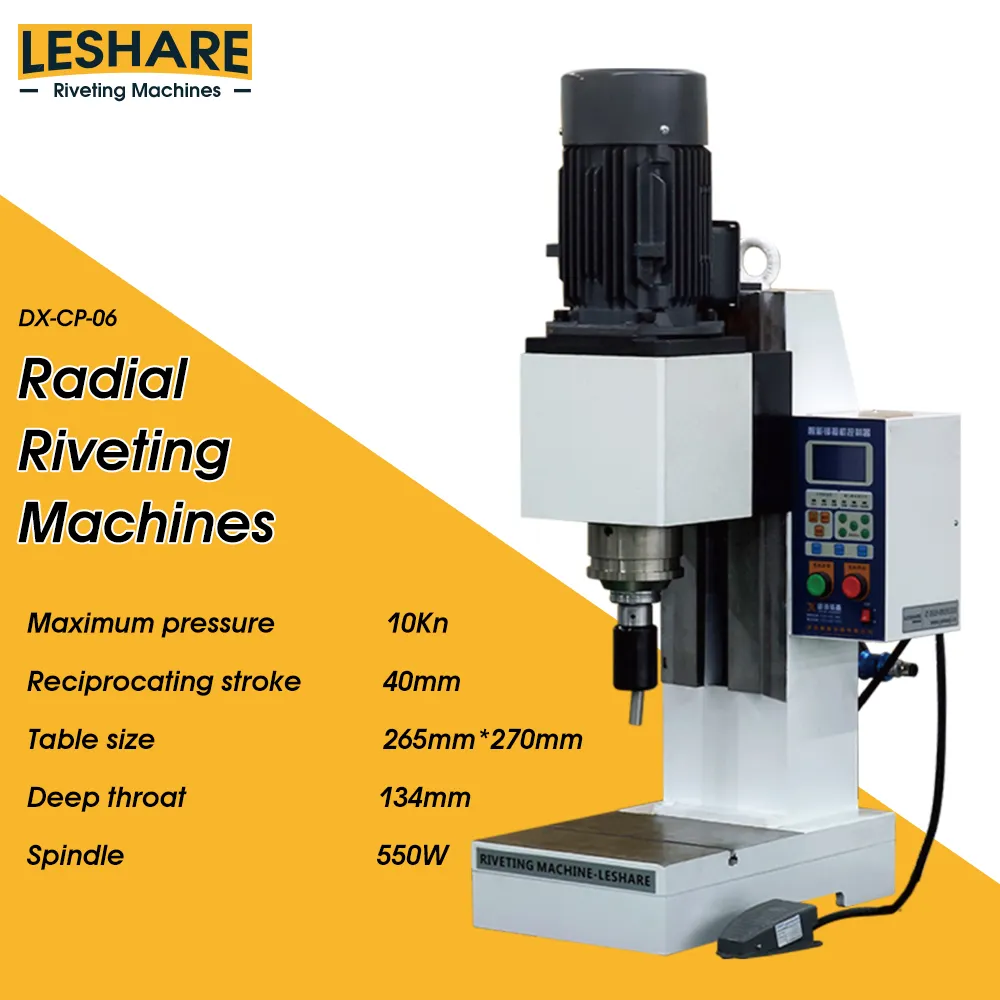
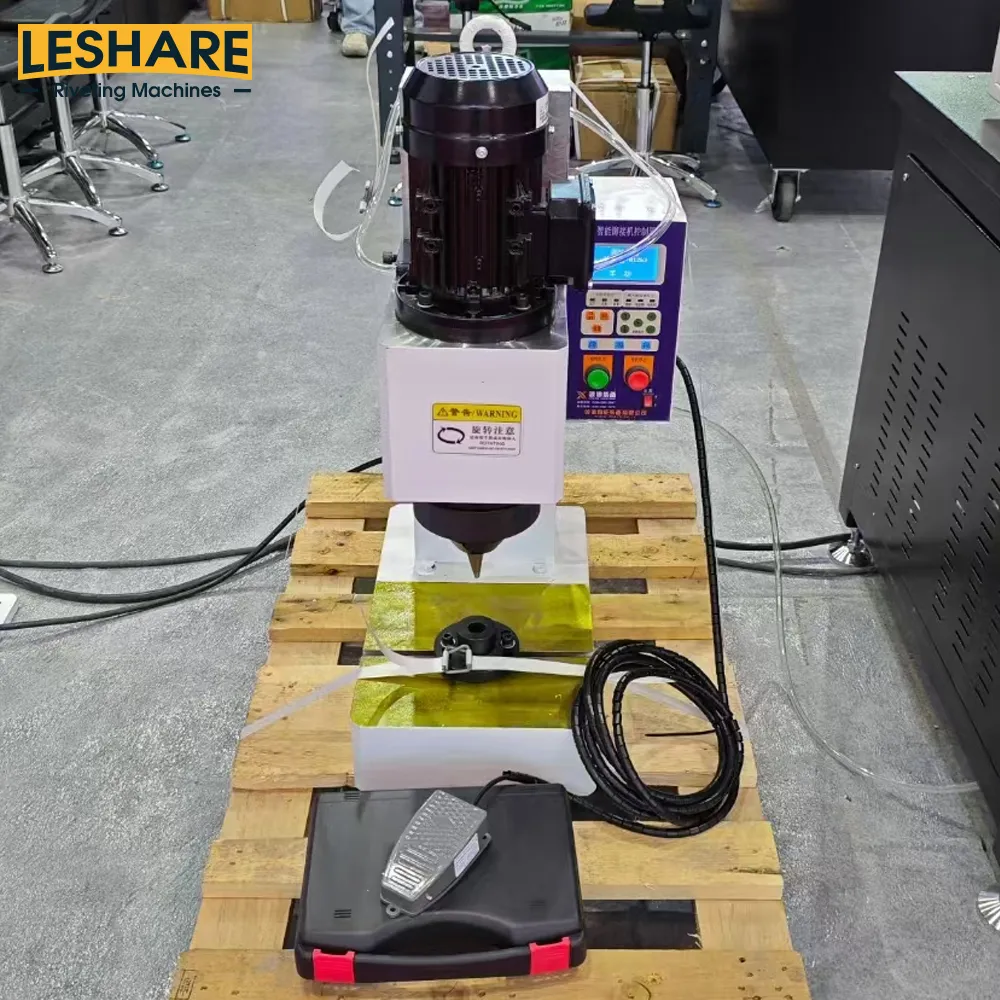
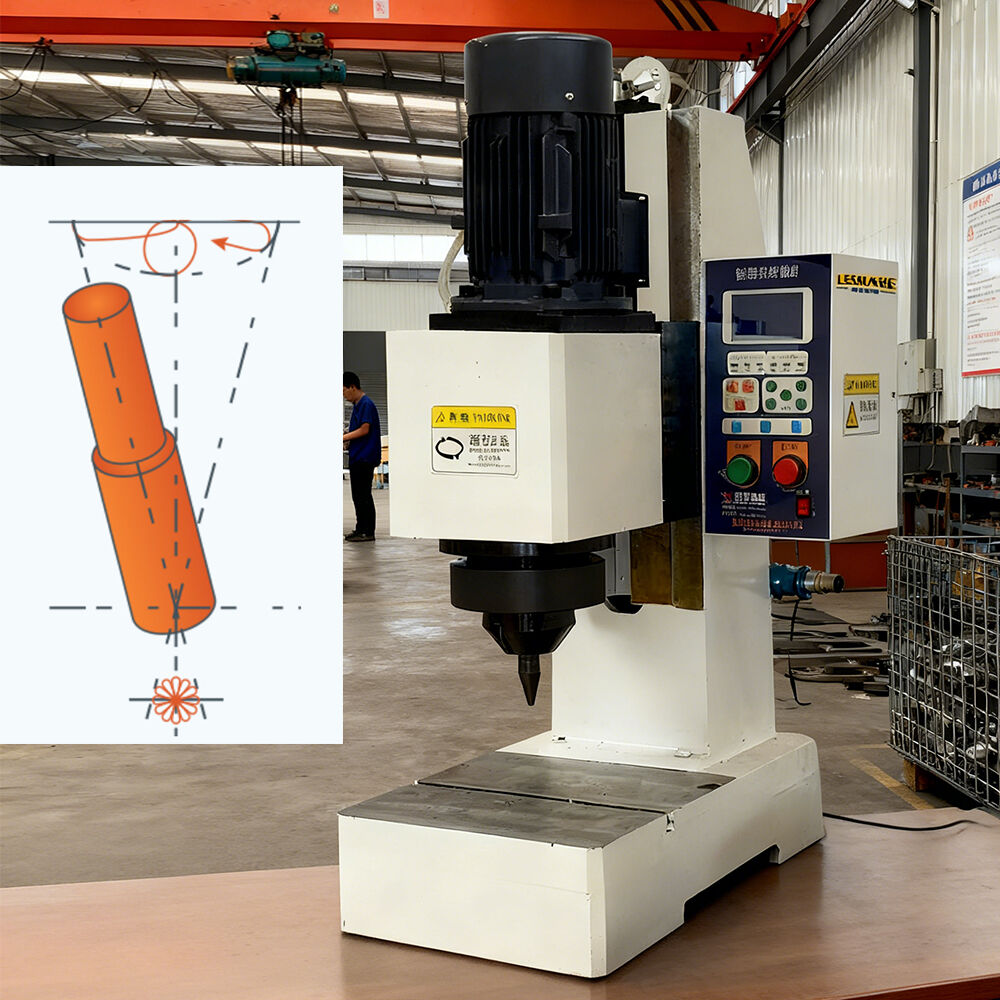
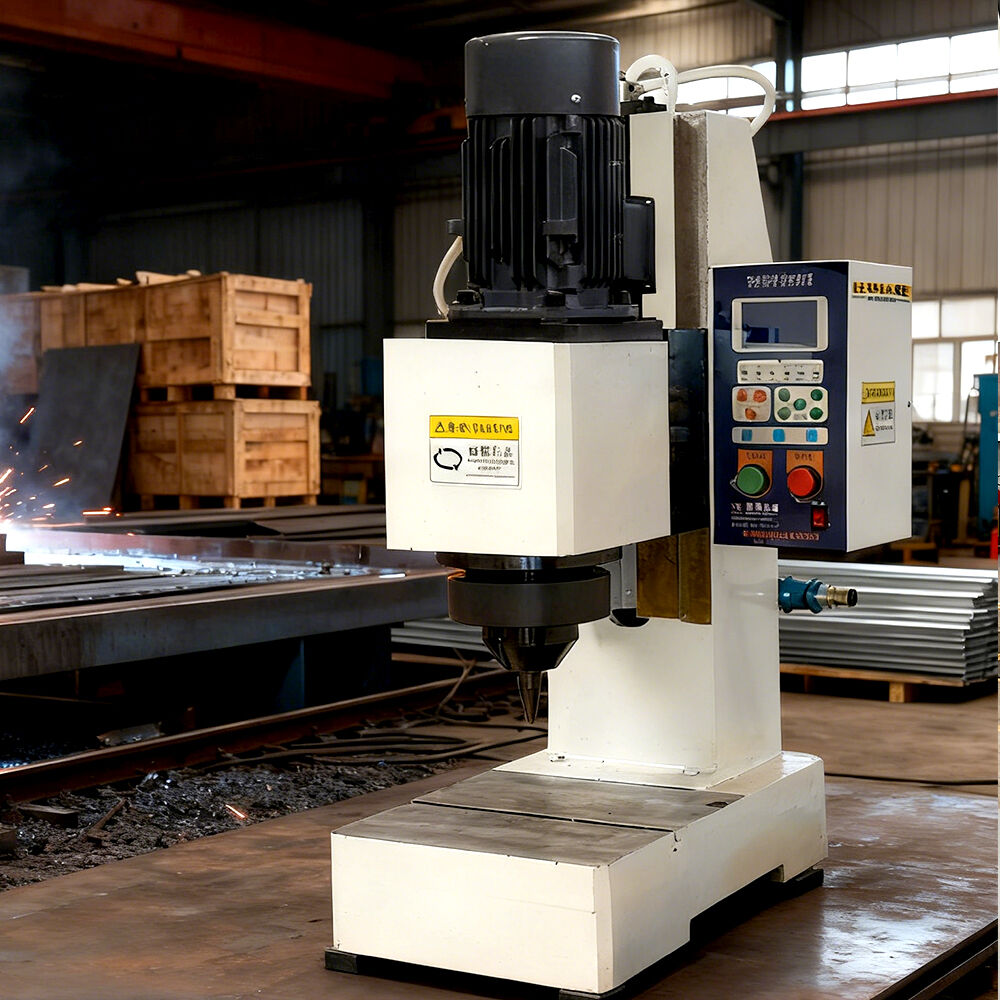
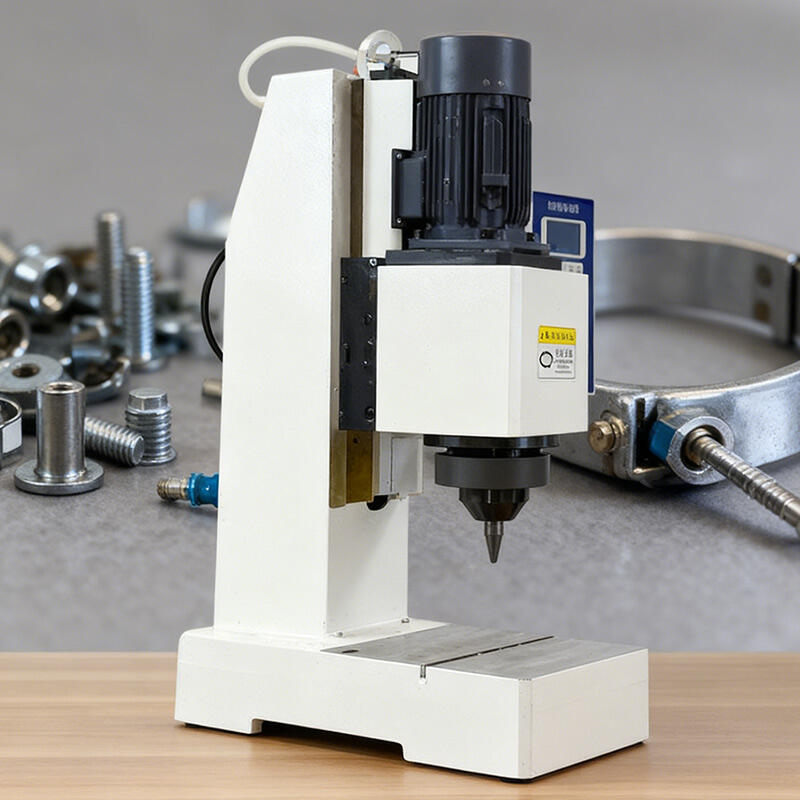
Servo Radial Riveting Machine - Advanced Precision Joining Technology for Manufacturing Excellence

Get a Free Quote

Our representative will contact you soon.
Email
Name
Company Name
Message
0/1000

servo radial riveting machine

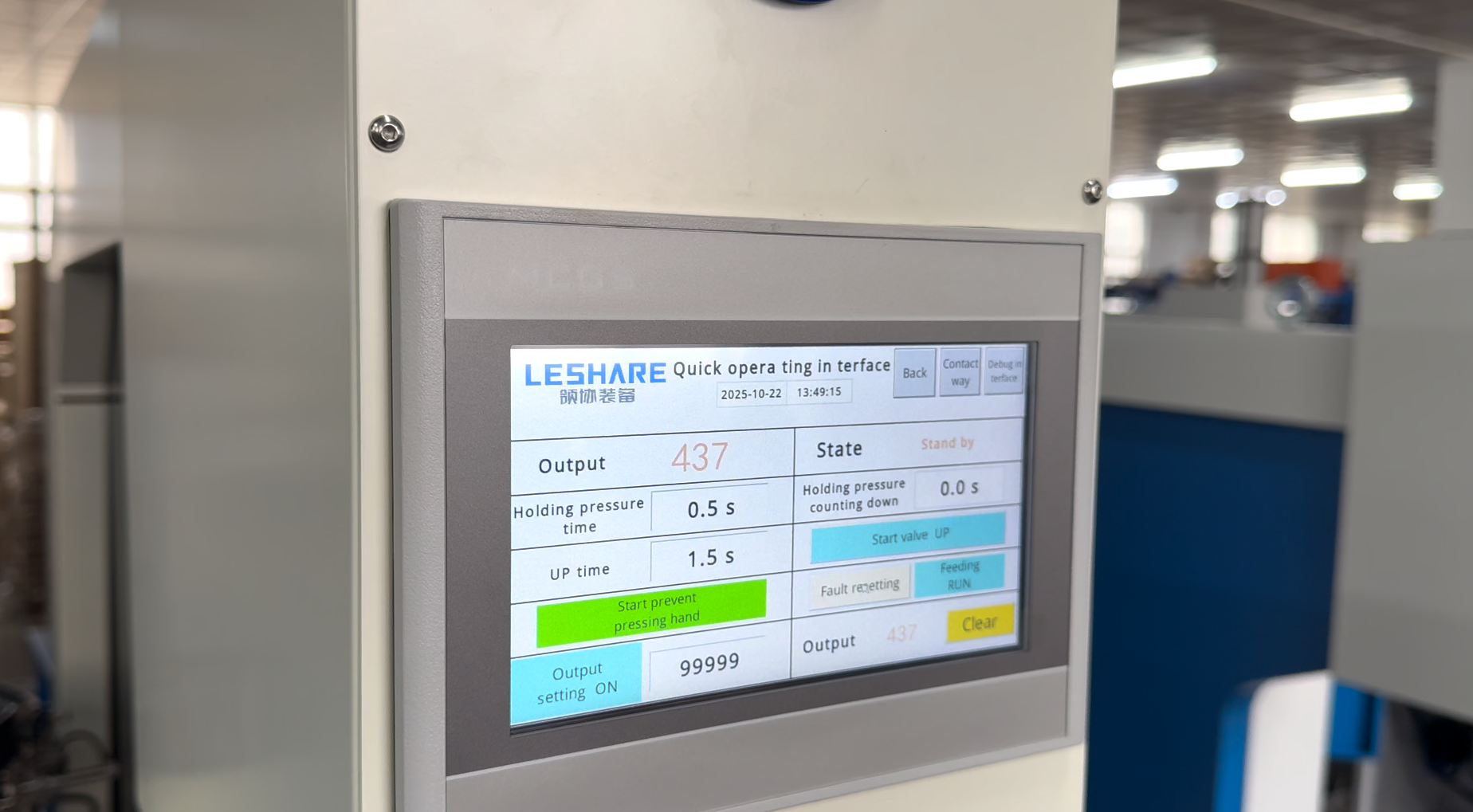
The servo radial riveting machine represents a significant advancement in metal joining technology, combining precision engineering with automated control systems to deliver superior riveting performance across diverse manufacturing applications. This sophisticated equipment utilizes servo motor technology to control the riveting process with exceptional accuracy, ensuring consistent results while reducing operator fatigue and increasing productivity. The machine operates through a radial riveting mechanism that forms joints by applying controlled pressure and rotation to create permanent connections between metal components. At its core, the servo radial riveting machine features advanced programmable logic controllers that manage every aspect of the riveting cycle, from initial positioning to final quality verification. The system incorporates real-time monitoring capabilities that track force, displacement, and timing parameters throughout each operation. This comprehensive data collection enables operators to maintain optimal process conditions and identify potential issues before they impact production quality. The machine's modular design allows for easy customization to accommodate various workpiece sizes and configurations, making it suitable for both high-volume production runs and specialized assembly operations. Key technological features include variable speed control, adjustable pressure settings, and integrated safety systems that protect both operators and equipment during operation. The servo radial riveting machine excels in automotive manufacturing, aerospace assembly, electronics production, and general fabrication applications where reliable joint integrity is essential. Its ability to process different rivet materials including aluminum, steel, and specialized alloys makes it versatile for numerous industrial sectors. The machine's compact footprint and energy-efficient design contribute to reduced operational costs while maintaining high throughput capabilities. Advanced diagnostics and maintenance scheduling features help minimize downtime and extend equipment lifespan, making the servo radial riveting machine an intelligent investment for modern manufacturing facilities seeking to enhance their joining processes.

New Product Releases

Manufacturing companies choose servo radial riveting machines because these systems deliver measurable improvements in production efficiency and product quality that directly impact their bottom line. The precision control offered by servo technology eliminates the inconsistencies common with pneumatic or hydraulic systems, resulting in uniform rivet formation and reduced scrap rates. Operators benefit from the machine's user-friendly interface that simplifies setup procedures and reduces training requirements, allowing skilled technicians to focus on higher-value tasks while less experienced workers can operate the equipment safely and effectively. The servo radial riveting machine provides exceptional flexibility in handling various rivet sizes and materials without requiring extensive tooling changes, enabling manufacturers to respond quickly to customer demands and product variations. Energy consumption decreases significantly compared to traditional riveting methods because servo motors only consume power when actively performing work, unlike pneumatic systems that require continuous air pressure maintenance. Quality control becomes more reliable through the machine's built-in monitoring systems that track each rivet's formation characteristics and alert operators to any deviations from established parameters. This real-time feedback prevents defective parts from advancing through production lines, saving materials and reducing rework costs. Maintenance requirements are minimal due to the servo system's design, which features fewer moving parts and eliminates the wear associated with hydraulic seals and pneumatic components. The machine's ability to store multiple program settings allows manufacturers to quickly switch between different products without manual adjustments, reducing changeover time and increasing overall equipment effectiveness. Noise levels are substantially lower than conventional riveting equipment, creating a more comfortable work environment and helping companies comply with occupational safety regulations. The servo radial riveting machine's consistent performance characteristics ensure that each rivet meets specified torque and compression requirements, resulting in stronger joints and improved product reliability. Investment returns are realized through increased throughput, reduced labor costs, lower energy consumption, and decreased warranty claims from customers. The machine's data logging capabilities provide valuable insights for process optimization and quality certification requirements, supporting continuous improvement initiatives and regulatory compliance efforts.

Tips And Tricks

How to Maintain a Leveling Machine for Long-Term Precision?

28

Aug

How to Maintain a Leveling Machine for Long-Term Precision?

Essential Strategies for Leveling Machine Longevity Maintaining a leveling machine's precision and performance requires a systematic approach and dedication to regular maintenance protocols. These sophisticated pieces of equipment play a crucial role...
View More
What Should You Check During Routine Maintenance of a Pneumatic Orbital Riveter?

06

Nov

What Should You Check During Routine Maintenance of a Pneumatic Orbital Riveter?

Essential Maintenance Guidelines for Industrial Riveting Equipment Maintaining a pneumatic orbital riveter is crucial for ensuring consistent performance and longevity in industrial applications. These sophisticated tools require regular attention to...
View More
How Do Pneumatic Riveting Machines Improve Production Efficiency?

06

Nov

How Do Pneumatic Riveting Machines Improve Production Efficiency?

Understanding the Impact of Modern Riveting Technology in Manufacturing Manufacturing facilities worldwide are constantly seeking ways to enhance their production capabilities and streamline operations. Among the most significant advancements in asse...
View More
Why Are Automotive Suppliers Increasingly Relying on Clinching Machines?

11

Dec

Why Are Automotive Suppliers Increasingly Relying on Clinching Machines?

The automotive manufacturing industry has witnessed a remarkable transformation in recent years, driven by the need for lighter, stronger, and more cost-effective production methods. Among the various technological advancements reshaping the sector, ...
View More

Get a Free Quote

Our representative will contact you soon.
Email
Name
Company Name
Message
0/1000

servo radial riveting machine

Advanced Servo Control Technology

Advanced Servo Control Technology

The servo radial riveting machine's most distinguishing feature lies in its sophisticated servo control technology that transforms traditional riveting operations into precision manufacturing processes. Unlike conventional pneumatic or hydraulic systems that rely on air pressure or fluid power, servo technology employs electric motors with closed-loop feedback systems to achieve unprecedented control over every aspect of the riveting cycle. This advanced control mechanism monitors and adjusts force, speed, and position parameters in real-time, ensuring that each rivet receives exactly the right amount of energy for optimal formation. The servo system's ability to provide variable force application throughout the riveting process creates superior joint quality by gradually building pressure rather than applying sudden impact forces that can damage delicate components or create stress concentrations. Manufacturing engineers particularly value this technology's repeatability, as servo motors can reproduce identical motion profiles thousands of times without degradation in performance. The system's programmable nature allows operators to create custom riveting profiles for different materials and applications, storing these parameters for future use and ensuring consistent results across production runs. Quality assurance teams benefit from the servo system's comprehensive data collection capabilities, which record force curves, displacement measurements, and timing information for each rivet operation. This detailed documentation supports statistical process control initiatives and provides evidence of compliance with industry standards and customer specifications. The servo radial riveting machine's control technology also enables adaptive processing, where the system automatically adjusts parameters based on real-time feedback to compensate for variations in material properties or component tolerances. This intelligence prevents the formation of weak joints caused by insufficient force or component damage from excessive pressure. Energy efficiency represents another significant advantage of servo control technology, as motors only consume power during active operation and can regenerate energy during deceleration phases. The precise control offered by servo systems eliminates the waste associated with over-processing and reduces the need for secondary operations, contributing to overall manufacturing cost reduction and improved sustainability.
Exceptional Versatility and Adaptability

Exceptional Versatility and Adaptability

The servo radial riveting machine demonstrates remarkable versatility that allows manufacturers to consolidate multiple joining processes into a single, efficient system capable of handling diverse production requirements. This adaptability stems from the machine's modular design philosophy, which enables quick reconfiguration for different workpiece geometries, rivet specifications, and production volumes without requiring significant downtime or specialized tooling. The system accommodates an extensive range of rivet materials including aluminum, steel, copper, and exotic alloys used in aerospace and medical device manufacturing, making it suitable for industries with varying material requirements. Size flexibility is equally impressive, as the servo radial riveting machine can process rivets ranging from miniature components used in electronics assembly to larger fasteners required in structural applications. The machine's adjustable work holding fixtures and programmable positioning systems ensure proper alignment and support for workpieces of different shapes and sizes, from simple flat panels to complex three-dimensional assemblies. This versatility eliminates the need for multiple specialized machines, reducing capital equipment costs and simplifying production planning. Manufacturers appreciate the system's ability to switch between different rivet types and sizes through software changes rather than mechanical adjustments, enabling rapid response to changing production demands and mixed-model manufacturing scenarios. The servo radial riveting machine's adaptability extends to integration with existing production lines, as it can interface with robotic systems, conveyor networks, and quality inspection equipment through standard industrial communication protocols. This integration capability allows the machine to function as part of automated assembly cells while maintaining the flexibility to operate as a standalone unit when needed. The system's learning capabilities enable it to optimize process parameters for new applications automatically, reducing setup time and eliminating the trial-and-error approach traditionally associated with riveting operations. Quality control versatility is achieved through programmable inspection criteria that can be customized for different product specifications and customer requirements. The machine's data management system stores process parameters and quality records for multiple products simultaneously, facilitating quick changeovers and ensuring traceability throughout the production process. This comprehensive versatility makes the servo radial riveting machine an ideal solution for manufacturers seeking to streamline their operations while maintaining the capability to produce diverse product portfolios.
Superior Joint Quality and Reliability

Superior Joint Quality and Reliability

The servo radial riveting machine produces joints of exceptional quality and reliability that exceed the performance characteristics achievable with conventional riveting methods, making it the preferred choice for applications where joint integrity is critical to product safety and performance. The machine's controlled forming process creates rivets with optimal head geometry and consistent mechanical properties by precisely managing the flow of material during the upsetting operation. This controlled deformation ensures that each rivet achieves maximum strength while maintaining proper clearance and finish requirements. The servo system's ability to monitor and adjust forming forces throughout the riveting cycle prevents the formation of cracks, voids, or other defects that can compromise joint strength and lead to premature failure in service. Quality consistency is maintained through the machine's closed-loop control system that compensates for variations in rivet material properties, workpiece thickness, and ambient conditions that would affect joint formation in manual or semi-automatic systems. The servo radial riveting machine's precise force application creates joints with superior fatigue resistance, as the controlled forming process minimizes stress concentrations and ensures uniform load distribution across the rivet-to-workpiece interface. This enhanced fatigue performance is particularly valuable in automotive and aerospace applications where components must withstand millions of load cycles throughout their service life. The machine's ability to create gas-tight and liquid-tight joints makes it suitable for pressure vessel manufacturing and other applications requiring hermetic sealing without additional gaskets or sealants. Joint reliability is further enhanced by the system's real-time monitoring capabilities that detect and reject defective rivets before they become part of finished assemblies, preventing costly field failures and warranty claims. The servo radial riveting machine's consistent performance eliminates the variability associated with operator skill and fatigue, ensuring that every joint meets specified requirements regardless of production volume or shift conditions. Quality documentation is automatically generated for each rivet operation, providing comprehensive traceability and supporting certification requirements for regulated industries. The machine's ability to perform non-destructive testing during the riveting process through force and displacement analysis eliminates the need for separate inspection operations while providing 100 percent quality verification. Long-term joint reliability is supported by the system's ability to create stress-free connections that resist loosening and corrosion, extending product life and reducing maintenance requirements for end users.

Get a Free Quote

Our representative will contact you soon.
Email
Name
Company Name
Message
0/1000